waiting for shipment. By that point, an incorrect profile, machining error,
colour mismatch, incompatible motor or missing drainage component may already
have been repeated across an entire production batch.For importers, distributors, outdoor living brands, contractors and project
buyers, effective quality control begins with an approved product specification.
It then follows the product through incoming materials, profile processing,
surface finishing, component preparation, trial assembly, functional inspection,
packaging and pre-shipment release.
This aluminum pergola quality control checklist explains what B2B buyers should
inspect, which records they should request and how to distinguish a useful
inspection from a general statement that a product has “passed QC.”
Buyers who are still selecting a supplier should first review
how to evaluate a louvered pergola manufacturer and supplier
.
Buyers developing a new configuration should also review the
custom aluminum pergola OEM process
before defining the final inspection plan.
specification, aluminum profiles, dimensions, machining, powder-coated finish,
purchased components, fasteners, roof movement, motors and controls, drainage,
assembly fit, packaging and shipment quantities. Each inspection item should
have a defined method, sampling level, acceptance criterion and evidence
requirement. Product certificates or a factory quality-management certificate
do not replace inspection of the actual production batch.
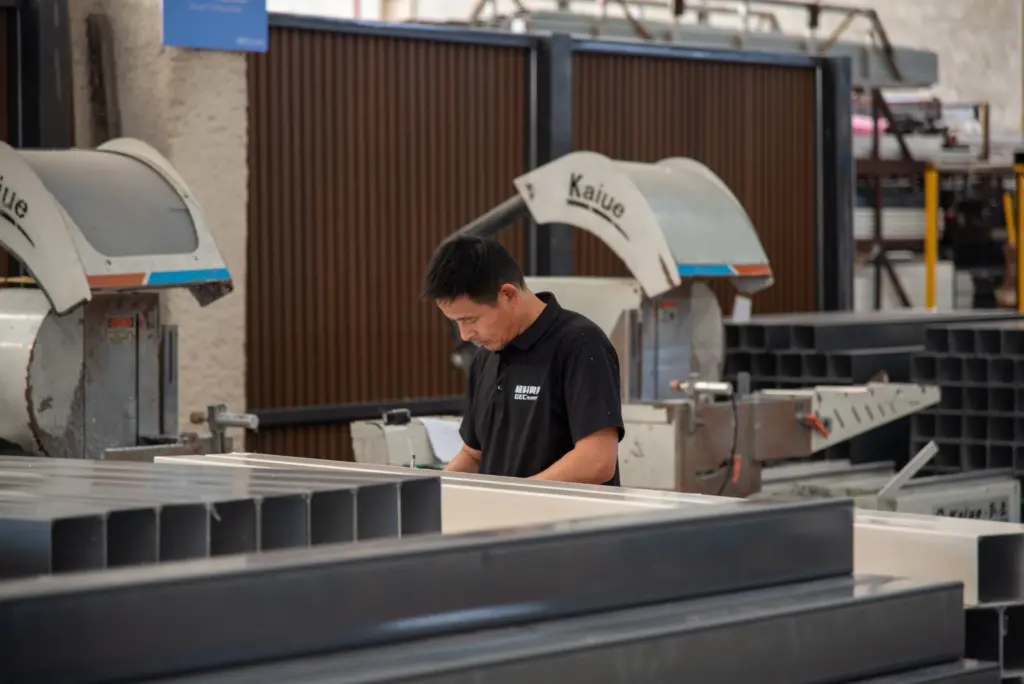
Quality Control Starts with an Approved Specification
A factory cannot inspect a product accurately if the buyer and manufacturer have
not agreed on what the product is supposed to be. Photographs, quotations and
general catalogue descriptions are not sufficient inspection standards.
The inspection basis should identify the product model, size, structure,
installation type, aluminium alloy where specified, profile dimensions, roof
configuration, colour, surface finish, motor or manual operating system,
accessories, hardware, packaging and required documentation.
The relevant drawing, bill of materials, colour approval and packing information
should use the same revision number. If a drawing is revised but the production
BOM, inspection sheet or packaging list is not updated, the factory may produce
and inspect different versions of the same order.
| Controlled Document | What It Should Define | Quality-Control Use |
|---|---|---|
| Product specification | Model, dimensions, materials, operating system, finish and accessories | Defines the product being purchased and inspected |
| Approved technical drawing | Overall dimensions, profile layout, holes, connections and drainage route | Provides the dimensional and construction reference |
| Bill of materials | Profiles, components, hardware, seals, motors and packing groups | Supports component verification and quantity control |
| Approved finish sample | Colour, texture, gloss and acceptable visual appearance | Provides a physical comparison standard for surface inspection |
| Golden sample or approved unit | Confirmed product appearance, assembly and operating configuration | Provides a reference where written specifications are insufficient |
| Inspection checklist | Inspection items, methods, sampling and acceptance criteria | Ensures the inspector follows the agreed scope |
| Packaging specification | Carton structure, protection, labels, contents and carton sequence | Provides the basis for packing and shipment inspection |
A drawing is not automatically an inspection standard
A drawing may show a nominal dimension without stating the permitted
tolerance. A finish description may identify a colour without defining an
approved physical sample. A product page may list a motorized roof without
defining the motor voltage, controller or programming. Inspection criteria
should therefore be added where the technical documents do not provide enough
information to make a clear accept-or-reject decision.
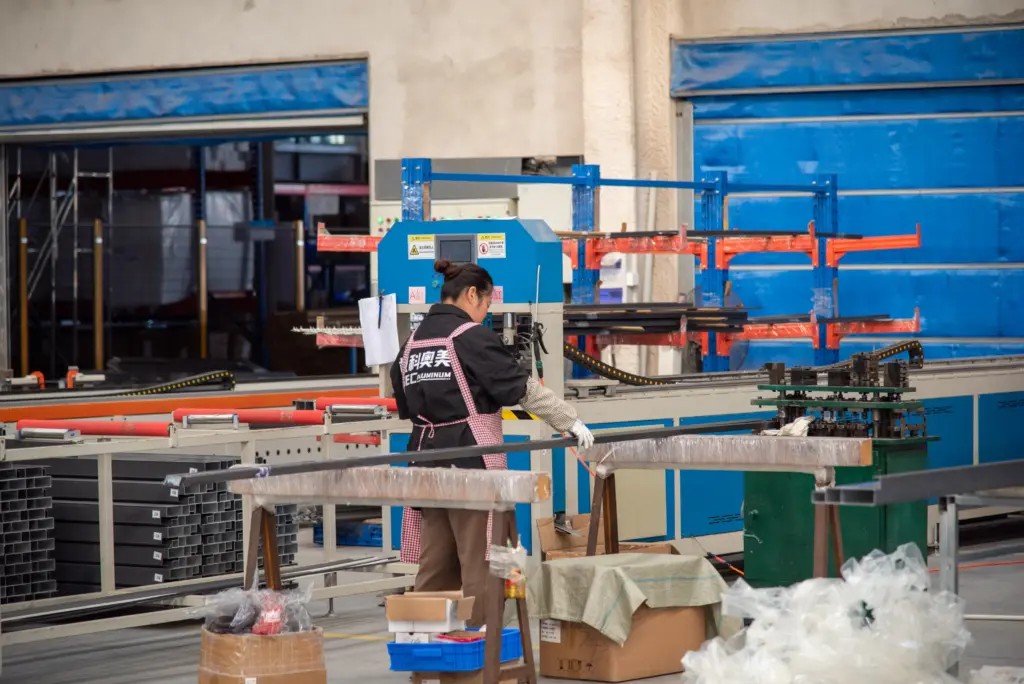
The 12-Point Aluminum Pergola Quality Control Framework
The following framework follows the product from approved specification to
shipment release. The exact depth should match the order, product platform and
risk level. A standard manual pergola and a newly developed motorized system may
require different inspection scopes.
Specification and Revision
Incoming Materials
Aluminum Profiles
Cutting and Machining
Surface Finish
Purchased Components
Trial Assembly
Roof Operation
Drainage
Structural Conformity
Pre-Shipment Inspection
Packaging and Loading
1. Confirm the Product Specification and Revision
Before production inspection begins, the inspector should confirm that the
factory is using the approved product revision. This includes the technical
drawing, BOM, colour, motor configuration, accessory list, packaging artwork and
order quantity.
The production order should not rely on informal messages that are disconnected
from the controlled specification. A late change to the beam, louvre, post,
controller, screen, lighting position or packaging may affect several documents
and inspection points.
Product model, revision, dimensions, finish, controls, accessories and order configuration.
Compare the production order, drawings, BOM and approved samples.
Signed specification, revision log and approved order configuration.
Production and inspection are performed against different product revisions.
2. Inspect Incoming Materials and Purchased Components
Incoming quality control should verify that materials and components correspond
to the approved BOM before they enter production. A finished pergola can appear
correct while containing the wrong profile, fastener, motor, seal or electrical
component.
For aluminum profiles, incoming verification may include material identification,
extrusion reference, profile cross-section, nominal dimensions, wall thickness
where specified, surface condition, straightness and production-batch
identification.
Purchased parts may include motors, control units, rain sensors, LEDs, wiring
components, seals, brackets, bearings, fasteners, drainage fittings and screen
components. The required level of verification depends on the function and risk
of each part.
| Incoming Item | Quality Checks | Possible Evidence |
|---|---|---|
| Aluminum profiles | Profile code, cross-section, dimensions, wall thickness, straightness and visible damage | Incoming inspection record, profile drawing and batch identification |
| Steel reinforcements or brackets | Material, thickness, hole position, protective finish and deformation | Specification, supplier record and dimensional inspection |
| Fasteners | Type, diameter, length, thread, finish and quantity | BOM comparison, packaging label and sample measurement |
| Motors and controls | Model, voltage, frequency, controller, connector and ordered quantity | Product label, supplier documentation and functional sample check |
| Seals and plastic components | Shape, hardness or material where specified, fit, colour and visible defects | Approved sample, drawing and incoming record |
| LED and electrical accessories | Model, voltage, connector type, cable length and ordered configuration | Component label, BOM and functional inspection |
| Packaging materials | Carton grade, dimensions, printing, foam, corner protection and labels | Approved packaging sample and incoming inspection record |
Incoming documentation should not be accepted without checking whether it
applies to the material or batch being received. A supplier catalogue or general
material declaration may not prove that the actual production input matches the
purchased specification.
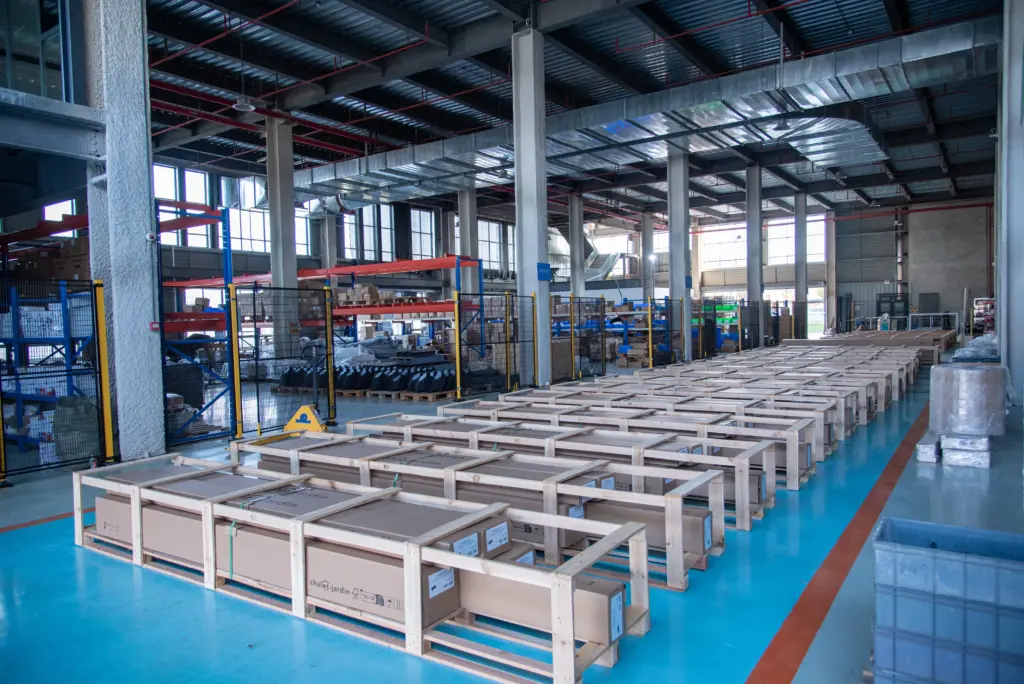
3. Check Aluminum Profile Dimensions and Condition
Aluminum profiles form the primary structural and functional parts of many
louvered pergola systems. Posts, beams, gutters, louvers and accessory tracks
must correspond to the approved profile drawings and fit together correctly.
A profile inspection may include overall width and height, specified wall
sections, channel geometry, straightness, twist, surface dents, extrusion marks
and damage caused during handling. The measurement points and tolerances should
be defined in the drawing or inspection plan.
Inspectors should avoid measuring only one convenient location. Complex hollow
profiles can have functional channels, screw positions and mating areas that are
more important than the outside dimension alone.
Evidence is more useful than a “profile passed” statement
A useful report identifies the profile code, drawing revision, measurement
instrument, measurement points, sample quantity, specified requirement and
actual result. Photographs should show the part and measuring position clearly
enough for a buyer or engineer to understand what was checked.
4. Inspect Cutting, Drilling and Machining
Profile machining converts an approved extrusion into an assembly-ready
component. Errors at this stage can affect frame dimensions, louver movement,
drainage, accessory installation and on-site assembly.
Inspection points may include cut length, cut angle, hole diameter, hole
position, slot size, drainage opening, countersinking, thread quality, burr
removal and component orientation. Left-hand and right-hand parts should be
identified correctly where they are not interchangeable.
Machined surfaces should be checked for sharp burrs, deformation and damage to
visible areas. Protective film and handling methods should also be reviewed
where the finished surface can be scratched during transfer between processes.
| Defect | Possible Consequence | Inspection Method |
|---|---|---|
| Incorrect cut length | Frame does not align or finished dimensions are incorrect | Measure against the approved cutting drawing |
| Incorrect hole position | Parts cannot be assembled or fasteners force the frame out of alignment | Use a fixture, template or dimensional measurement |
| Blocked or missing drainage opening | Water cannot follow the intended drainage route | Visual inspection and water-path confirmation |
| Excessive burrs | Assembly difficulty, damage to seals or handling risk | Visual and tactile inspection |
| Wrong left/right orientation | Components cannot be installed in the intended position | Compare identification and geometry with the assembly drawing |
| Damaged visible surface | Cosmetic rejection after coating or assembly | Visual inspection under agreed lighting and viewing conditions |
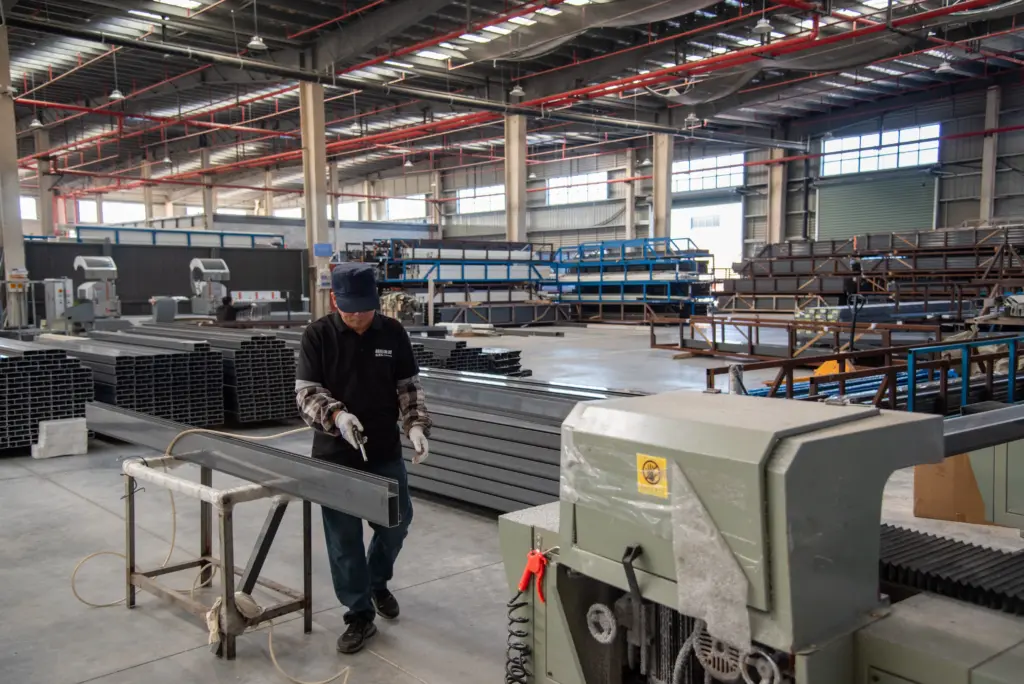
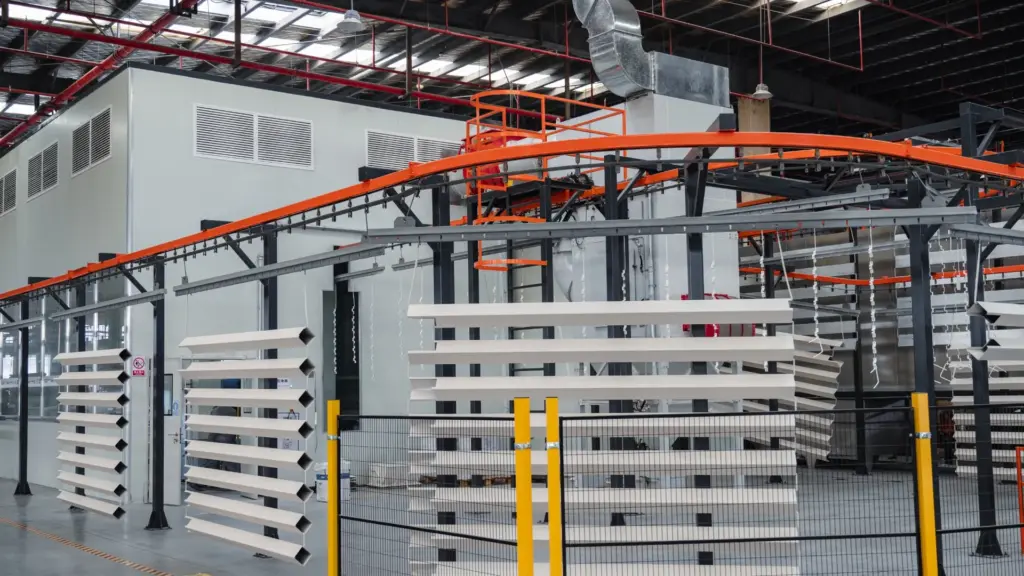
5. Inspect Pretreatment and Powder-Coated Finish
Powder coating quality cannot be determined from colour alone. Surface
preparation, pretreatment, powder material, application, curing and handling all
influence the finished surface.
Buyers should define the approved colour, texture and gloss level using a
physical sample where appearance is important. Inspection may also address
coating thickness, adhesion, curing, coverage, contamination, colour consistency,
orange peel, pinholes, exposed substrate, scratches and impact damage.
El
QUALICOAT Specifications
provide a recognised reference for the coating of aluminum used in architectural
applications. Buyers may use such references when developing a project
specification, but a reference to QUALICOAT does not mean that a particular
factory, coating line or product is licensed under the quality label.
Where coating thickness measurement is required, the specification should define
the method, instrument, measurement locations and acceptance criteria.
ISO 2360:2017
describes an eddy-current method for non-destructive measurement of
non-conductive coatings on non-magnetic conductive base metals, including
applications relevant to many powder-coated aluminum surfaces.
| Inspection Area | What to Check | Important Limitation |
|---|---|---|
| Colour | Comparison with approved sample under agreed lighting conditions | Screen images and RAL references alone may not represent final appearance |
| Gloss and texture | Consistency across connected and visible parts | Different powder batches or substrates may create visible variation |
| Coating thickness | Measurements at agreed profile surfaces and sampling locations | A single reading does not represent the complete batch |
| Adhesion | Test method and acceptance level agreed for the project | Test results apply to the tested sample and process condition |
| Coverage | Edges, corners, channels and visible surfaces | Complex internal channels may have different appearance or coverage requirements |
| Visual defects | Scratches, dents, pinholes, contamination, exposed substrate and handling damage | Viewing distance, lighting and critical surfaces should be defined |
| Batch consistency | Connected parts and cartons intended for the same installation | Colour differences may be more visible after final assembly |
Outdoor exposure requirements should be considered before the finish is approved.
Coastal, humid and high-UV locations may require closer discussion of coating,
cleaning, material contact and maintenance. Buyers can review the
aluminum pergola materials and surface-finish guidance
when preparing the finish specification.
6. Verify Motors, Controls, Fasteners and Accessories
A pergola is a system of manufactured and purchased components. A correctly
produced aluminum frame can still fail the buyer’s inspection if the order
contains the wrong motor, controller, fasteners, lighting, screens or sensors.
Component inspection should verify the approved model, electrical rating,
connector, cable length, mounting interface, colour and quantity. Where
traceability is required, the report may also record supplier or batch
identification without disclosing commercially sensitive information publicly.
Fasteners should be checked against the BOM for type, size, thread, finish and
quantity. Substituting a fastener because it appears similar can affect fit,
corrosion behaviour, maintenance and installation.
Accessory compatibility should be evaluated as part of the main pergola system.
Screens, glass panels, lighting, fans, heaters and control devices can affect beam
preparation, cable routing, clearances, packaging and installation sequence.
Review the
pergola motor, smart-control and accessory planning guidance
before freezing the final configuration.
Do not approve an electrical component by appearance
Similar housings may contain different motors, voltages, frequencies, control
logic or connector arrangements. The label, approved specification and
functional configuration should be verified together. Destination-market
electrical and regulatory requirements must be established separately by the
responsible buyer and local professionals.
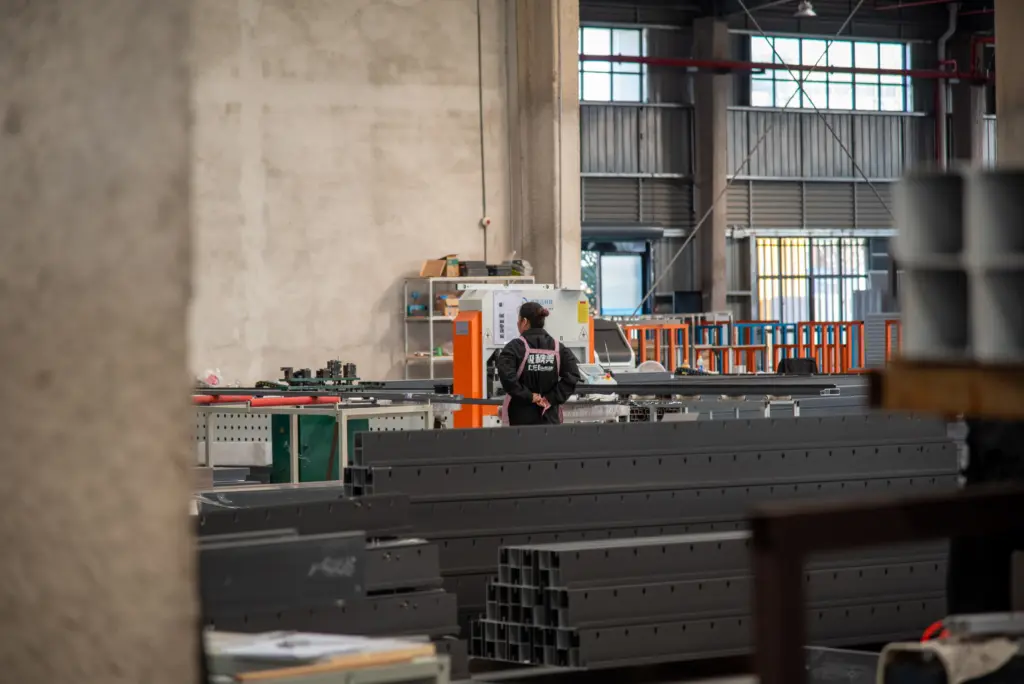
7. Perform Trial Assembly and Dimensional Verification
Trial assembly checks whether separately inspected components work together as a
complete pergola system. It can reveal accumulated dimensional variation,
incorrect hole positions, incompatible hardware, misidentified parts and
problems that are not visible during individual component inspection.
The scope can range from a connection sample or roof module to a complete
full-size assembly. The appropriate method depends on product maturity, order
size, customization and risk. It is not always practical or necessary to assemble
every complete pergola before shipment.
Dimensional verification may include overall width, projection, height, post
spacing, frame diagonals, beam level, roof-zone alignment and accessory opening
dimensions. The inspector should identify whether measurements are taken from the
outside frame, post centreline, clear opening or roof projection.
| Assembly Item | Inspection Question | Possible Evidence |
|---|---|---|
| Frame geometry | Are the dimensions, diagonals and post positions within the agreed tolerance? | Measurement photographs and dimensional record |
| Connections | Do brackets, holes and fasteners align without forcing or unauthorized modification? | Connection photographs and assembly record |
| Louvre alignment | Are the louvers level, evenly spaced and free from interference? | Roof photographs and operational video |
| Seals and covers | Are seals, caps and covers correctly positioned and secure? | Detail photographs |
| Accessory interfaces | Do screens, lighting or other selected accessories fit the prepared interfaces? | Interface measurements and fit check |
| Installation sequence | Can the system be assembled using the approved components and instructions? | Trial assembly notes and revised installation document |
8. Test Louver Movement, Motors and Control Functions
Functional inspection should confirm that the roof system operates according to
the approved configuration. For a manual pergola, this may include handle
operation, louvre travel, locking and interference. For a motorized pergola, it
may include motor direction, travel limits, roof-zone operation, controller
response, wiring connections and selected sensors or accessories.
The inspection should record the product configuration being tested. A functional
test on one roof module does not automatically verify every motor, controller or
finished pergola in the order unless the inspection plan specifies that scope.
A useful roof-operation inspection can include:
- Full opening and closing movement
- Intermediate louvre positions where applicable
- Movement without contact between adjacent louvers
- Motor direction and programmed limits
- Independent or synchronized roof-zone control
- Controller and remote pairing
- Manual override where included in the approved system
- Visible cable and connector condition
- Abnormal movement, vibration or noise
- Repeated operation where required by the inspection plan
Define what “functional test passed” means
A video showing the roof opening once is useful evidence, but it is not a
complete inspection standard. The approved test should identify the roof zone,
controller, number of cycles where relevant, expected travel, acceptance
criteria and any abnormal result.
9. Inspect the Drainage and Water-Management System
Water management depends on the interaction between louvers, seals, gutters,
beam channels, posts, outlets and installation level. Inspecting only one gutter
component does not confirm the performance of the complete drainage route.
During assembly or product verification, inspectors may check louvre overlap,
gutter continuity, outlet openings, post drainage paths, joint alignment,
blockage and visible leakage. The test setup, water volume, duration, roof
position and observed result should be documented where a water test is required.
A water-spray test is not the same as universal certification that the pergola is
waterproof under every rainfall intensity and wind direction. Actual performance
also depends on pergola size, installation accuracy, drainage connection,
maintenance and site conditions.
Buyers can review the
aluminum pergola weather-performance and regional-use guidance
for additional information about rainfall, wind, snow, coastal exposure and local
design conditions.
| Inspection Point | What to Verify | Common Risk |
|---|---|---|
| Louvre overlap | Closed-roof alignment and designed water direction | Misaligned louvers allow water to bypass the intended channel |
| Gutter channels | Continuity, cleanliness, joints and slope where applicable | Debris, seal gaps or poor alignment interrupt water flow |
| Drainage openings | Correct machining, location and absence of blockage | Water accumulates because openings are missing or obstructed |
| Post drainage | Internal route, outlet direction and component fit | Water reaches the post but cannot discharge correctly |
| Connections | Beam, gutter, seal and outlet interfaces | Leakage occurs at transitions rather than through the main components |
| Test documentation | Configuration, water method, duration and observed result | A generic “waterproof test” claim cannot be traced to the inspected product |
10. Distinguish Structural Verification from Production Inspection
Structural calculations, prototype tests and batch-production inspections serve
different purposes. Buyers should not treat them as interchangeable evidence.
Engineering calculations evaluate an identified structure using defined
assumptions, dimensions, materials, connections, loads and boundary conditions.
Prototype or laboratory testing evaluates a particular sample and test setup.
Production inspection verifies whether manufactured parts conform to the
approved design and material configuration.
A production inspector does not normally apply full design loads to every
pergola. Instead, the inspector may verify that the profiles, wall sections,
brackets, fasteners, dimensions and assembly correspond to the configuration
supported by the available engineering or test evidence.
| Control Type | Primary Purpose | What Buyers Should Confirm |
|---|---|---|
| Engineering calculation | Evaluate an identified structure under defined design assumptions | Size, profile, material, connections, loads, site assumptions and responsible author |
| Prototype or laboratory test | Observe the behaviour of a specific sample under a defined test method | Sample configuration, test setup, load or cycle, acceptance criteria and result |
| Component test | Evaluate an individual part, connection or mechanism | Tested component, revision, method and relationship to the final system |
| Production inspection | Confirm manufactured products correspond to approved specifications | Sampling, measurement, actual results, deviations and release decision |
| Local project approval | Confirm suitability under the installation jurisdiction | Local codes, site exposure, foundation, anchoring and licensed professional responsibility |
A published load value should not be applied automatically to every pergola size,
side enclosure, installation method or location. Changes to span, post layout,
roof zones, walls, screens or anchoring can require additional review.
11. Define the Pre-Shipment Inspection and Sampling Plan
A pre-shipment inspection should take place when enough of the order is completed
and packed for the inspector to evaluate the actual shipment. The inspection
scope should be agreed before production rather than decided after the inspector
arrives.
The buyer should define the lot, sample size, inspection level, defect
classifications and acceptance rules. Some items may be inspected by sampling,
while critical product identity, configuration or functional items may justify
broader or 100% verification depending on the order and risk.
ISO 2859-1:2026
defines acceptance sampling plans for inspection by attributes and is indexed
using an acceptance quality limit. Buyers may use it as a basis for lot-by-lot
sampling, but the selected plan and acceptance levels must be agreed for the
particular product and order.
AQL does not mean zero defects
Acceptance sampling provides a method for deciding whether to accept or reject
a production lot based on an inspected sample. It does not guarantee that every
item in an accepted lot is defect-free. Buyers should decide which functions or
risks require sampling and which require complete verification.
Define critical, major and minor defects before inspection
Defect classifications should be connected to product use and buyer requirements.
The following examples provide a planning framework rather than universal
classifications.
| Classification | General Meaning | Possible Pergola Examples |
|---|---|---|
| Critical | A defect that may create an unacceptable safety, regulatory or essential functional risk | Wrong essential electrical rating, prohibited sharp condition or a critical structural component missing |
| Major | A defect likely to cause product failure, installation difficulty, rejection or substantial loss of function | Wrong profile, incorrect dimensions, motor failure, blocked drainage, missing main hardware or severe coating damage |
| Minor | A limited deviation that does not substantially affect intended use but does not meet the agreed standard | Small cosmetic variation on a non-critical surface, minor label-position issue or limited packaging appearance defect |
The same defect may be classified differently depending on location, severity,
quantity and customer requirements. A scratch on a concealed internal face is not
necessarily equivalent to the same scratch on a highly visible front beam.
What should appear in a pergola inspection report?
Purchase order, model, revision, quantity and inspection date.
Percentage produced, assembled, packed and available for inspection.
Lot size, sample size, inspection level and acceptance rules.
Drawing, BOM, colour sample and packaging revision used.
Recorded results rather than only pass or fail statements.
Roof movement, motor, controller and accessory checks where applicable.
Clear location, scale, part identification and quantity information.
Carton contents, labels, accessories, manuals and shipment count.
Classification, affected quantity, root cause where known and proposed action.
Accepted, rejected, conditionally accepted or subject to reinspection.
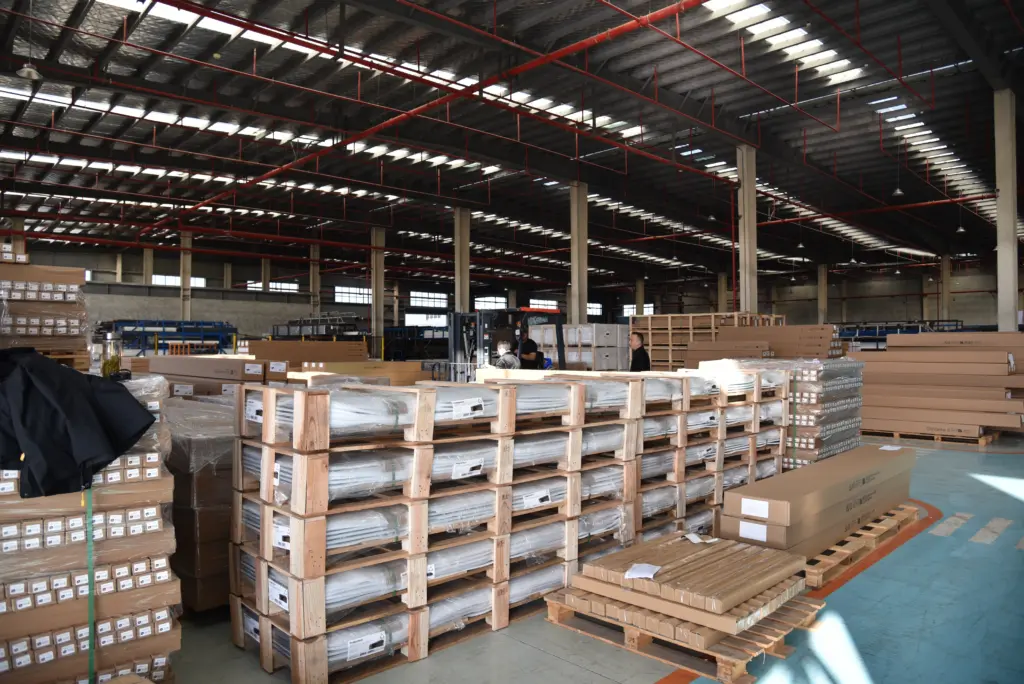
12. Inspect Packaging, Labels and Container Loading
Product inspection is incomplete if a correctly manufactured pergola is packed
in a way that causes scratches, deformation, missing components or installation
confusion during transport.
Pergola packaging may include long aluminum profiles, roof components, motors,
controllers, screens, glass, lighting and small hardware. These items require
different protection and should be grouped according to the approved packing
plan.
Inspectors should verify carton condition, internal protection, part separation,
hardware kits, carton labels, model identification, carton sequence, manuals,
spare parts, total quantity and consistency with the packing list.
El
International Safe Transit Association test-procedure resources
describe different approaches for packaged-product integrity, simulation and
distribution testing. The appropriate procedure depends on product weight,
packaging format, distribution route and intended test objective.
| Packaging Area | What to Inspect | Common Failure |
|---|---|---|
| Surface protection | Protective film, foam, sleeves and separation between coated parts | Coated surfaces rub against each other during transport |
| Edge and corner protection | Protection at long-profile ends, corners and vulnerable machined areas | Profiles are dented or coating is damaged during handling |
| Internal restraint | Movement of profiles, motors, controls and hardware inside cartons | Parts move and damage each other during vibration or impact |
| Carton strength | Carton structure, dimensions, closure and stacking arrangement | Cartons deform during storage or container loading |
| Part grouping | Components grouped logically by installation sequence or pergola unit | Installers must open multiple unrelated cartons to find one part |
| Hardware kits | Fasteners, brackets, tools and quantities compared with the BOM | Small but essential installation parts are missing |
| Carton labels | Model, colour, carton number, quantity and destination requirements | Cartons are mixed between models, colours or customer orders |
| Documents | Installation manual, packing list and required product information | Correct products arrive without usable installation guidance |
| Loading condition | Container condition, loading sequence, stability and protection from movement | Cartons are crushed, inaccessible or free to move during transport |
Container-loading records may include the container condition, carton count,
loading sequence, load distribution, photographs before closing, container number
and seal number. These records do not prevent every transport incident, but they
help establish the shipment condition at handover.
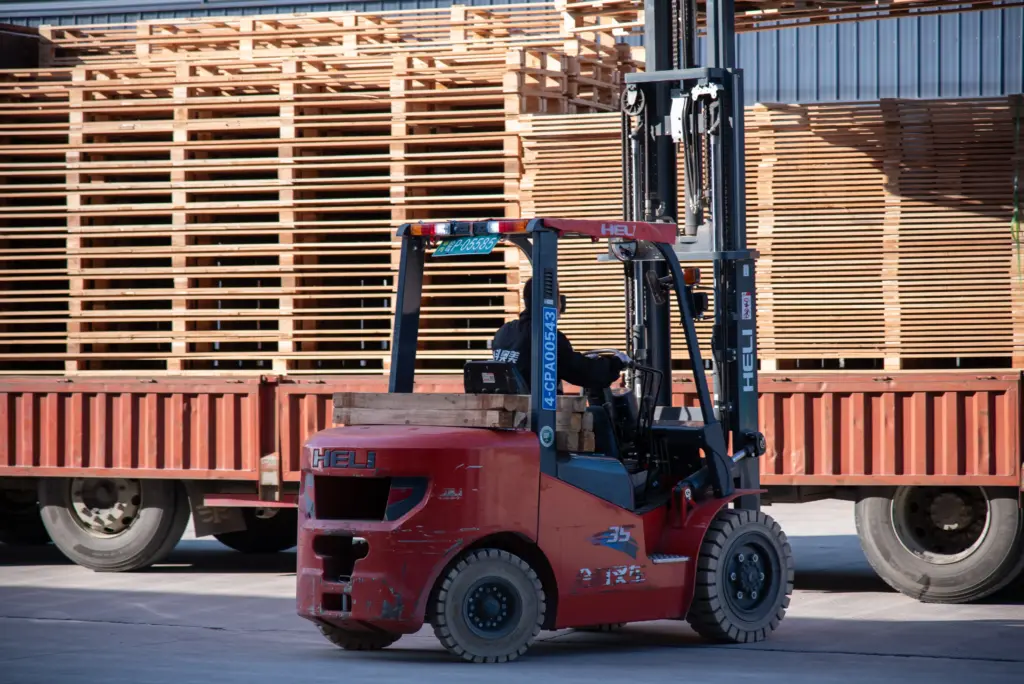
Outdoor Creation’s
fábrica de pérgolas de aluminio.
provides additional context on component preparation, surface finishing,
assembly, quality checks, packing and export loading.
How Should Buyers Handle Non-Conforming Products?
Finding a defect does not complete the quality-control process. The buyer and
manufacturer still need to define containment, correction, root-cause analysis,
verification and release.
Immediate containment identifies the affected products and prevents them from
being packed or shipped. Correction addresses the inspected defect through
repair, replacement, rework or another approved action. Root-cause analysis asks
why the defect occurred and whether the same cause may affect products that were
not included in the original sample.
After correction, the relevant characteristic should be reinspected. A
photograph showing one repaired item is not necessarily evidence that every
affected unit has been corrected.
| Control Step | Required Question | Expected Evidence |
|---|---|---|
| Containment | Which products, cartons or batches may be affected? | Segregation record and affected-quantity assessment |
| Correction | Will the product be repaired, replaced, reworked or rejected? | Approved correction plan and completion record |
| Root cause | Why did the defect occur and why was it not detected earlier? | Documented cause analysis |
| Corrective action | What process change will reduce recurrence? | Updated fixture, instruction, training, supplier control or process check |
| Reinspection | Has the corrected scope been inspected using an appropriate method? | Reinspection report with actual results |
| Release | Who approved shipment and were any deviations accepted? | Release decision and written deviation approval where applicable |
Repeated sorting without corrective action can remove visible defects from one
shipment while allowing the underlying process problem to continue into future
orders.
ISO 9001 Does Not Replace Product Inspection
ISO 9001
defines internationally agreed requirements for a quality-management system.
It addresses how an organization controls processes, responsibilities,
improvement and customer requirements.
An ISO 9001 certificate can provide useful information about the manufacturer’s
management system and audit scope. It does not prove that a specific pergola
batch has the correct dimensions, colour, motor, hardware, drainage or packaging.
Buyers should therefore review both:
- The manufacturer’s quality-management system and process controls
- The inspection and verification evidence for the actual product and order
The same distinction applies to product test reports and material certificates.
Each document should be checked for its issuing body, scope, product
configuration, test method, date and relationship to the ordered product.
Common Quality-Control Mistakes Made by Pergola Buyers
Practices that create avoidable inspection risk
- Inspecting against catalogue photographs instead of an approved specification
- Allowing drawings, BOMs and packaging files to use different revisions
- Checking only finished appearance and not profile dimensions or machining
- Approving colour from a computer screen without a physical reference sample
- Checking one motorized roof and assuming every control unit has been verified
- Using a generic water-spray video as proof of universal weather performance
- Treating a load value as applicable to every size and side enclosure
- Selecting an AQL plan without defining critical, major and minor defects
- Accepting an inspection report that contains only check marks and no actual results
- Inspecting products before the shipment is sufficiently complete and packed
- Ignoring hardware quantities, manuals, carton labels and installation sequencing
- Accepting repaired defects without reinspection
- Assuming an ISO 9001 certificate replaces batch-level product inspection
- Waiting until final inspection to detect problems that should have been controlled in production
Final Aluminum Pergola Quality Control Checklist
Before releasing an aluminum pergola order for shipment, B2B buyers should be
able to answer the following questions with documented evidence.
Is the order defined by a controlled product specification and revision?
Do the technical drawings, BOM and order configuration describe the same product?
Were profiles, components, fasteners and packaging materials verified before use?
Were relevant cross-sections, dimensions, wall sections and straightness checked?
Are cut lengths, holes, slots, drainage openings and machined edges correct?
Does the colour, texture, thickness and visual quality match the agreed standard?
Are motors, controls, seals, hardware and accessories the approved models?
Has the frame, roof or representative assembly been checked for fit and alignment?
Were manual or motorized roof functions checked against defined criteria?
Are louvers, gutters, openings, post channels and outlets correctly prepared?
Does production match the configuration supported by available technical evidence?
Were the lot, sample size, defect classes and acceptance rules defined in advance?
Does the report contain measurements, photographs and functional results?
Are surfaces protected, components restrained and cartons suitable for the route?
Do carton numbers, contents, accessories and packing-list quantities correspond?
Were defects contained, corrected and reinspected before shipment release?
Conclusion: Quality Control Should Follow the Product, Not Only the Final Carton
Effective aluminum pergola quality control is a sequence of connected controls.
It begins by defining the correct product and continues through materials,
machining, surface finishing, purchased components, assembly, roof operation,
drainage, packaging and shipment release.
No single inspection can replace every earlier control. Final random inspection
may identify visible and functional defects, but it cannot efficiently correct
systematic profile, machining or coating problems that have already been repeated
throughout the batch.
Buyers should therefore ask more than whether a pergola “passed QC.” They should
ask which revision was inspected, what was measured, how many units were sampled,
which acceptance criteria were used, what evidence was recorded and how
non-conforming products were controlled.
A useful quality-control system creates traceability between the buyer’s
requirements, the factory’s production documents and the actual shipment. This
reduces uncertainty for importers and distributors while giving the manufacturer
a clearer basis for repeat production and corrective improvement.
Review an Aluminum Pergola Product or Quality-Control Plan
Outdoor Creation supports B2B customers with aluminum pergola product
development, controlled production, surface finishing, assembly coordination,
quality inspection, packaging and export delivery.
The company’s product-development framework connects CAD drawings, exploded
views, BOM preparation, package design and loading design. Depending on the
product and development stage, verification may include component performance,
strength, durability and transport-packaging checks before mass production.
Explore the
aluminum pergola product collection
,
review the
pergola manufacturing facility
or
discuss a pergola order and inspection requirement
with the Outdoor Creation team.
Inspection requirements, tolerances, sampling plans, test methods, certificates
and acceptance criteria vary by product, order, destination market and contract.
This article provides a general B2B quality-control framework and does not replace
an approved product specification, inspection agreement, engineering review,
applicable product standard or local regulatory requirement.