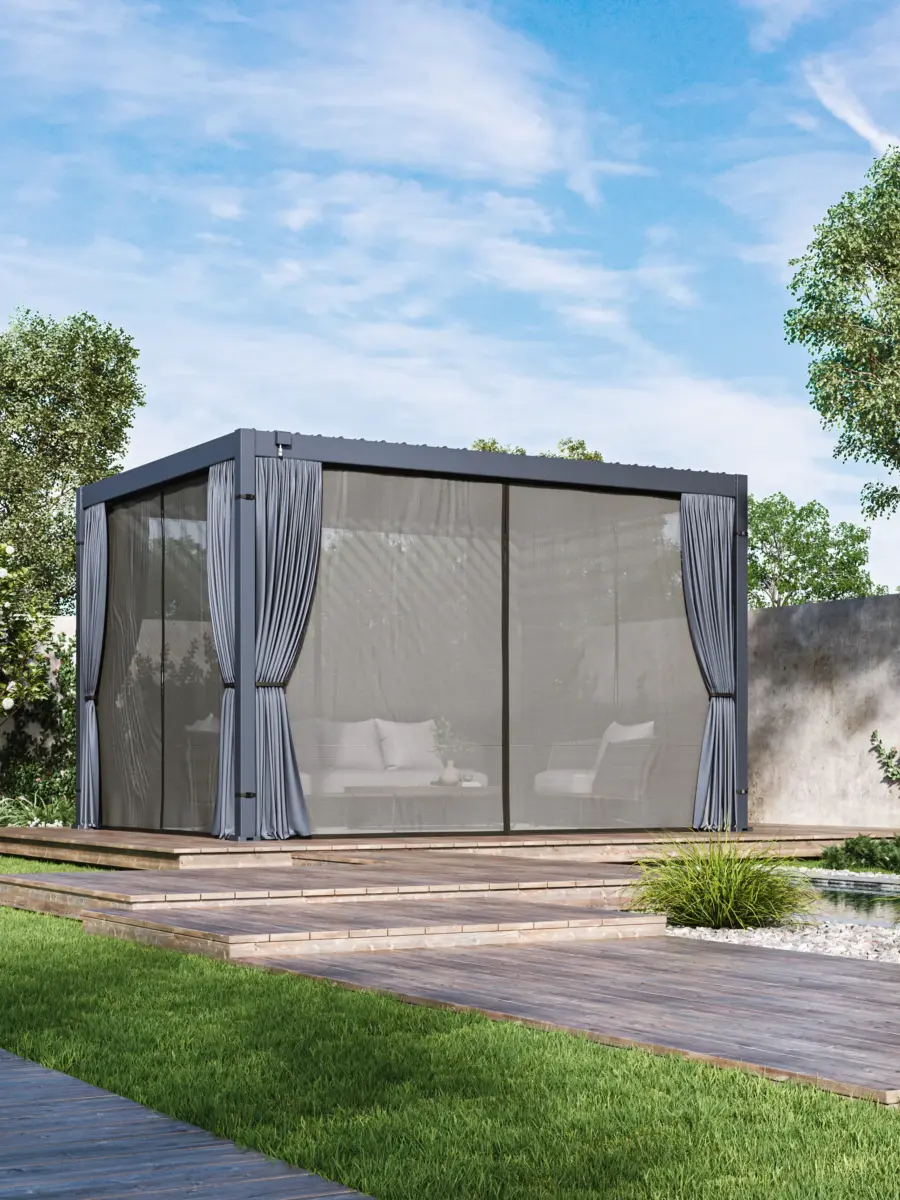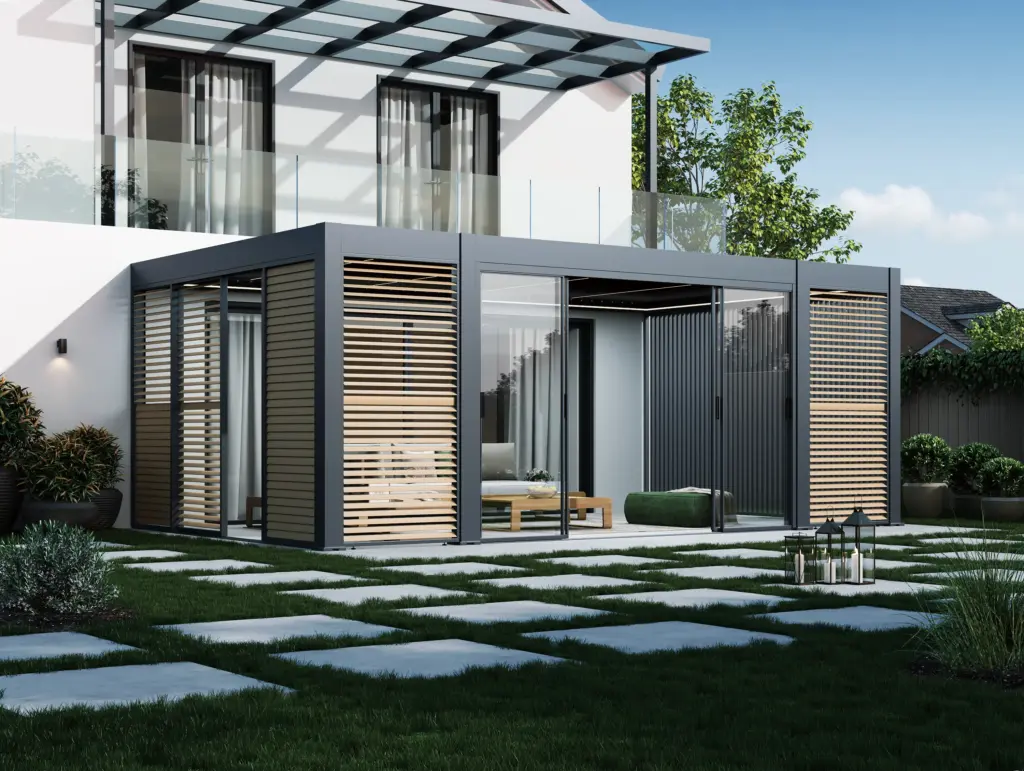
product photographs, profile dimensions and unit prices. For an importer,
distributor, contractor, outdoor living brand or commercial project company,
the quality of the supplier affects far more than the appearance of the finished
pergola. It can influence structural suitability, installation time, replacement
parts, documentation, shipment efficiency, warranty handling and the long-term
reputation of the buyer’s own business.A professional outdoor louvered pergola manufacturer should therefore be
evaluated as a complete product-development and supply partner. Buyers need to
understand what the company actually manufactures, how it controls quality, what
technical evidence it can provide, how accurately it defines product limitations,
and whether its systems can be adapted to the intended market and project.This guide presents a practical framework for evaluating a louvered pergola
supplier without relying on vague claims such as “premium quality,” “heavy duty”
or “all-weather.” It is intended for professional B2B buyers sourcing
aluminum louvered pergola systems
for residential distribution, hospitality projects, commercial outdoor spaces
or customized product programs.
areas: product engineering, structural and weather-performance information,
materials and surface finishing, manufacturing control, documentation,
customization, logistics and installation support, and after-sales service.
Buyers should compare the evidence behind each claim rather than selecting a
pergola supplier on price or presentation alone.
Why Manufacturer Evaluation Matters Before Comparing Prices
Pergola quotations often appear comparable because they use similar product
descriptions: aluminum frame, adjustable louvers, powder coating, drainage,
remote control and optional screens. However, two systems with the same headline
features may differ substantially in structural layout, profile geometry,
material thickness, connection design, coating preparation, motor configuration,
packaging and installation documentation.
A low quotation may represent a well-engineered, efficiently manufactured product.
It may also exclude important items, use a lighter configuration, assume a smaller
loading requirement, include less protective packaging or provide limited
technical support. The price itself does not reveal which explanation is correct.
The first task is therefore not to decide whether one quotation is expensive or
inexpensive. It is to determine whether each supplier is quoting the same scope,
performance level and support package. Only after that comparison can the buyer
make a meaningful commercial decision.
Manufacturer, Supplier or Trading Company: Understand the Business Model
The terms pergola manufacturer y pergola supplier are often
used interchangeably, but they do not always describe the same role.
A manufacturer normally participates directly in product engineering,
manufacturing processes, assembly control, testing, packaging and product
iteration. A supplier may perform some or all of these functions, but it may also
source finished systems from another factory. A trading company can still be a
competent commercial partner, especially when it provides strong quality control,
technical communication and logistics coordination. The problem is not the
business model itself; the problem is an unclear or misrepresented business model.
Buyers should ask which legal entity signs the contract, which facility produces
the outdoor shade structure, which company owns the technical drawings, who performs final
inspection and who is responsible for warranty claims. A professional supplier
should be able to explain these relationships without ambiguity.
| Business Function | Evidence to Request | Why It Matters |
|---|---|---|
| Product engineering | Technical drawings, profile sections, component lists and revision records | Shows whether the supplier understands and controls the system being offered |
| Manufacturing | Facility information, process flow, production equipment and in-process records | Clarifies where and how the product is manufactured |
| Quality control | Inspection criteria, test reports, batch records and non-conformance procedures | Indicates whether quality is managed systematically rather than visually |
| Export coordination | Packing lists, loading plans, lead-time process and shipping documentation | Reduces delays, missing components and avoidable freight problems |
| After-sales responsibility | Written warranty terms, spare-parts process and claim-response workflow | Defines what happens after the goods leave the factory |
Outdoor Creation publishes information about its own
fábrica de pérgolas de aluminio.
,
but the same verification principle should be applied to any prospective
louvered pergola manufacturer.
An Eight-Factor Framework for Evaluating a Louvered Pergola Manufacturer
A supplier assessment becomes more useful when it is organized around measurable
criteria. The following framework separates product appearance from the underlying
capabilities that determine whether a system can be supplied consistently.
| Evaluation Area | What the Buyer Should Establish | Typical Evidence |
|---|---|---|
| 1. Product engineering | Whether the system has defined dimensions, configurations and operating limits | Drawings, profile sections, BOMs, connection details and configuration tables |
| 2. Structural and weather suitability | Whether project conditions have been considered rather than assumed | Load information, drainage details, anchoring requirements and test references |
| 3. Materials and finish | What materials and coating processes are actually included | Alloy specifications, coating specification, pretreatment information and samples |
| 4. Manufacturing control | How consistency is maintained from incoming material to final packing | Inspection plans, process controls, batch records and final inspection reports |
| 5. Documentation | Whether claims, certificates and manuals correspond to the quoted product | Certificates, reports, manuals, drawings, declarations and revision numbers |
| 6. Customization capability | Whether changes are engineered and controlled rather than improvised | Design review, samples, approval drawings, prototypes and change records |
| 7. Logistics and installation support | Whether the product can arrive complete and be installed efficiently | Packing diagrams, labels, loading plans, installation manuals and technical support |
| 8. Warranty and after-sales | How defects, replacement parts and technical problems are handled | Written warranty scope, spare-parts policy, claim process and response responsibility |
1. Start with Product Engineering, Not the Product Rendering
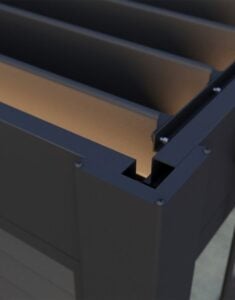
High-quality renderings are useful for design communication, but they are not
evidence of engineering capability. A qualified aluminum louvered pergola
manufacturer should be able to translate a visual concept into a controlled
system of profiles, connections, roof zones, drainage paths, motors, fasteners
and accessories.
Buyers should review more than the overall outside dimensions. Important
questions include the maximum pivot direction, maximum span, allowable height,
number of roof zones, post layout, beam configuration, louver orientation,
drainage direction and compatibility with wall-mounted or freestanding
installations.
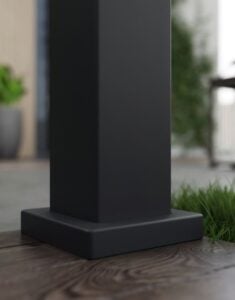
Profile dimensions should also be interpreted in context. A larger beam is not
automatically better if its geometry, wall thickness, alloy, connection method
and supported span are unknown. Similarly, a thick-looking louver does not by
itself establish roof performance. Product evaluation should consider the whole
load path from the roof blades through the beams, posts, brackets, anchors and
supporting foundation.
A mature outdoor pergola product range normally includes clear distinctions between
manual, motorized, standard, reinforced and project-oriented configurations.
However, a large number of models is not proof of engineering strength. The
manufacturer should be able to explain why the models differ and where each
system should or should not be used.
2. Match Structural and Weather Claims to the Project Location
Statements such as “wind resistant,” “snow resistant” or “waterproof” are
incomplete unless the supplier identifies the tested or calculated
configuration, dimensions, installation conditions and applicable standard.
Weather performance is produced by the complete system. Roof-zone size, louver
position, beam and post configuration, drainage capacity, installation tolerance,
anchoring, surrounding buildings and exposure all affect performance. Adding
screens, glass panels or fixed walls may improve comfort, but it can also change
wind pressure and structural behavior.
Buyers should provide the project location, required dimensions, installation
method, intended use and known local loading requirements before asking a
manufacturer to recommend a configuration. For European projects, the
European Commission’s Eurocodes resource
explains the common structural-design framework used for buildings and civil
engineering works. Other markets use different codes, local amendments and
approval processes.
A supplier’s general test report should not be treated as automatic approval for
every project. A wider module, taller post, different anchor, wall-mounted
connection or more exposed site can require a separate review. Local building
authorities, structural engineers and qualified installers remain responsible
for determining the requirements that apply to the actual site.
More detailed planning considerations are covered in Outdoor Creation’s
pergola weather-performance and regional-use guide
.
3. Verify Aluminum, Fasteners and Surface-Finish Specifications
“Made of aluminum” is not a complete material specification. Buyers should
identify the alloy and temper where relevant, the wall thickness of important
profiles, the material used for roof louvers, the fastener specification and any
steel components concealed inside the system.
This is particularly important when comparing an all-aluminum pergola with a
hybrid structure using aluminum beams and posts with steel roof components.
These products can serve different market positions and price levels, but the
material composition needs to be stated accurately. Buyers needing a more
detailed material comparison can refer to the existing guide on
steel pergolas versus aluminum pergolas
.
Surface finishing should also be discussed as a process rather than a color.
Powder type, pretreatment, coating application, curing control, coating thickness,
adhesion, color consistency and environmental exposure all influence the finished
result. Coastal, high-UV, humid or chemically exposed locations may need different
specifications from a sheltered inland patio.
Buyers can use recognized industry resources to structure these discussions.
For example,
QUALICOAT specifications
are designed around the quality of coated aluminum products used in architectural
applications. Referencing an external coating standard does not mean every
pergola or coating line is automatically certified to that standard. The buyer
should verify the exact specification, licence, applicator and scope being claimed.
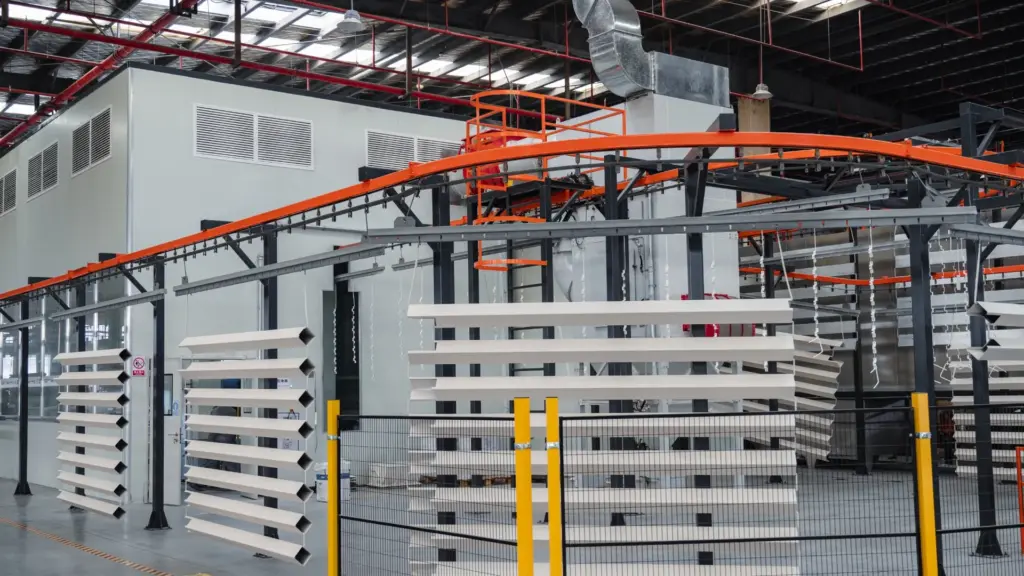
4. Examine the Manufacturing and Quality-Control Process
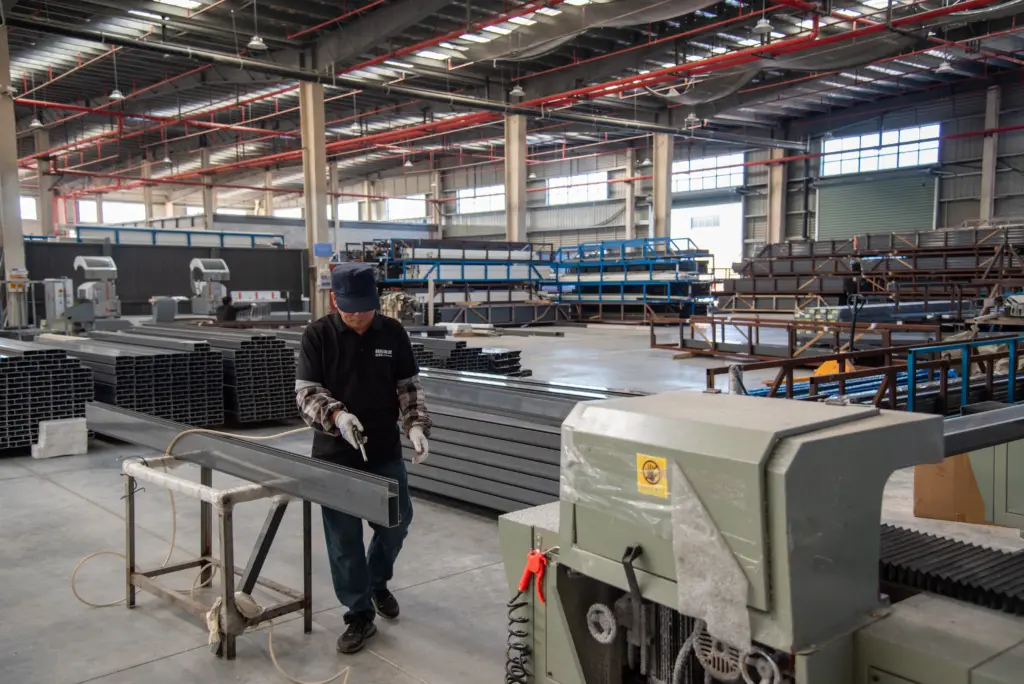
A factory visit can be very useful, but walking through a production building is not
the same as auditing a process. The objective is to understand how requirements
move from an approved drawing to material preparation, machining, surface
finishing, assembly, inspection, packing and shipment.
A capable aluminum pergola manufacturer should be able to explain its controls at
several stages:
- Verification of incoming aluminum profiles, components and purchased accessories
- Control of cutting, drilling, machining and component identification
- Surface preparation, coating and finish inspection
- Assembly or pre-assembly checks for roof movement and component fit
- Inspection of drainage components, seals, motors, controls and lighting where applicable
- Final quantity checks before packing
- Packaging inspection, carton identification and loading confirmation
- Recording and correction of non-conforming parts
The relevant controls will vary by product. A manual louvered pergola does not
require the same electrical checks as a motorized system. A standard residential
kit may require a different documentation package from a customized hospitality
project. Quality control should therefore follow the approved product
specification rather than rely on one generic checklist for every order.
Management-system certification can support process discipline, but it should be
interpreted correctly. The official
ISO 9001
page describes a framework for establishing, maintaining and continually
improving a quality-management system. It does not, by itself, certify the
structural performance of an individual pergola model.
5. Review Certifications and Test Reports by Scope, Not by Logo
Certification is one of the most misunderstood areas of supplier evaluation.
Buyers are often shown a page of logos without sufficient information about the
certified entity, product, model, standard, issue date or testing configuration.
Each document should be checked against five questions:
- Which legal company or manufacturing facility is named?
- Is it a management-system certificate, product certificate or laboratory test report?
- Which product, component, model or process is included in the scope?
- Which version of the standard was applied, and is the document still valid?
- Does the tested configuration match the product and dimensions being quoted?
ISO itself explains that certification is written assurance provided by an
independent body and that ISO develops standards rather than directly certifying
companies. Buyers can review the distinction on the
official ISO certification page
.
A credible supplier should not object when a customer asks to verify a certificate
or clarify its scope. It should also avoid presenting a management-system
certificate as proof that every product has passed a specific wind, snow or
water-performance test.
6. Evaluate Customization and OEM Support as a Controlled Process
Customization is valuable only when it is managed. Changing the size, number of
roof zones, post location, color, louver direction, motor, lighting, screen or
packaging can affect other parts of the system. A reliable custom louvered pergola
manufacturer should identify these dependencies before confirming production.
For example, adding a motorized wind screen may affect power routing, beam
preparation, control-system planning and installation sequencing. Adding glass
doors or fixed side panels may change the project’s wind behavior and foundation
requirements. Increasing the span may require more than simply cutting longer
profiles.
The manufacturer’s OEM or ODM workflow should include a defined requirement,
technical review, approval drawing, sample or prototype where appropriate,
quotation confirmation and controlled release to production. Changes made after
approval should be documented, especially when they affect structural components,
electrical routing or packaging.
Product-range depth can help indicate whether a supplier understands different
use cases. A complete program may include manual and motorized pergolas,
freestanding and wall-mounted structures, reinforced configurations and
compatible
pergola screens, panels, lighting and accessories
.
Nevertheless, buyers should select a system based on project requirements rather
than assuming that the highest-priced or most heavily equipped model is always
the correct choice.
7. Compare Quotations by Scope and Total Project Cost
The lowest unit price does not necessarily produce the lowest installed cost.
Quotations should be normalized before comparison so that differences in
specification and service are visible.
| Quotation Item | Details to Confirm | Potential Hidden Cost |
|---|---|---|
| Structural system | Profiles, materials, module size, post count, wall-mounted or freestanding layout | Additional posts, reinforcements or redesign after order confirmation |
| Roof and operation | Manual or motorized system, number of roof zones, motor and control specification | Separate motors, controls, transformers or electrical preparation |
| Surface finish | Color, powder type, pretreatment, coating specification and sample approval | Color surcharge, premium coating or rework caused by unclear approval |
| Accesorios | Screens, panels, glass, lighting, heaters, fans, sensors and control integration | Missing mounting parts, separate wiring or incompatible accessories |
| Documentation | Drawings, manuals, packing lists, technical files and test information | Local engineering, translation, drawing preparation or installer delays |
| Packaging | Carton structure, protective materials, palletization, labels and spare-parts packing | Transit damage, sorting time, missing parts and replacement freight |
| Commercial terms | Incoterm, payment, lead time, validity, inspection and claim procedure | Unplanned local charges, production delay or disputed responsibility |
Buyers should also distinguish product price from project price. Foundation work,
unloading, local transportation, electrical installation, permits, structural
review and installer labor may sit outside the manufacturer’s quotation. A
responsible supplier should state these exclusions rather than allowing the buyer
to assume they are included.
8. Assess Packaging, Shipping and Installation Support
An export pergola is not finished when it leaves the assembly area. It still needs
to survive handling, container loading, ocean or road transport, unloading,
warehouse storage and movement to the installation site.
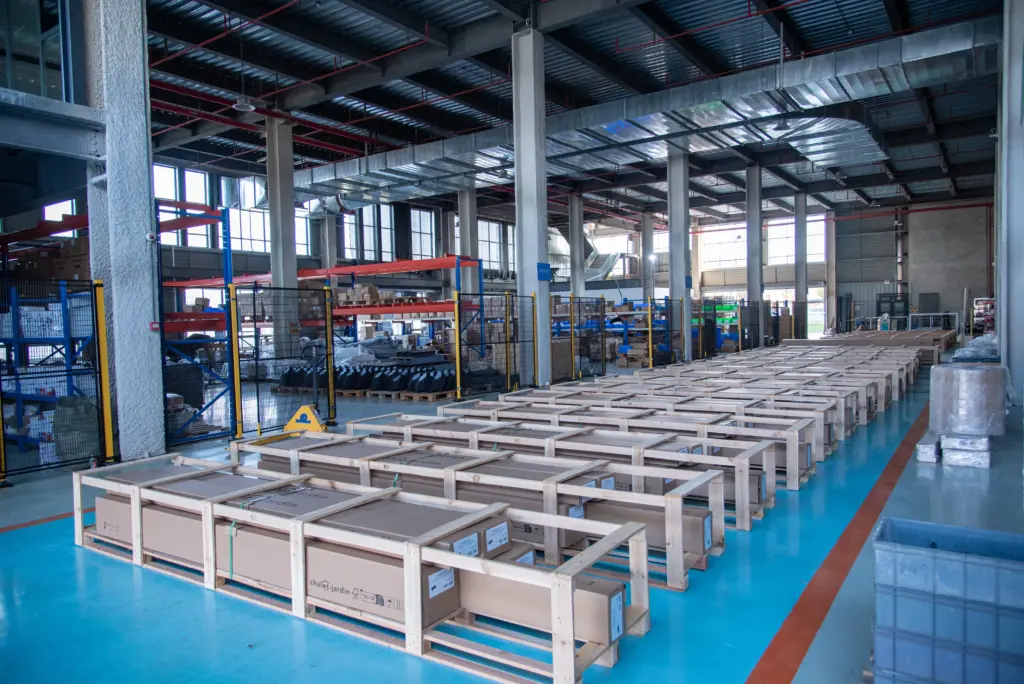
Packaging should protect long aluminum profiles, powder-coated metal surfaces, motors,
seals, fasteners and fragile accessories while remaining practical for sorting
and installation. Buyers should ask how cartons are numbered, how parts are
matched to modules, how installation hardware is separated and how replacement
parts can be identified later.
Container efficiency also matters, but maximum loading density should not come at
the expense of protection. A supplier that can explain loading design, carton
dimensions, pallet strategy and unloading requirements is usually easier to plan
with than one that provides only a total cubic-meter estimate.
Installation documentation should include more than a general assembly diagram.
Depending on the project, useful information may include foundation or anchoring
guidance, frame assembly sequence, roof-louver installation, drainage routing,
electrical preparation, motor commissioning, screen installation and final
operating checks.
Site conditions must still be assessed locally. Concrete, decking, rooftops,
existing patios and exterior walls each require separate review. Outdoor Creation’s
installation, site-requirement and permit guidance
summarizes the project information that should be checked before installation.
9. Check Warranty, Spare Parts and After-Sales Responsibility
A warranty statement is useful only when its scope and process are clear. Buyers
should confirm the warranty period for structural components, coating, motors,
controls, lighting and other accessories separately. These components may have
different suppliers, service lives and claim conditions.
The agreement should explain what evidence is required for a claim, whether
replacement parts or financial compensation are available, who pays freight,
which installation conditions can invalidate coverage and how discontinued
components will be handled.
Spare-parts planning is particularly important for distributors and project
companies. A missing fastener can delay installation; a damaged motor or control
component can create a customer-service issue years after the original shipment.
Buyers should establish part numbering, recommended spare quantities and
replacement lead times before the first large order.
The strongest after-sales process is not the one that promises that problems will
never occur. It is the one that defines how problems are recorded, investigated,
corrected and prevented from recurring.
Evaluating a Pergola Manufacturer in China or Another Supply Market
Country of origin can affect freight, lead time, communication, import procedures
and commercial risk, but it should not replace supplier-level due diligence.
Buyers sourcing from China, Europe, North America or another manufacturing region
should apply the same core evaluation principles.
When working with a louvered pergola manufacturer in China, additional attention
may be given to export experience, English-language documentation, container
loading, replacement-part logistics, production lead time, time-zone
communication and the relationship between the sales entity and manufacturing
facility.
The importing country remains equally important. Local wind and snow requirements,
electrical rules, product classifications, building permits, customs procedures
and installer responsibilities can differ significantly. The manufacturer should
support the buyer with available product information, but it should not claim to
replace the local architect, engineer, customs adviser, electrician or approval
authority.
Buyers serving a specific country should create a separate compliance checklist.
For example, the existing
aluminum pergola sourcing guide for Canada
addresses Canadian project location, wind, snow, permits and import planning.
European buyers may also need to consider carbon-reporting requirements; those
issues are discussed separately in the guide to
CBAM and aluminum pergolas
.
Due-Diligence Questions to Use During Supplier Screening
The following questions can be used in an initial supplier meeting, factory audit
or request-for-quotation process. They are intended to reveal how clearly the
manufacturer understands its own product and responsibilities.
- Which parts of the pergola are manufactured in-house, and which are purchased?
This helps identify critical subcontracted components and responsibility for quality. - Which company owns and controls the product drawings?
The answer matters when dimensions, accessories or project configurations need to change. - What are the defined maximum dimensions and configuration limits?
Reliable limits are more useful than a supplier agreeing to every requested size. - What structural or weather-performance evidence is available?
Ask for the tested or calculated model, size, installation condition and applicable standard. - How are aluminum, coating and purchased components inspected?
Confirm whether incoming materials are checked against defined requirements. - What inspections are performed before packing?
The answer should reflect the actual manual, motorized or accessory configuration. - How are customized orders reviewed and approved?
Look for controlled drawings, samples, sign-off and revision management. - What exactly is included and excluded from the quotation?
Confirm packaging, controls, accessories, documents, spare parts and commercial terms. - What installation documentation and technical support are provided?
Consider the needs of local installers who may not have worked with the system before. - How are warranty claims and replacement parts handled?
Request a written process rather than relying on a general promise.
Warning Signs When Evaluating a Pergola Supplier
Common supplier red flags
- The supplier provides attractive renderings but cannot provide consistent technical drawings.
- Dimensions or material specifications change between the catalogue, quotation and manual.
- Every requested size is approved immediately without engineering review.
- Wind, snow or waterproof claims are made without identifying a configuration or test basis.
- Certificates are presented without the named company, scope, model or validity information.
- The quotation does not clearly identify included motors, controls, accessories or packaging.
- The supplier cannot explain whether it is the manufacturer, exporter or intermediary.
- Installation manuals are generic and do not match the quoted product.
- No clear process exists for spare parts, complaints or corrective action.
- The supplier relies mainly on price pressure rather than explaining product differences.
One warning sign does not automatically disqualify a supplier. A new product may
still be finalizing documentation, and a smaller manufacturer may have strong
engineering capability without a highly polished presentation. The buyer should
assess whether gaps are acknowledged and corrected transparently.
Use an Evidence-Based Supplier Scorecard
A simple scoring method can prevent the final decision from being dominated by
price, presentation or one strong sales meeting. Each category can be scored from
one to five and weighted according to the buyer’s business model.
| Category | Suggested Weight | Score 1 | Score 3 | Score 5 |
|---|---|---|---|---|
| Engineering and product definition | 20% | Mostly marketing information | Basic drawings and defined models | Controlled technical package and clear limits |
| Structural and weather information | 15% | Generic claims | Some test or calculation evidence | Configuration-specific evidence and clear limitations |
| Manufacturing and quality control | 20% | Unclear process | Documented main inspections | Traceable controls from material to shipment |
| Documentation and compliance support | 10% | Incomplete or inconsistent documents | Usable standard documentation | Verified, current and project-relevant documentation |
| Customization and product development | 10% | Uncontrolled changes | Drawing approval for common changes | Formal review, sample and revision process |
| Packaging, logistics and installation | 10% | Minimal planning | Standard export packing and manual | Detailed labelling, loading and installation support |
| Commercial clarity | 5% | Unclear scope and exclusions | Generally complete quotation | Fully normalized specification and commercial terms |
| Warranty and after-sales support | 10% | Verbal assurance only | Written standard warranty | Clear claims, parts and corrective-action process |
The weighting should reflect the project. A DTC retailer may assign more weight to
packaging, installation simplicity and replacement parts. A landscape contractor
may prioritize technical drawings and site support. A hospitality or commercial
project company may give greater weight to structural review, documentation and
customization.
Final Assessment: Choose the Supplier That Reduces Uncertainty
The best louvered pergola manufacturer is not necessarily the largest factory,
the lowest-priced supplier or the company with the longest product catalogue. It
is the supplier whose product, scope, limitations and responsibilities can be
understood before the order is placed.
A strong manufacturer should be able to explain why one system is suitable for a
project and why another is not. It should provide evidence proportionate to the
claim, distinguish product certification from management-system certification,
and identify where local engineering or approval is still required.
For buyers, the purpose of due diligence is not to eliminate every risk. No
manufacturer can control the installation site, local contractor, weather,
freight handling and regulatory environment at the same time. The objective is to
identify risks early, assign responsibility clearly and select a supply partner
capable of resolving problems systematically.
Review the Product Range and Manufacturing Information
Buyers preparing a distributor program, customized product range or project
quotation can review Outdoor Creation’s
manual and motorized aluminum pergola collection
together with its
pergola manufacturing and project-support capabilities
Before requesting a quotation, prepare the project location, overall dimensions,
preferred installation method, required quantity, roof-control type, color,
accessories and available site drawings. The
pergola and B2B cooperation FAQ center
provides additional guidance on product selection, customization, installation,
shipping and warranty planning.
Technical standards, certification requirements and building approvals vary by
product, jurisdiction, project configuration and date. External references in
this article are provided for general procurement research. Buyers should verify
the current applicable standards and obtain advice from qualified local
professionals before design approval or installation.