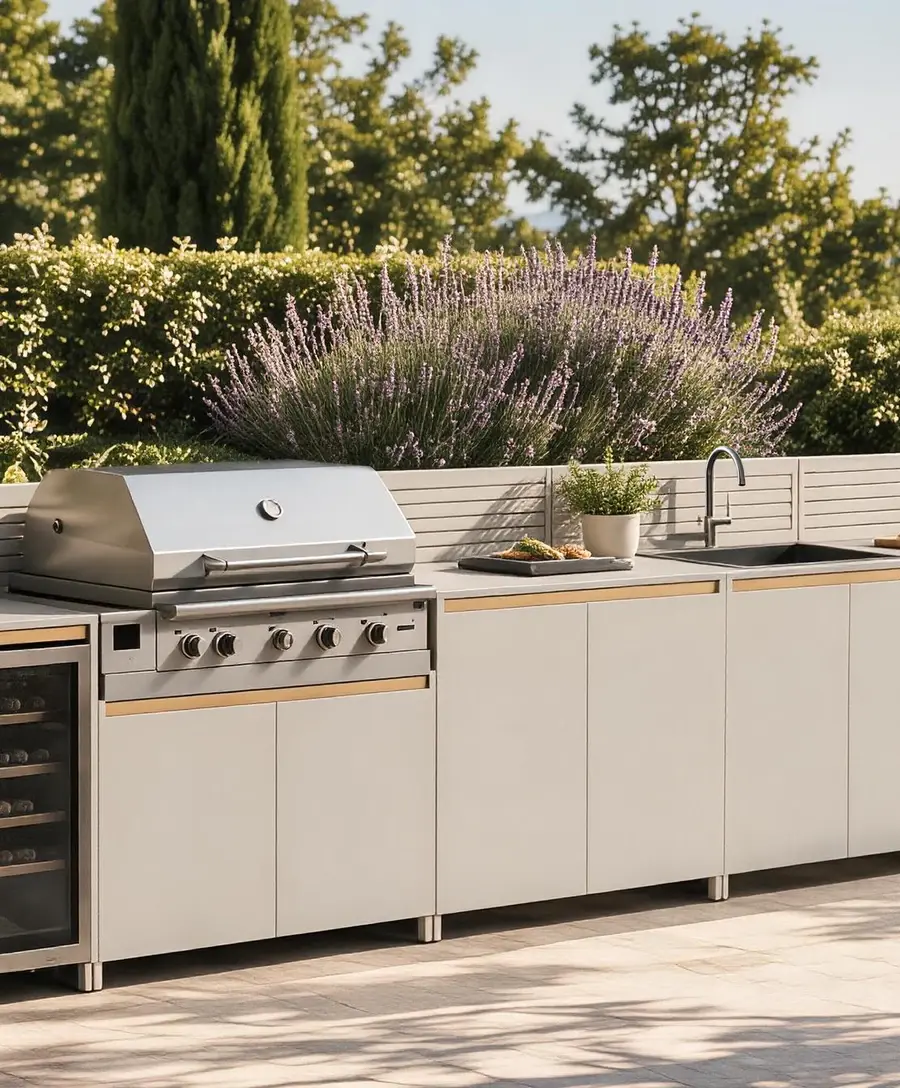
Read outdoor kitchen cabinet drawings by part number and revision. Match the worktop, cabinet body, door panel and hardware to their own material callouts before checking the delivery. An ambiguous note can leave the grade or finish open, so record the exact component and ask for the approved specification. If the delivered part differs, hold the affected items for review and document the disposition before release.
Locate Each Material Callout on the Approved Drawing
Match the View, Part Number and Revision
Start with the drawing and revision cited on the purchase order or approved submittal. Match the module position in the assembly view to the part identified by the leader line. Use the corresponding row in the material schedule, which may be part of a bill of materials or a separately approved document. Ask the document owner to confirm the governing record when the drawing and schedule show different revisions.
This follows the identification and change control principles in ISO 10007 configuration management guidance. Record the exact part reference, the approval that governs it and any change that applies to that delivery. A shared part number may appear at more than one cabinet position. Note the position as well as the code whenever it matters for locating the affected item.
When the drawing has a general material note, look for any local callout and detail reference that apply to the part. A door section may identify a front panel and a separate edge finish, while an assembly view may identify the module alone. Record the sheet and detail reference so the reviewer can find the same location.
- 1Grill cabinet. Worktop opening and the front below it.
- 2Preparation and storage cabinet. Continuous work surface with the cabinet body below.
- 3Sink cabinet. Sink, faucet and the adjacent cabinet front.
Position references for the straight run shown. Check the approved order for the selected equipment and materials.
Designed and created by the Outdoor Creation team.
Find the Worktop, Body, Front and Hardware
Follow the leader to the part it touches. A note on a worktop belongs to the surface above the cabinet. A note on a door may describe the complete door panel or one facing. Use the section view or material schedule to confirm which. Give the pull, hinge or other separately specified hardware its own reference. Keep visible descriptions such as brushed or matte in the finish field.
- WWorktop. Material designation and thickness basis.
- BCabinet body. Base sheet and coating where specified.
- FFront. Panel build, total thickness and finish.
- HHardware. Separate part reference and required finish.
Illustrative callout keys. Use the part references on the approved project drawing.
Designed and created by the Outdoor Creation team.
On METRO, the worktop, dark cabinet fronts and long pulls are visible in the scene and the handle detail. Use the shapes to locate each part before comparing its fields. The related guide to outdoor kitchen cabinet materials by component helps when setting requirements for modular outdoor kitchen systems and cabinet options. Keep the part reference beside each requirement for use at receiving.
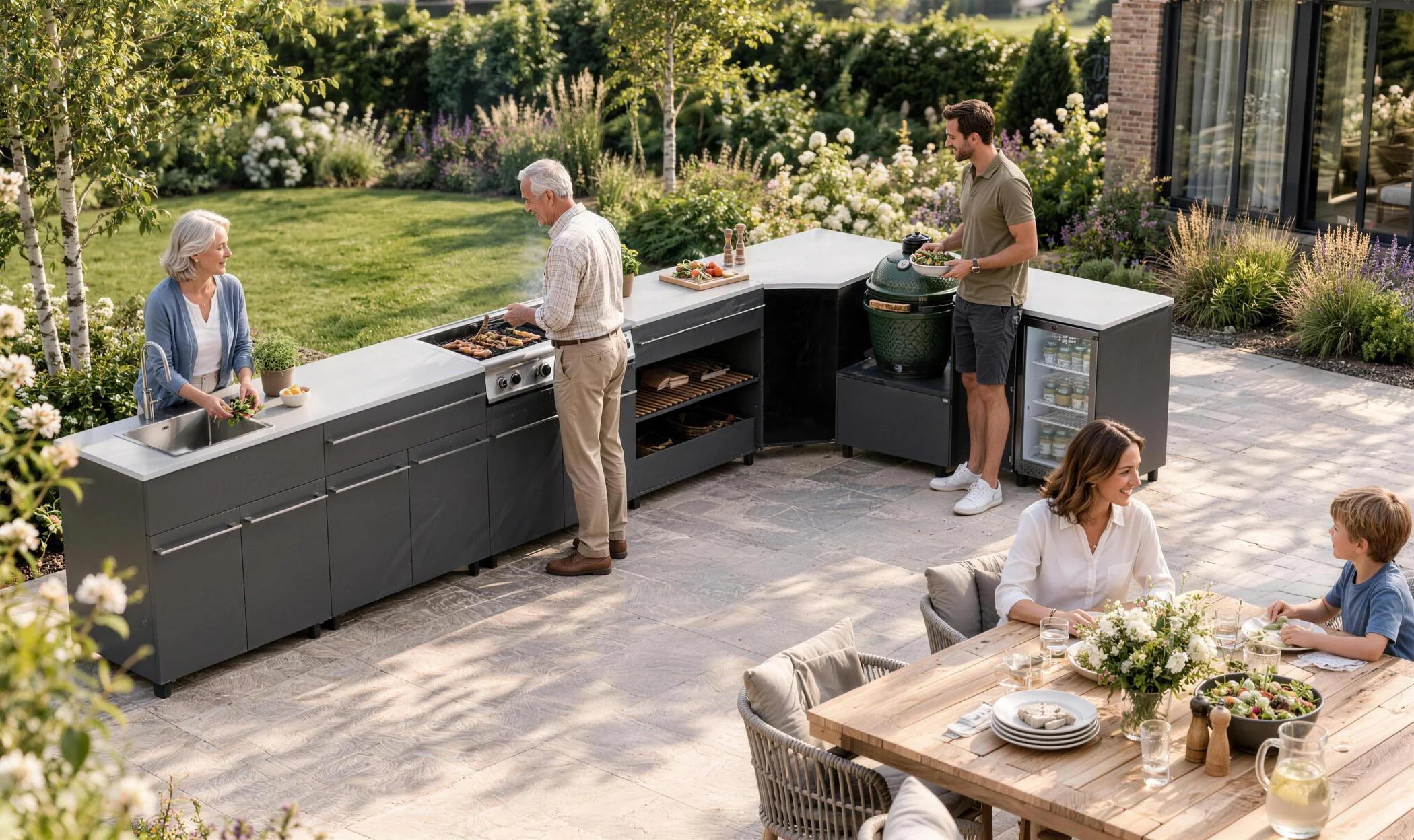 METRO outdoor kitchen with dark cabinet fronts and a stainless steel worktop in a garden
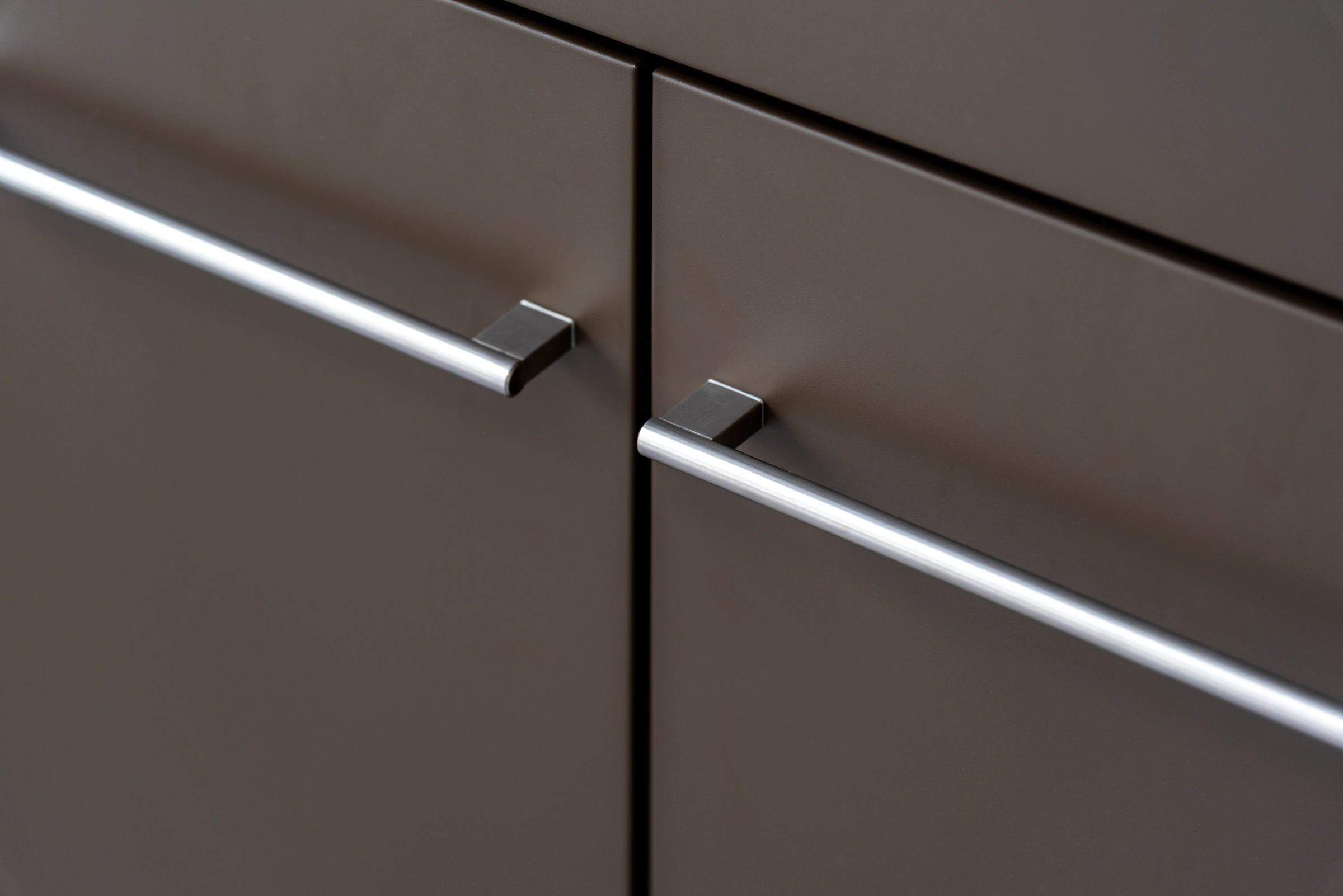 METRO long pull on the cabinet front
Read Material, Thickness and Finish by Component
Compare the METRO Worktop and Cabinet Fields
The METRO outdoor kitchen with a 304 stainless steel worktop lists a 0.8 mm 304 stainless steel worktop and 0.7 mm galvanized steel cabinet material. On a project schedule, place these values under their own part references. Check whether the specified thickness describes base metal or the finished sheet when that detail affects the order. A sink assembly and a lid can each carry a separate material or finish requirement.
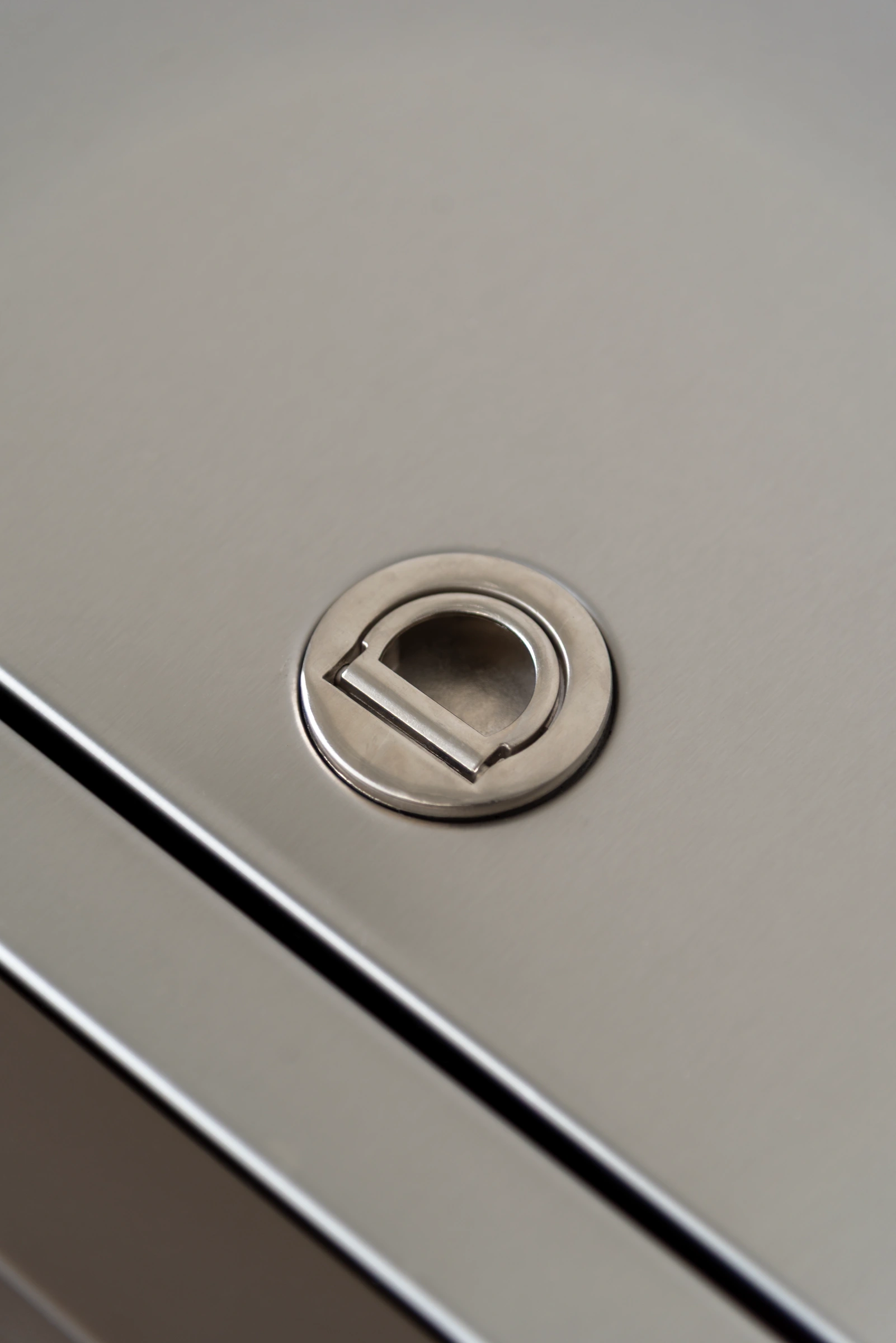 METRO lid and recessed pull on the stainless steel worktop
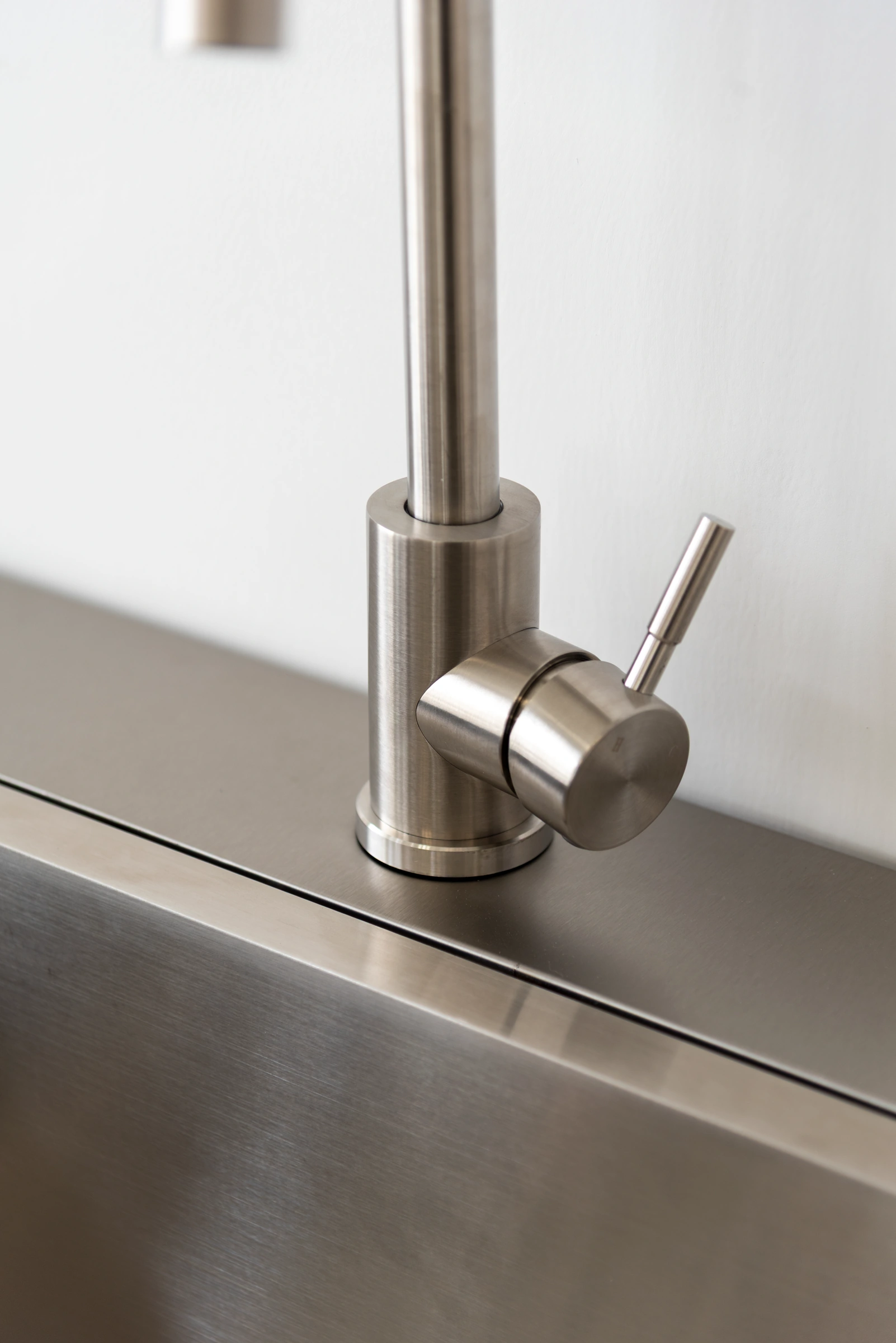 METRO sink rim and faucet detail
If a purchase specification cites a material standard, record the designation and edition with the part. ASTM A240/A240M addresses stainless steel in flat product forms. ASTM A653/A653M addresses hot-dip zinc-coated or zinc-iron alloy-coated steel sheet. These scopes help buyers read the material field. Apply the grade, coating designation and acceptance method specified for the particular order.
A broad description such as stainless steel outdoor kitchen cabinets can apply to several different parts in a schedule. Identify the lines carrying the requirement. For metal outdoor kitchen cabinets with a specified coating, record the sheet thickness basis and coating designation as separate fields. This gives the receiver a way to compare the approved requirement with the submitted material record.
Read the Total ELITE Composite Thickness
The ELITE outdoor kitchen with composite cabinets and a sintered stone worktop lists a 12 mm stone worktop and an 18 mm cabinet material made with two stainless steel faces and an aluminum honeycomb core. Read 18 mm across the composite panel. Where the order controls the facing thickness, alloy or edge construction, ask for a separate value and part reference. Give a wood trim or pull its own record when specified.
If an overall panel dimension is the acceptance field, use the project drawing to locate its measurement points. Keep a measured assembly thickness under the panel entry. A facing thickness can be entered against the facing only when the approved documents and evidence support it.
METRO
The 0.8 mm and 0.7 mm values apply to different parts.
Designed and created by the Outdoor Creation team.
ELITE
The 18 mm bracket spans both stainless steel faces and the aluminum honeycomb core.
Designed and created by the Outdoor Creation team.
Schematic, not to scale. Published thicknesses are shown for the named materials. Verify additional layer and finish details on the approved part specification.
Designed and created by the Outdoor Creation team.
Use the same method on series references for the AXIS galvanized steel outdoor kitchen, the NOVA compact galvanized steel outdoor kitchen and URBAN aluminum outdoor kitchen cabinets. Ask an outdoor kitchen manufacturer for buyers reviewing cabinet specifications to confirm the fields attached to each chosen part before the order. Finish names, colors and metal family descriptions each answer a different procurement question.
Check Received Parts Against the Approved Schedule
Record the Delivered Part and Its Evidence
At receiving, start with the affected order line. Capture the delivery reference, the carton or lot identifier and a photograph of the part in context. Attach the readable marking or tag that ties the observation to that item. Ask which material or inspection document corresponds to the same part or lot. Return a document covering the wrong delivery reference to the supplier for clarification.
A cabinet label locates an item. A photo gives a record of visible finish and the position of a fitting. The evidence agreed for material grade or layer construction may come from linked supplier records or inspection results. Use the contract inspection plan for the measurement method, sampling and tolerances. Where composite construction is controlled, record the approved thickness basis alongside the measurement.
 ELITE outdoor kitchen with stone worktops and wood trim by a pool
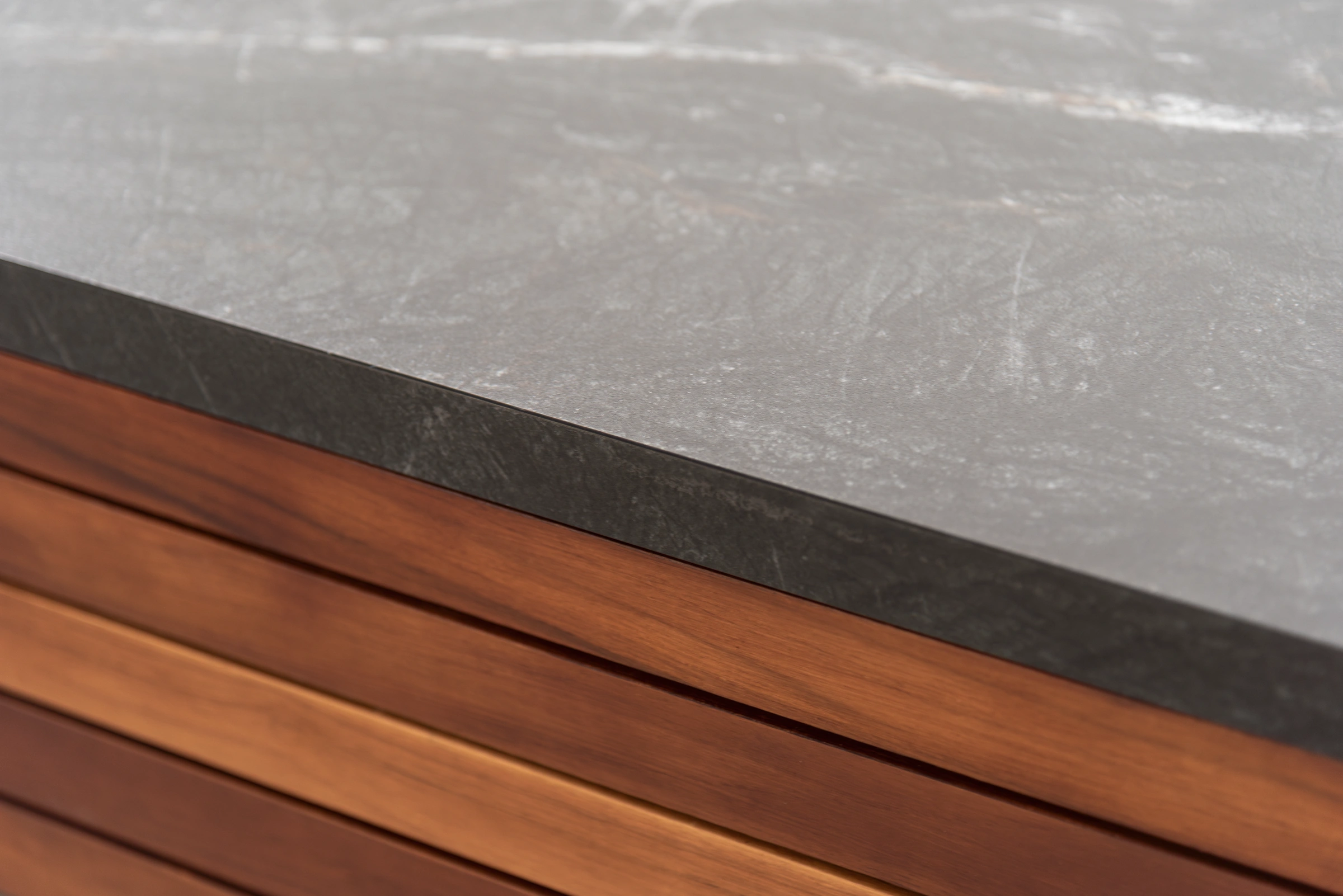 ELITE stone worktop edge and wood trim above the cabinet front
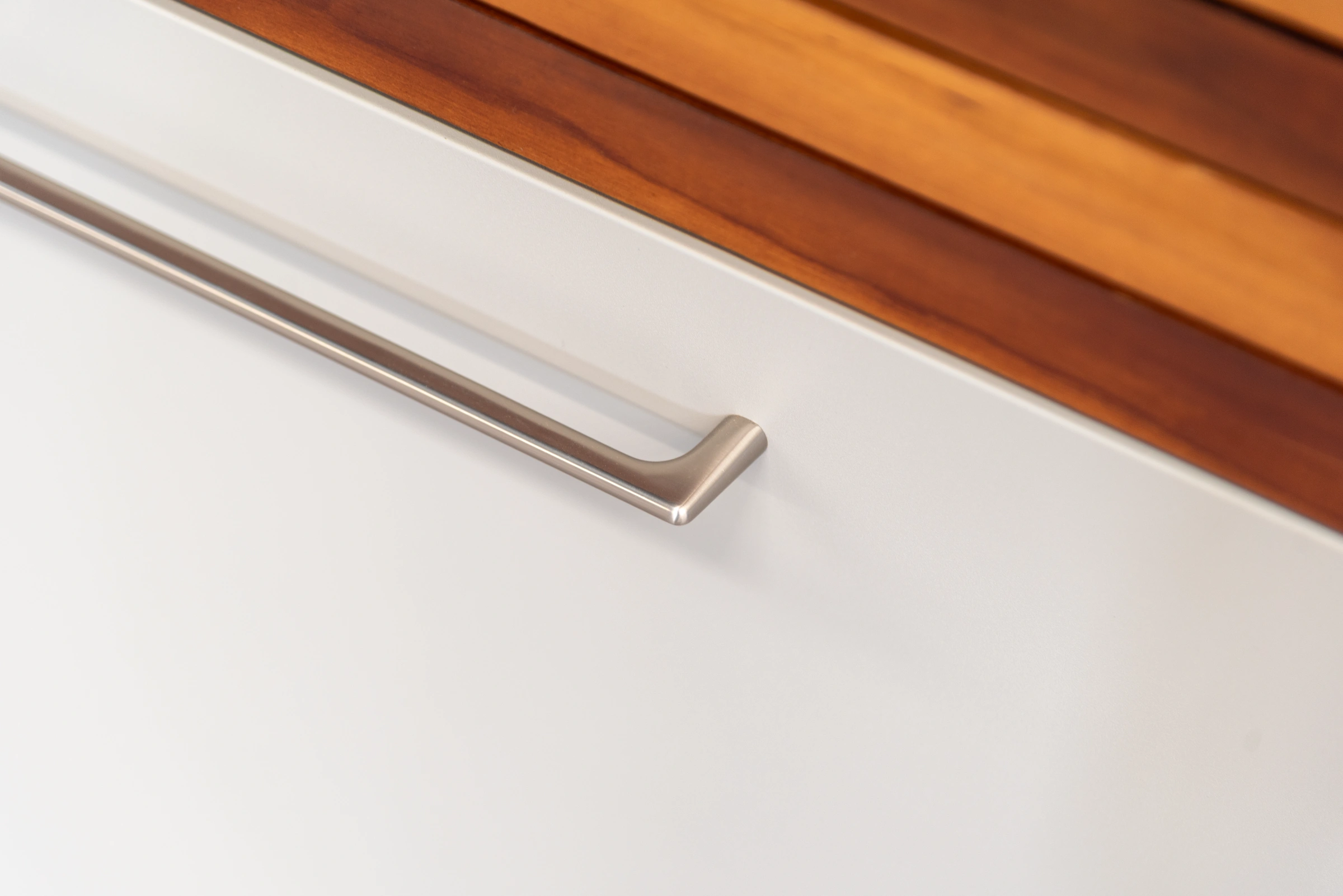 ELITE cabinet door pull beneath the wood trim
 ELITE dark sintered stone surface and veining
Verify the Specified Fields at Receiving
Use separate fields for what was approved and what was observed. Include part location when a module contains several fronts. If a stainless finish can be seen but material identity remains open, record the visual result and request the appropriate confirmation. Save the evidence with the revision used for the comparison, including an approved change where it covers the delivered item.
Match the measurement unit and basis before deciding whether readings are comparable. If the schedule specifies a sheet thickness and the arrival record gives an overall panel thickness, log both values with their descriptions. Ask which observation or document is needed for the specified field. Leave the material decision open until the two records cover the same feature.
| Component | Approved reference | Specified field | Receiving evidence | Decision |
|---|---|---|---|---|
| Worktop | Drawing revision and worktop number | Material grade and sheet thickness basis | Linked material record and the agreed thickness check | Record a match when the identity, basis and result agree. |
| Cabinet body | Cabinet part number and material schedule | Base sheet and specified coating | Part or lot link and the coating evidence specified in the order | Request evidence if the surface appearance is the only observation. |
| Door front | Door position, part number and approved revision | Facings, core and overall panel thickness | Linked construction record and agreed thickness check | Hold the affected parts if a different construction is verified. |
| Pull or hinge | Hardware part number and order option | Material or finish field where specified | Item label and applicable specification or inspection record | Compare the option and the specified material or finish. |
Designed and created by the Outdoor Creation team.
Differences between shelf stock and ordered hardware can be resolved faster when the buyer identifies the exact requirement. If the delivery record is incomplete, send the part and lot references with the evidence request. An inquiry about outdoor kitchen manufacturing and order preparation at our factory can include the approved line and the record received with the goods.
Close the Material Discrepancy Before Release
Assign a Disposition to the Authorized Reviewer
Group the affected units by part reference and lot. Keep them identified and on hold under the receiving procedure when a material difference is confirmed. Record who reviews the affected quantity and decides whether to replace, correct or formally accept a deviation where the order allows it. Parts with verified materials continue through the agreed acceptance checks. Keep requests for missing evidence open until the link is established.
Check whether the observation covers one unit or an identified group. The same part reference can occur in more than one lot. When the records define which units carry the suspect material, note those identifiers in the hold record. State the affected quantity the reviewer can verify and retain any open quantity separately for follow-up.
Match the part and revision Compare the approved material field with receiving evidence.
- Verified match
Record the matched material field and continue the agreed receiving checks.
- Missing proof
Request evidence for the same part or lot. Repeat the comparison when it arrives.
- Confirmed mismatch
Identify and hold the affected parts for the authorized reviewer.
Confirmed mismatch Continue from the hold record.
- Approve disposition
Document correction, replacement or an authorized written concession.
- Reinspect the parts
Apply the agreed acceptance criteria and retain the result.
- Record final status
Complete release or continue the hold under the order procedure.
Designed and created by the Outdoor Creation team.
Document the decision and the agreed recheck. The ISO and IAF guidance on closing nonconformities distinguishes correction, cause analysis and corrective action in an audit context. Apply the project’s receiving procedure to the affected parts. For a recurring issue, preserve both the immediate action on the delivery and any approved change meant to address the source.
Recheck the Affected Part Before Release
If the reviewer grants a written concession, keep its scope with the original requirement. Identify the accepted deviation, the specific units it covers and the verification it still requires. Use any revised drawing for the orders named in its approval. This preserves which requirement applies when the same cabinet position is ordered again.
Give a factory direct outdoor kitchen bulk supplier for distributors verifying cabinet parts these references when arranging a resolution. Identify the part, required material, evidence received and open decision. For outdoor kitchens and other outdoor living products, keep the release record with the specific order so a later replacement starts with the same approved information.
Outdoor Kitchen Cabinet Drawing FAQ
What is a material callout on a cabinet drawing?
It identifies a material requirement at a specific part or location. Match the symbol or part number to the approved schedule for the full description.
Does a 304 worktop mean the cabinet is 304?
A 304 worktop specification applies to that surface. Check the cabinet body, front panels and hardware against their own approved material fields.
Does 18 mm describe each stainless steel face?
For the published ELITE cabinet material, 18 mm is the composite thickness. Confirm each face and the core separately when the project needs layer thicknesses.
Can color confirm the metal grade?
Use appearance to compare the finish. Confirm the metal grade through the material specification and the verification evidence agreed for the order.
Which revision do I check at receiving?
Use the approved revision identified for that order line. Check documented changes against the actual part and the delivery reference before resolving a difference.
What should I record when a part differs?
Record the part number, approved requirement, actual observation and evidence. Identify the affected units and send the record to the reviewer named for the order.
How do I specify a replacement for my customer?
Match the installed series, module position, part number, finish and approved revision. Ask the supplier to confirm replacement availability and fit for that specific configuration.
When can I release held cabinet parts?
Release them after the authorized reviewer approves the disposition and the required reinspection confirms the specified result. Retain the confirmation with the original finding.
Confirm Your Cabinet Material Specification
Our own factory designs and produces modular outdoor kitchens. Share your technical cabinet drawings, part numbers and the finishes you need to match. We can review the configuration and discuss custom options, including which material details need confirmation before you place your order.
Materials, hardware, installation conditions and custom specifications depend on the approved design and confirmed order.