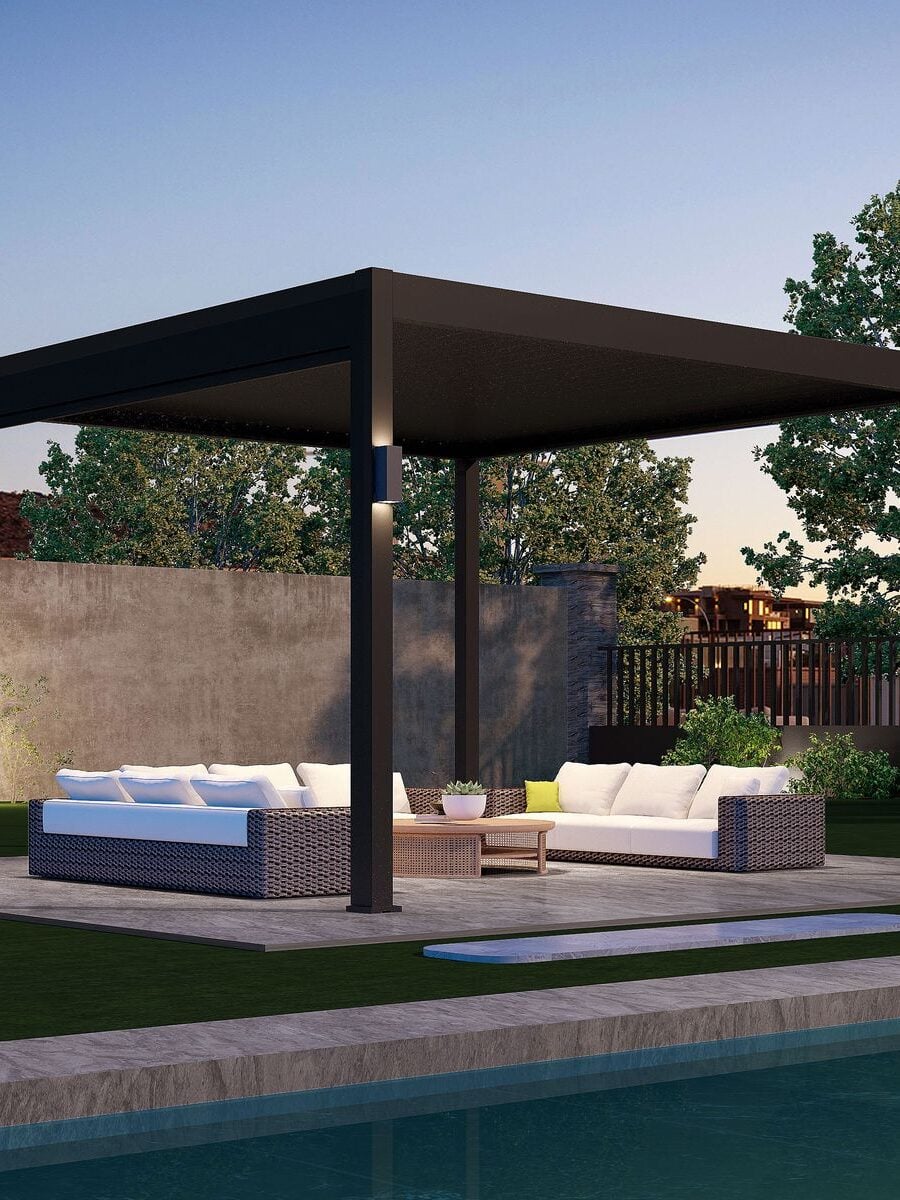
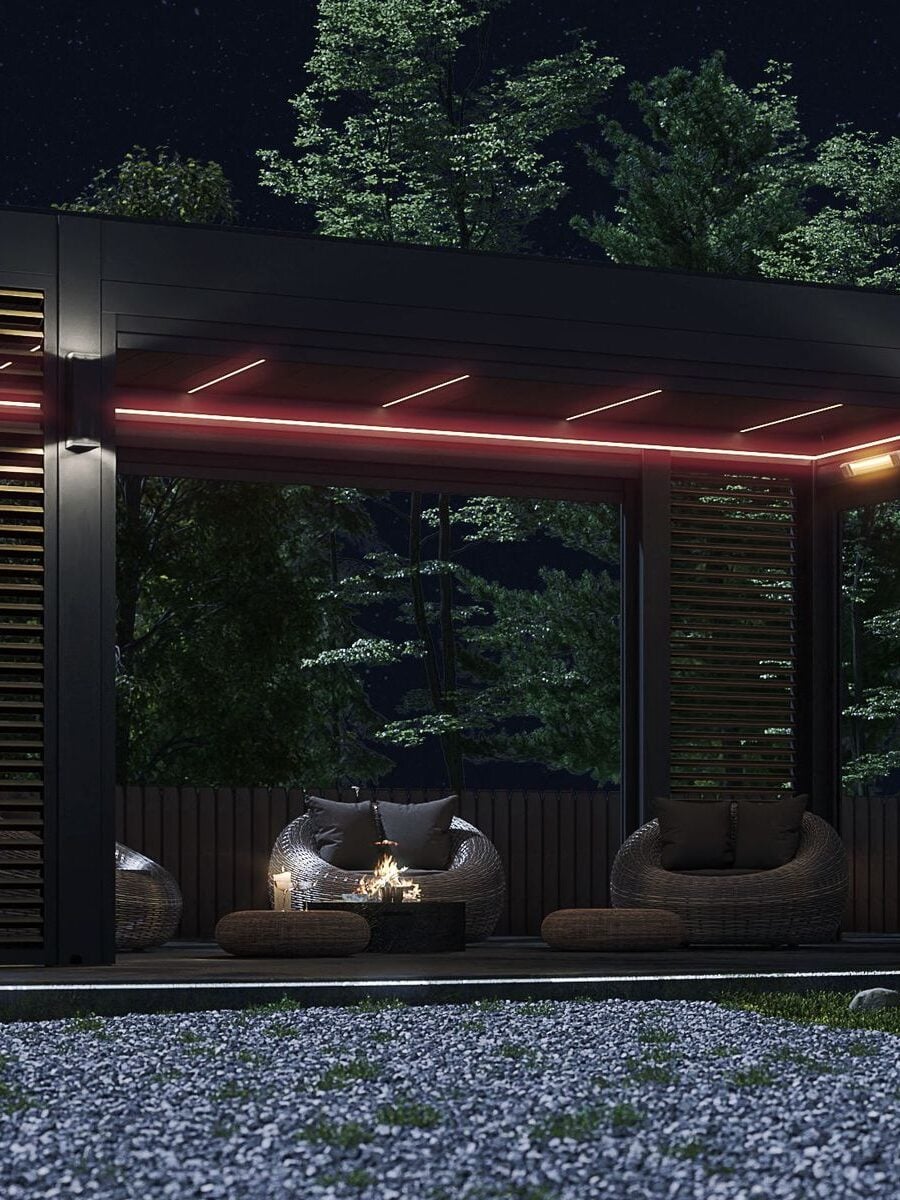
A pergola with storage is not simply a shaded structure with a cabinet attached to one side. When it is planned well, it becomes a more complete outdoor living system: one part adjustable shade, one part usable lounge space, and one part nearby organization for the items that make the space work every day.
This matters because outdoor spaces rarely fail because of shade alone. They often fail because the details are inconvenient. Cushions are stored too far away. Pool towels end up indoors. Garden tools sit in view. Covers, cleaning items, outdoor furniture accessories, and dining supplies have no clear place to go. The result is a patio or garden area that looks good in a rendering but becomes harder to use and organize in real life.
A pergola with integrated storage area solves a different problem from a standard pergola. It brings the support zone closer to the living zone. Instead of treating storage as a separate shed, box or furniture item, the storage module becomes part of the same outdoor structure. For patios, poolside lounges, garden seating areas, villas, restaurant terraces and hospitality spaces, this can make the difference between a beautiful outdoor feature and a space that is actually used more often.
The purpose of this guide is to explain when a pergola storage makes sense, how to plan the storage position, what should be considered before selecting a configuration, and how this type of structure differs from a storage box, garden shed or pool house.
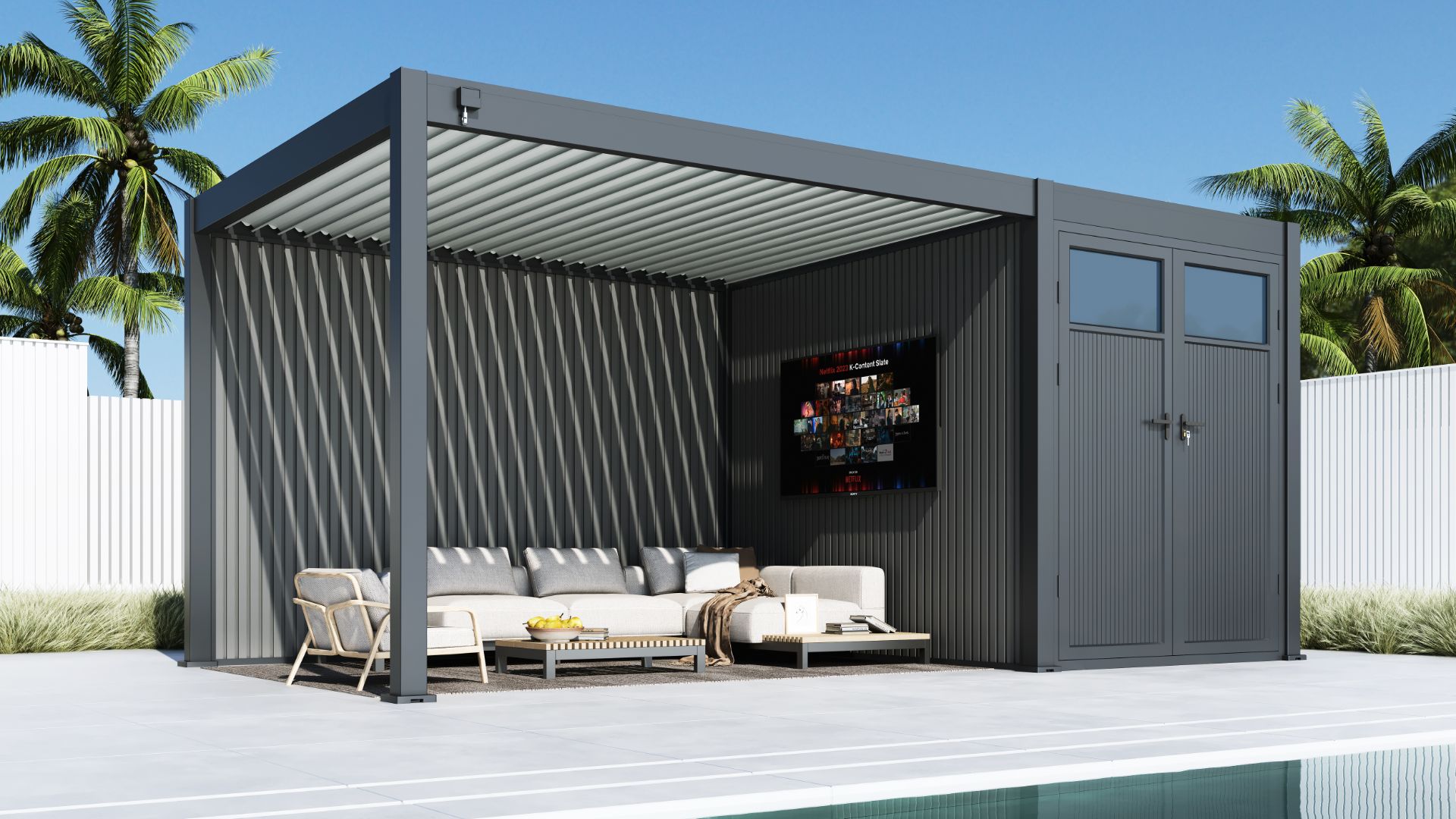
Why Storage Becomes a Planning Issue in Outdoor Living Spaces
Most outdoor living projects begin with the visible features: the roof, the seating area, the view, the lighting, the colour and the furniture. Storage is often considered later. That is usually when the problems begin.
Outdoor spaces need more supporting items than people expect. A poolside pergola may need space for towels, pool toys, cleaning items, covers and spare cushions. A garden lounge may need storage for furniture cushions, small tools, blankets, side-table accessories and seasonal items. A restaurant terrace may need quick access to service items, protective covers or accessories used during different parts of the day. A villa terrace may need a clean place for everyday outdoor equipment without turning the space into a visible utility zone.
If these items are stored indoors, the outdoor area becomes less convenient. If they are left outside, the space quickly looks disorganized. If a small storage box is added later, it may not match the pergola structure, and it often becomes another loose object in the layout.
This is why storage should be planned as part of outdoor living, not as an afterthought. The more frequently the outdoor space is used, the more important nearby storage space becomes.
A pergola with storage is especially useful when the items being stored are used in the same area. Cushions should be close to the seating zone. Pool accessories should be close to the pool. Dining-related items should be close to the terrace. Garden tools should be accessible without crossing the entire property.
The key is not to create more storage for its own sake. The key is to place the right amount of storage near the activity it supports.
What Is a Pergola with Integrated Storage?
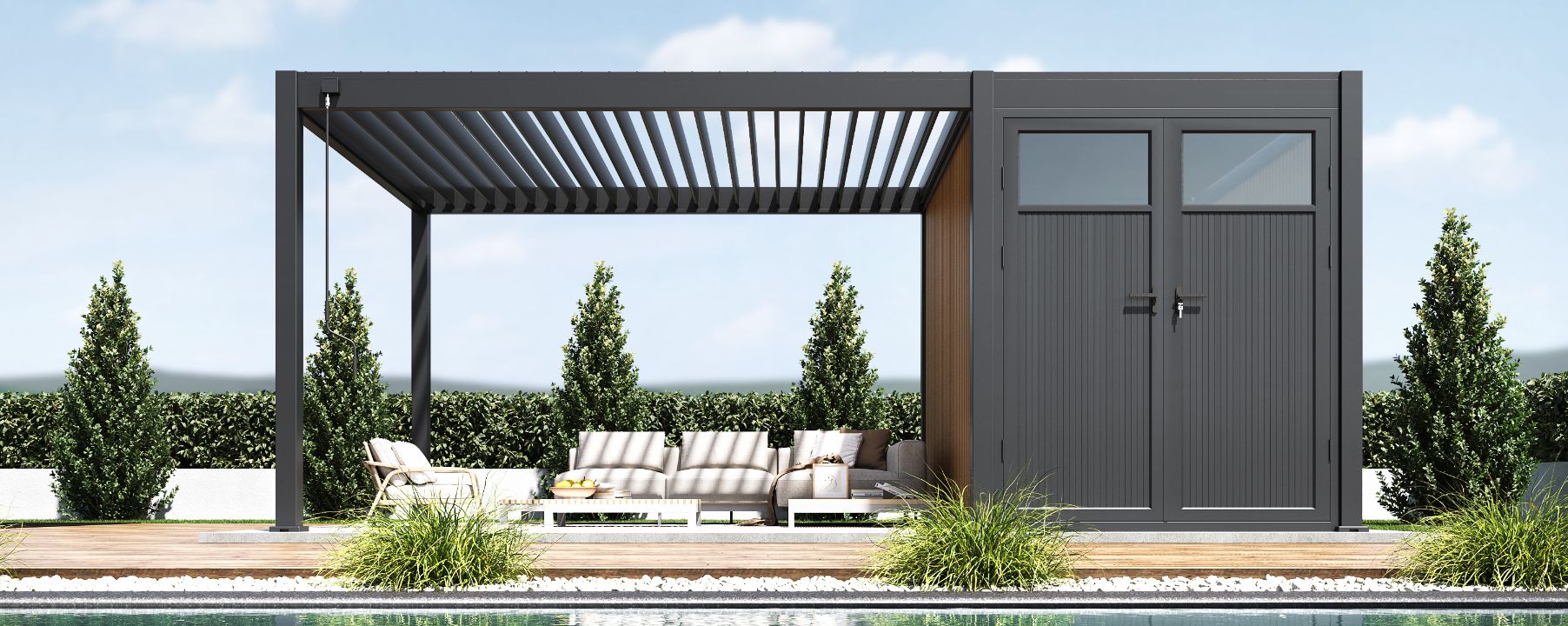
A pergola with integrated storage combines two outdoor functions in one coordinated structure. One zone provides shade, airflow and outdoor living space. The other zone provides enclosed or semi-enclosed storage for items that need to stay close to the area.
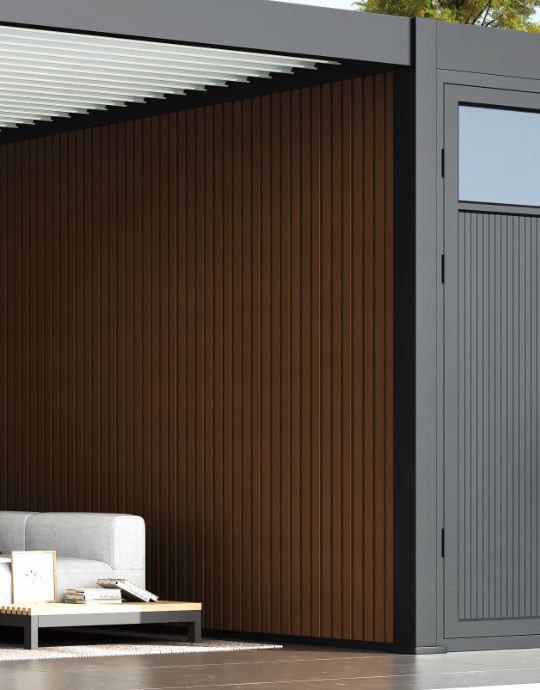
This is different from placing a storage box under a pergola. It is also different from building a full garden shed beside the patio. In an integrated system, the storage module is planned together with the pergola’s frame, proportions, materials and layout. The result should feel like one structure rather than two unrelated objects placed next to each other.
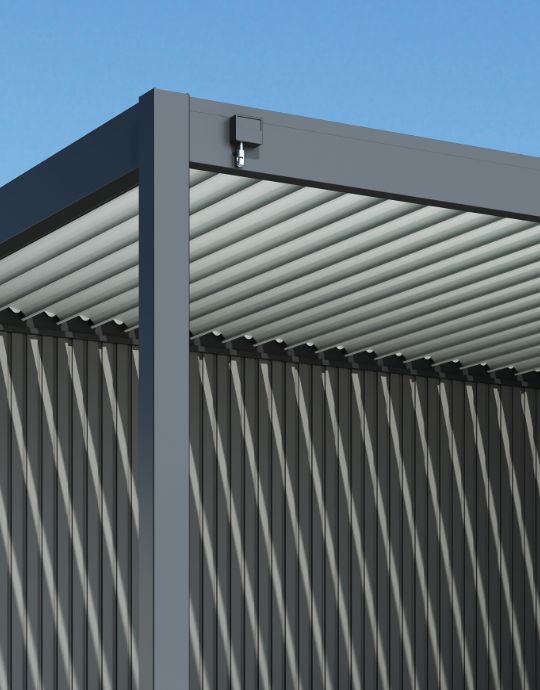
In a louvered pergola with storage, the open area may include an adjustable roof system that can respond to sun, airflow and rain conditions. The storage area may be positioned to one side, at the rear, or as part of a longer combined layout. The best arrangement depends on site dimensions, access direction, view lines and the way the outdoor space will be used.
For residential projects, this type of structure can support daily living: outdoor cushions, garden accessories, pool items and patio supplies stay close to where they are needed. For hospitality projects, integrated storage can support operational use without exposing supplies to guests. For villa and resort spaces, it can help maintain a clean architectural appearance while improving convenience.
The word “integrated” is important. The storage module should not look like a late addition. Its wall material, frame lines, colour, door position and proportions should work with the pergola structure. When the storage element is visually coordinated, the whole outdoor area feels more intentional.
A pergola with integrated storage is therefore not only a product choice. It is a layout decision.
Pergola with Storage vs Storage Box, Shed or Pool House
Before choosing a pergola with storage, it helps to understand what it can and cannot replace.
A storage box is usually a small furniture-level solution. It can be useful for a few cushions, covers or small accessories. It is simple and flexible, but it has limited capacity and may not match the pergola structure.
A garden shed is more suitable for larger tools, garden equipment, bicycles or seasonal storage. It usually has more volume, but it is often separated from the outdoor living area. If the shed is far from the patio or pool, it may not solve the daily convenience problem.
A pool house can provide a more complete enclosed support space. Depending on the design, it may include changing areas, bathrooms, mechanical systems, storage or entertainment functions. However, it involves greater building complexity and is often beyond the scope of a standard pergola project.
A pergola with integrated storage sits between these options. It does not try to become a full indoor room. It also does not function like a small movable deck box. Its value lies in combining shade, outdoor use and nearby organization in one coordinated outdoor structure.
| Option | Best For | Main Limitation |
|---|---|---|
| Storage box | Small cushions, covers and loose patio items | Limited volume and weak visual integration |
| Garden shed | Larger tools, equipment and seasonal storage | Often separated from the outdoor living area |
| Pool house | Enclosed poolside support and building-level functions | Higher complexity, cost and site requirements |
| Pergola with integrated storage | Shade, lounge use and nearby outdoor organization | Requires layout planning before purchase |
The right choice depends on the project. A compact patio may only need a storage box. A large garden property may still need a separate shed. A resort pool area may require a more complete pool house. But when the main need is to support a shaded outdoor living area with nearby storage, a pergola with integrated storage can be a more balanced solution.
Where the Storage Module Should Be Placed
The storage module should never be positioned only because it looks good in a rendering. Its location affects movement, visibility, convenience, and the overall comfort of the outdoor space.
The first question is access. The storage door should open toward the side where items are most often used. If cushions are stored for a seating area, the door should not require people to walk around the entire pergola. If pool accessories are stored inside, the module should be accessible from the poolside path. If the space supports restaurant or hospitality use, staff should be able to reach the storage area without crossing through guest seating in an awkward way.
The second question is circulation. A storage module should not block the natural movement around the pergola. People need to move between the house, garden, pool, dining area and seating zone. Door swing, walkway width and furniture layout should be checked before finalising the position.
The third question is view. In many projects, the pergola is connected to a garden, pool, landscape feature or building façade. If the storage module is placed on the wrong side, it may block the best view or make the outdoor area feel closed off. In other cases, the module can be used intentionally to screen a less attractive side of the site, create privacy or form a visual backdrop behind the seating area.
The fourth question is sunlight and weather exposure. The storage module may help create a more sheltered side of the pergola, but it should not create unwanted heat build-up or restrict airflow in a way that makes the lounge area uncomfortable.
Common layouts include side storage, rear storage and adjacent storage. Side storage works well when the pergola needs an enclosed module along one edge. Rear storage can create a clean backdrop and keep the main seating area open. Adjacent storage can support a larger outdoor layout where the storage module is near, but not visually dominant.
The best position is usually the one that makes the storage useful without making the outdoor living area feel smaller.
How the Louvered Roof Changes the Use of the Space
Storage solves the organization problem. The roof solves the comfort problem. A pergola with storage becomes more useful when both are planned together.
A louvered roof allows the shaded zone to respond to changing outdoor conditions. When the roof louvers are open, the space can receive more daylight and airflow. When the louvers are tilted, the area can gain filtered shade while still feeling open. When the louvers are closed, the pergola can provide a more protected outdoor setting, depending on the roof design, drainage path, installation quality and local weather conditions.
This flexibility is important because the items stored nearby are usually connected to changing use. Cushions may be taken out when the weather is dry and stored again when rain is expected. Pool towels and accessories may be used during the day and put away in the evening. Outdoor dining items may be brought out for service and returned after use.
The roof and storage module therefore support each other. The roof helps extend the usable hours of the outdoor space. The storage module helps keep that space ready for use.
In a fixed-roof structure, the space may feel more enclosed than necessary during mild weather. In an open pergola, the space may be too exposed during strong sun or light rain. A louvered roof provides more control, which makes the nearby storage more valuable because the outdoor area is more likely to be used across different parts of the day.
For projects where the pergola is used only occasionally, integrated storage may not be essential. But for daily-use patios, poolside lounges, hospitality terraces and villa outdoor spaces, the combination of adjustable shade and nearby storage can make the structure more practical.
What Should Be Stored Near a Pergola?
The storage module should be planned around real use, not a generic list of outdoor items.
Cushions and Furniture Covers
Cushions are one of the most common reasons to add nearby storage. Outdoor furniture may be designed for exterior use, but cushions and soft accessories still benefit from a clean, accessible place when they are not in use.
If the pergola covers a seating or dining area, storage for cushions should be close enough for daily use. If users have to carry cushions across the property every time they want to sit outside, the space becomes less convenient.
Furniture covers also need a defined place. Without storage, covers often end up folded behind furniture, left in corners or stored indoors where they are easy to forget.
Pool Accessories and Towels
Poolside projects often need more storage than expected. Towels, pool toys, cleaning accessories, floating items and seasonal pool equipment can quickly make the area feel cluttered.
A pergola with storage can support the poolside lounge without turning the space into a full pool house. It keeps frequently used items close to the water while preserving a more open outdoor structure.
This is especially useful for villas, resorts and private pool areas where visual order matters as much as convenience.
Garden Tools and Cleaning Items
Not every garden tool needs to be stored near a pergola. Larger equipment may still belong in a shed or service area. But small tools, cleaning items, watering accessories and maintenance supplies can be useful near a garden lounge or patio.
The goal is not to convert the storage module into a full utility shed. The goal is to keep the items used around the outdoor living area within easy reach while keeping them out of view.
Outdoor Dining and Lounge Accessories
Outdoor dining areas often need small but important items: table accessories, cushions, protective covers, portable service items, throws, lanterns or seasonal decorations.
For restaurants and hospitality terraces, storage may also support faster setup and closing routines. Staff can access what they need without moving through indoor service areas for every small item.
For residential patios, the same logic applies at a smaller scale. A storage module can make the space easier to prepare for guests and easier to clean after use.
Hospitality Terrace Supplies
Commercial outdoor spaces require more disciplined planning. A hotel terrace or restaurant pergola may need storage for accessories that are not always visible to guests but are necessary for operation.
This may include covers, spare cushions, cleaning items, small service accessories or seasonal outdoor elements. A coordinated storage module can keep these items close without making the guest-facing area look temporary or improvised.

Planning the Footprint: Pergola Zone and Storage Zone
A pergola with storage takes more planning than a standard freestanding pergola because the footprint includes both open living space and enclosed storage volume.
The pergola zone should be sized around the activity. A dining area needs enough space for the table, chairs and movement around the table. A lounge area needs space for sofas, side tables and circulation. A poolside pergola needs room for loungers and safe movement around the pool edge.
The storage zone should be sized around the items stored and the access required. A narrow storage module may work for cushions, covers and small items. A deeper module may be needed for larger accessories or hospitality supplies. Door width, door swing and internal organization should be considered before the module is finalized.
A common mistake is to maximize storage volume at the expense of the outdoor living area. Another mistake is to create a generous pergola zone but leave storage too small to be useful. The two zones should be balanced.
The footprint should also be checked against the site. This includes foundation position, drainage direction, building setbacks, garden paths, pool edges, privacy screens and access routes for installation.
In commercial or hospitality projects, multiple pergola modules may be used across a larger terrace. In that case, storage should not be randomly attached to one unit. It should support the operating logic of the full layout.
A good layout makes the storage feel close when needed and quiet when not in use.
Materials and Visual Integration
A pergola with storage should feel like one coordinated structure. This depends on material selection, surface finish, wall treatment and the relationship between open and enclosed zones.
Aluminum is commonly used for the pergola frame because it supports clean lines, powder-coated finishes and outdoor durability. For the storage enclosure, wall materials should match the project style while supporting exterior use. Composite wall panels, aluminum framing and coordinated colour selections can help the storage module feel integrated rather than added later.
Visual integration matters especially in premium residential and hospitality spaces. A storage module that looks like a separate shed can weaken the overall design. A module that follows the pergola’s frame lines, proportions and colour language can become part of the architecture.
The transition between the pergola roof, posts, beams and storage walls should be considered carefully. If the storage module is too visually heavy, it may dominate the structure. If it is too light or unrelated, it may appear temporary.
The best result is usually a balanced one: the storage module is clearly functional, but it does not interrupt the outdoor living experience.
Rain, Drainage and Everyday Maintenance
A pergola with storage should be planned with weather and maintenance in mind.
For the pergola zone, drainage from the louvered roof should be reviewed. Buyers should understand how water moves from the roof, through beams or channels, and away from the covered area. Site slope, rainfall intensity and installation quality can all affect performance.
For the storage zone, the concern is different. The module should be positioned and detailed so that stored items remain protected according to the intended use of the structure. Door position, wall material, ventilation, floor condition and exposure should be reviewed.
Maintenance access is also important. If lighting, motorized roof operation or other electrical accessories are included, service points should not be blocked by furniture or storage arrangements. Cleaning access around the storage module and pergola frame should be considered before the project is completed.
Everyday maintenance is often overlooked because it feels less exciting than product design. But in real use, easy access and clean organization are what keep an outdoor area pleasant over time.
When a Pergola with Storage Makes Sense
A pergola with integrated storage makes sense when the outdoor space is used often enough that nearby organization improves daily life or operations.
It is a strong fit for poolside areas where towels, cushions and accessories need to stay nearby. It works well for garden lounges where furniture covers, small tools and seasonal items should be hidden but accessible. It can support villa terraces where the outdoor area needs to look clean and architectural. It can also help restaurant and hospitality terraces where setup, closing and maintenance routines need to be more efficient.
It may be less suitable when the project only needs a simple shade structure, when storage requirements are very small, or when the site already has a convenient shed or service room nearby. It is also not the right replacement for a full enclosed pool house if the project requires bathrooms, changing rooms, conditioned interior space or building-level facilities.
A COMBO-style system makes the most sense when the project wants the pergola and storage module to look like one coordinated outdoor structure rather than two separate products. The storage element supports the way the shaded area is used, while the louvered roof gives the outdoor living zone more flexibility through the day.
This is the main planning logic: storage should support the outdoor experience, not compete with it.
What to Check Before Choosing a Pergola with Storage
Before choosing a pergola with storage, buyers should review the project as a complete outdoor layout.
First, confirm the purpose of the outdoor area. Is it mainly for dining, lounging, poolside use, hospitality seating or garden relaxation? The storage should support that purpose.
Second, confirm what will be stored. Cushions, covers, towels, tools, dining accessories and hospitality supplies have different volume and access requirements.
Third, check the total footprint. The combined pergola and storage structure must fit the site without blocking movement, views or access to the building, garden or pool.
Fourth, review the storage position. Door direction, access path and visibility should be planned before purchase. A storage module in the wrong location can make the whole structure feel less convenient.
Fifth, review the roof system. If the pergola uses adjustable louvers, buyers should understand how the roof operates, how drainage is handled and how the structure responds to sun, airflow and rain conditions.
Sixth, consider accessories early. Lighting, screens, heaters, fans or privacy panels may affect wiring, mounting positions and how the pergola is used after dark.
Seventh, confirm materials and finishes. The storage module should match the pergola frame and project environment, especially in premium residential, villa, resort and commercial settings.
Eighth, think about maintenance. Future access to doors, drainage paths, motors, lighting and cleaning areas should not be blocked by the final layout.
Related Outdoor Structure Options
For projects where shade, outdoor living and nearby storage need to be planned together, a coordinated pergola-and-storage system can provide a more complete solution than a standard pergola with a separate storage box.
COMBO Motorized Louvered Pergola with Storage
A freestanding motorized louvered pergola system with an integrated storage module for outdoor living, poolside, garden and hospitality spaces.
Aluminum Pergola Collection
Compare manual, motorized, freestanding, wall-mounted, premium and heavy-duty aluminum pergola systems before selecting storage, lighting or other outdoor accessories.
Outdoor Shade Product Collection
Explore Outdoor Creation’s broader outdoor structure and storage-related product range for project planning.
A pergola with storage should not be chosen only because it looks complete in a product image. It should be selected because the outdoor space needs both comfort and organization. When shade, layout, access and storage are planned together, the pergola becomes more than a roof. It becomes a usable outdoor room that is easier to maintain, easier to prepare and easier to enjoy.