An outdoor living brand should approve a representative physical finish sample for a named outdoor kitchen component and revision. The approval record should state which appearance is acceptable and who can release the first batch. A finish chip can look right on its own. The brand team still has to see how it meets adjacent parts on the unit and tell production which sample governs acceptance.
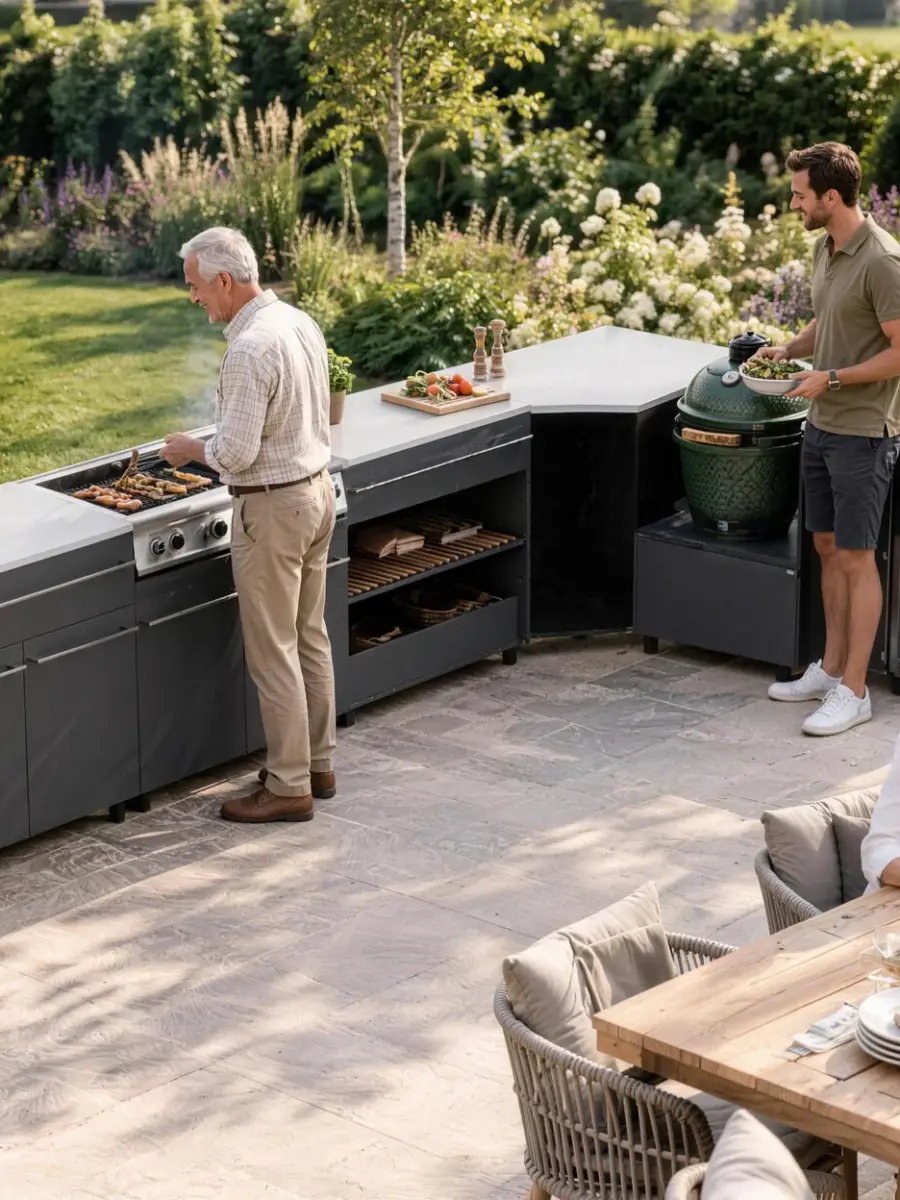
 URBAN outdoor kitchen in a garden dining setting
Define the Part and Approval Scope
Name the Component and Finish Process
For a custom outdoor kitchen, procurement needs a part reference that the factory and inspector can use on the same order. Start with the series, module and visible face. Identify the substrate, finish process, color or material code, and any edge or joint included in the review. Use our modular outdoor kitchen systems and cabinet materials to locate the parts first. Where a faucet or handle is included, record its finish separately from the cabinet face.
 URBAN metal faucet and slatted backboard
Choose a Sample That Represents the Assembly
A color chip helps choose a tone. A production-representative door, shelf or worktop offcut shows how the specified substrate and finish look together. Ask for an assembled sample when the decision involves a joint, a visible edge or the way two finishes meet. Include the working size and the viewing face. The brand confirms the appearance scope and the supplier confirms which process the sample represents. See how to prepare a private-label kitchen development brief when the request also changes the configuration.
Select a color direction with the brand team.
Designed and created by the Outdoor Creation team.
Review the viewing face, finish process and exposed edge.
Designed and created by the Outdoor Creation team.
Assess the joint and appearance of adjacent finishes together.
Designed and created by the Outdoor Creation team.
Use the order revision when requesting a representative part.
Designed and created by the Outdoor Creation team.
Agree which version will travel from the brand reviewer to purchasing, production and quality. Identify the person who will receive the first-batch record before ordering production.
- Define the faceBrand and procurement name the part.
- Review a sampleFactory confirms material and process.
- Sign the rangeBrand authorizes target and limits.
- Compare first piecesFactory quality records the lot and result.
- Decide the next stepAuthorized reviewer releases or reopens approval.
Designed and created by the Outdoor Creation team.
Compare Two Outdoor Kitchen Finish Interfaces
Check URBAN’s Frame and Wood-Grain Shelf Together
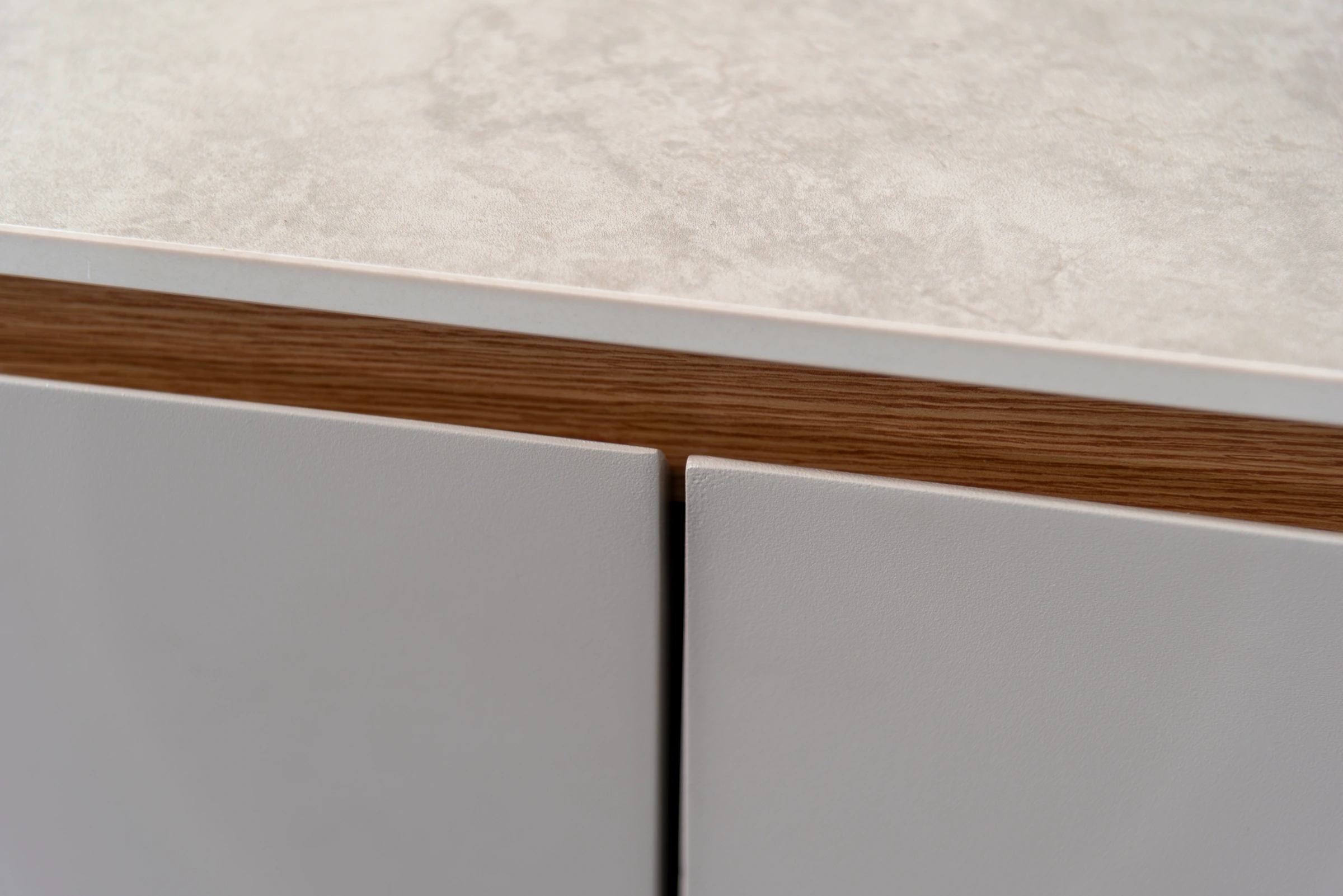
Our URBAN aluminum outdoor kitchen with wood-grain shelving pairs aluminum outdoor kitchen cabinets with a sintered stone worktop. In the straight-line example, use the open shelf next to the sink cabinet. View the wood-grain slats and adjacent aluminum rail from the front, then turn the assembly to inspect visible ends. Record grain direction and which surfaces each reference covers. Ask how a replacement slat would be matched if the rest of the unit remains in service.
- Grill cabinet
- Preparation and storage
- Sink cabinet
- Wood-grain shelf and aluminum rail
- Refrigeration bay
Designed and created by the Outdoor Creation team.

Review ELITE’s Stone Worktop and Teak Trim
Our ELITE sintered stone outdoor kitchen with solid teak trim uses double-layer stainless steel cabinets with an aluminum honeycomb core. The preparation and storage cabinet in the L-shaped example puts the worktop edge above solid teak trim. Agree an area large enough to show the stone’s vein direction and any visible seam. Give the teak its own hue and grain references, then inspect the two together where they meet.
 ELITE outdoor kitchen on a poolside terrace
At the selection stage, a scene shows how surfaces meet across a complete installation. For approval, mark the inspected faces on the module drawing and have the factory match those faces to the samples supplied.
- Grill cabinet
- Preparation and storage with a stone edge and teak trim
- Kamado corner
- Sink cabinet
Designed and created by the Outdoor Creation team.
Use a representative board or a set of signed pieces when a small swatch misses the pattern spread. If the approved appearance depends on orientation, mark the visible front edge and any seam between boards. Record the edge and teak strip as separate approval items.
 ELITE dark sintered stone veining
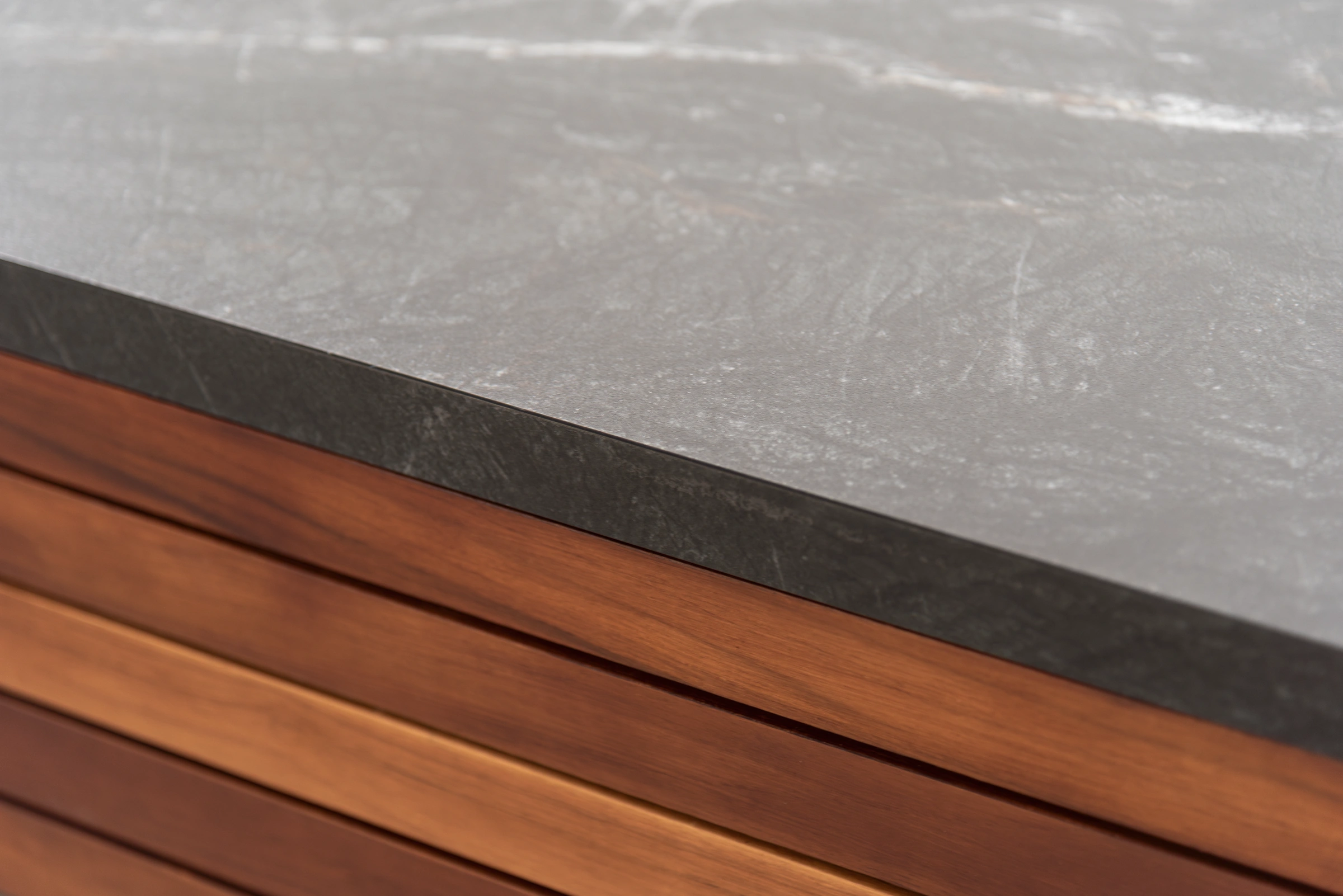 ELITE sintered stone edge and solid teak trim
View the shelf face and slat ends. Record the grain direction and the rail’s separate finish reference.
Designed and created by the Outdoor Creation team.
Check the vein direction across the worktop and inspect its edge above the teak trim.
Designed and created by the Outdoor Creation team.
Use the agreed light and viewing angle for both the sample and the assembly.
Designed and created by the Outdoor Creation team.
Sign the Reference and Set Acceptance Limits
Record Color, Texture and Viewing Conditions
For outdoor kitchen finishes, agree how to view the sample and production part together. Record the light source, viewing distance and angle, and align the grain or vein orientation. ASTM D1729 describes visual color appraisal for diffusely illuminated opaque materials. If the order uses instrumental color differences, name the agreed calculation and measurement settings with reference to ASTM D2244. For an agreed gloss check on flat, opaque, non-textured coatings, specify the applicable geometry from ISO 2813. Set the limits in the project record.
A signed reference shows the intended appearance. A signed limit sample can show the furthest acceptable variation for a named face, such as grain contrast. For textured or patterned finishes, agree a representative area and the direction of the pattern. If a supplier uses colour sample in UK documents, use the same reference ID across both versions of the order paperwork.
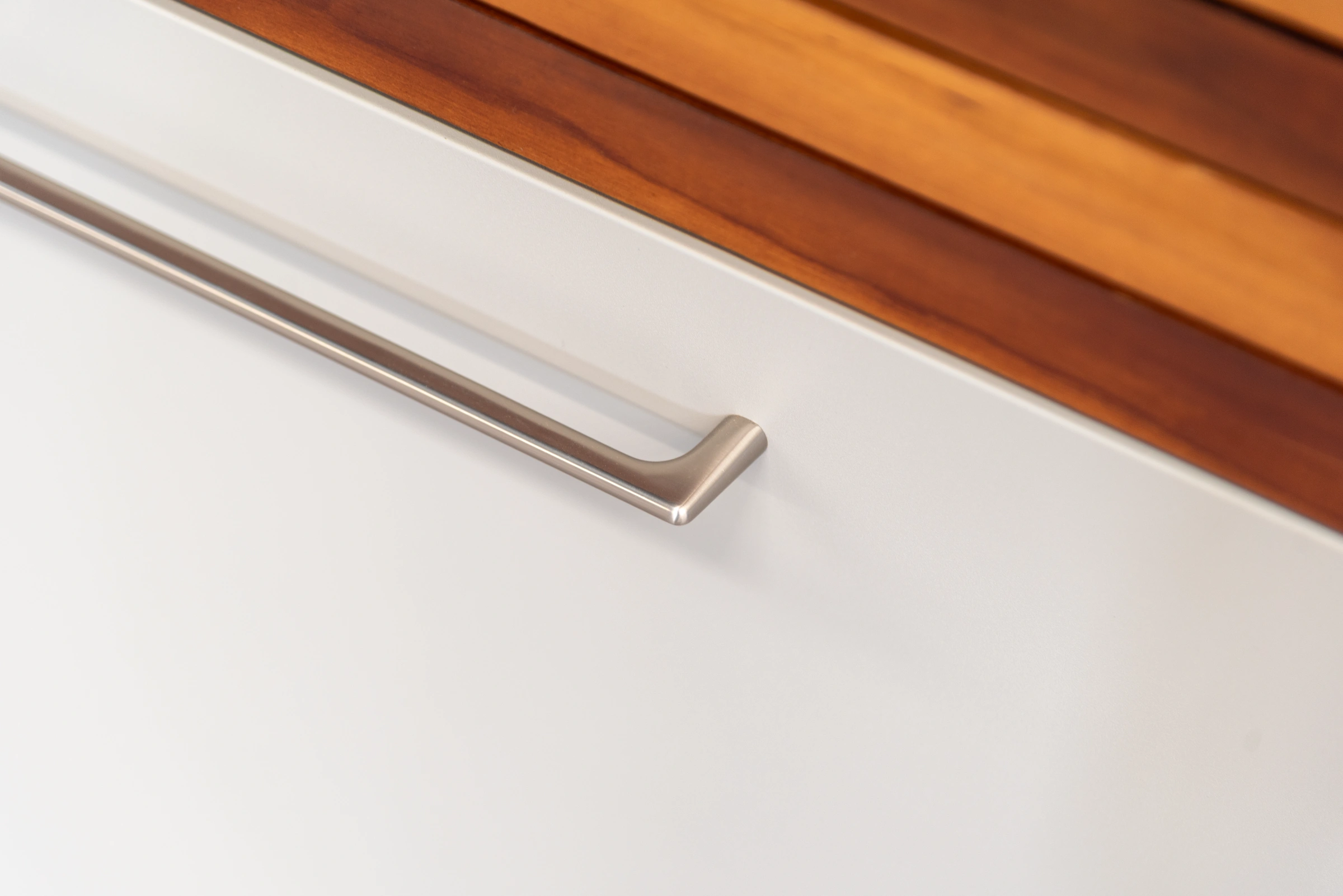 ELITE cabinet pull and wood trim
Link the Signed Sample to the Order Revision
When working with a custom outdoor kitchen manufacturer for private label brands, ask both parties to retain matched, labeled references. Log the sample revision, approval date, approved parts and purchase order revision together. The brand’s signatory owns the appearance decision. Procurement hands over that record and factory quality records its comparison against it.
Mark the back of each retained piece with its reference and orientation. If the teams share one reference set, record where it is kept and who sends it for inspection. For a changed finish, have procurement record the first order or lot covered by the new approval and retain the earlier reference for existing orders.
| Record | Evidence to retain | Prepared by | Handed to |
|---|---|---|---|
| Approval scope | Series, module, visible face and drawing revision | Brand and factory | Procurement |
| Material and finish | Substrate, process and finish code | Factory product team | Brand reviewer |
| Physical reference | Sample ID, revision, date and custodian | Factory and brand | Both quality teams |
| Viewing conditions | Light, distance, angle and direction | Both quality teams | Inspector |
| Acceptance limits | Signed range, limit sample or agreed measured limit | Brand quality | Factory quality |
| First-batch check | Order, lot, inspected parts and finding | Factory quality | Brand reviewer |
| Approval and changes | Named signatory, trigger and effective batch | Brand signatory | Procurement and factory |
Designed and created by the Outdoor Creation team.
For custom outdoor kitchen cabinets, confirm the reference for each series and part. Use the relevant drawings in AXIS galvanized steel outdoor kitchen system, NOVA compact galvanized steel outdoor kitchen cabinets or METRO outdoor kitchen with a stainless steel worktop to identify the face that requires approval. Our outdoor living product collection gives buyers the product overview.
Check the First Batch and Reapprove Changes
Compare First Production Pieces With the Signed Reference
Pull the agreed first pieces and check their work order, lot, finish revision and retained sample ID. Inspect the relevant faces and joins under the agreed conditions. At our outdoor living manufacturing facility in Xuancheng, our teams prepare parts to order, match components and check visible surfaces before packing. For global B2B customers, confirm what the factory can show the brand’s quality representative and which records the importer or buyer receives. Refer to how to specify cabinet finishes and corrosion protection for exposure and care.
Record the pieces checked and the limits of the inspection. If the first pieces came from one material lot, confirm how any other lots will be covered and agree who can extend the approval to those pieces.
Review a Changed Appearance or Finish Process
Consider an illustrative ELITE first batch. A new worktop lot shows veining beyond the signed range. Identify the affected boards, orders and adjacent panels. Recheck under the approved conditions and hold the affected pieces while the brand assesses the difference. An authorized decision may call for selection, replacement or a new signed reference. Record the applicable batch and repeat the check against the agreed revision.
Compare the affected pieces under the agreed conditions
- Within limitsRecord the comparison and send it to the authorized reviewer.
- Outside limits or uncertainHold the affected pieces. Send scope, sample and lot references to the brand. Once a disposition or new reference is authorized, log the effective batch and repeat the check.
Designed and created by the Outdoor Creation team.
For an OEM or other custom repeat order with an outdoor kitchen factory supporting international brand programs, agree which changes reopen approval. A new substrate, finish process, material code or pattern direction can change the appearance. The buyer confirms the affected scope and the factory records when the decision takes effect.
Finish Sample Approval Check
Frequently Asked Questions
What should a finish sample approval record include?
Record the part, sample ID, finish revision, matching conditions, approved limits and authorized signatory. Link the record to the applicable order and first-batch check.
Can a photo approve an outdoor kitchen finish?
Use a photo for early selection and references. Confirm the physical sample and the agreed acceptance method before the brand releases bulk production.
What is a limit sample?
A limit sample shows an agreed boundary of acceptable appearance. Identify the part, finish, viewing conditions and lot scope so both teams compare against the same reference.
Does one finish approval cover every component?
Apply it to the parts, substrate and finish process named in the record. List adjacent parts separately where their materials or visual criteria differ.
How are outdoor kitchen finishes checked in production?
Compare the first agreed pieces with the signed reference under the same viewing conditions. Record the lot, sample revision, observation and authorized decision.
When does a finish change need fresh approval?
Follow the agreed change triggers. Changes to the substrate, finish process or visual range can require a new sample and written approval for the affected parts.
Can one color code define gloss and texture?
A color code identifies a color reference. Specify gloss and texture separately, along with the finish process or signed sample when those details affect acceptance.
How should brands approve worktop veining?
Review a representative area and record the allowed direction, variation and visible joins. Confirm the signed reference and the pieces it applies to.
Will a replacement door match my outdoor kitchen?
Ask the retailer to check your order, module and original finish reference. Confirm available options and likely appearance differences with the factory before ordering.
Finish approvals, materials, hardware, installation details and final customization apply to the components and revisions specified in the written order.