
Before approving outdoor kitchen packaging artwork, match the proof to the exact module, packaging level and destination. Ask the printer to show where the model, brand copy and any barcode will appear on the finished carton, then release one identified revision in writing. A brand manager may see a clean proof while the factory and warehouse are working from different item codes. Resolve those differences before printing so the carton can be identified at packing and receipt.
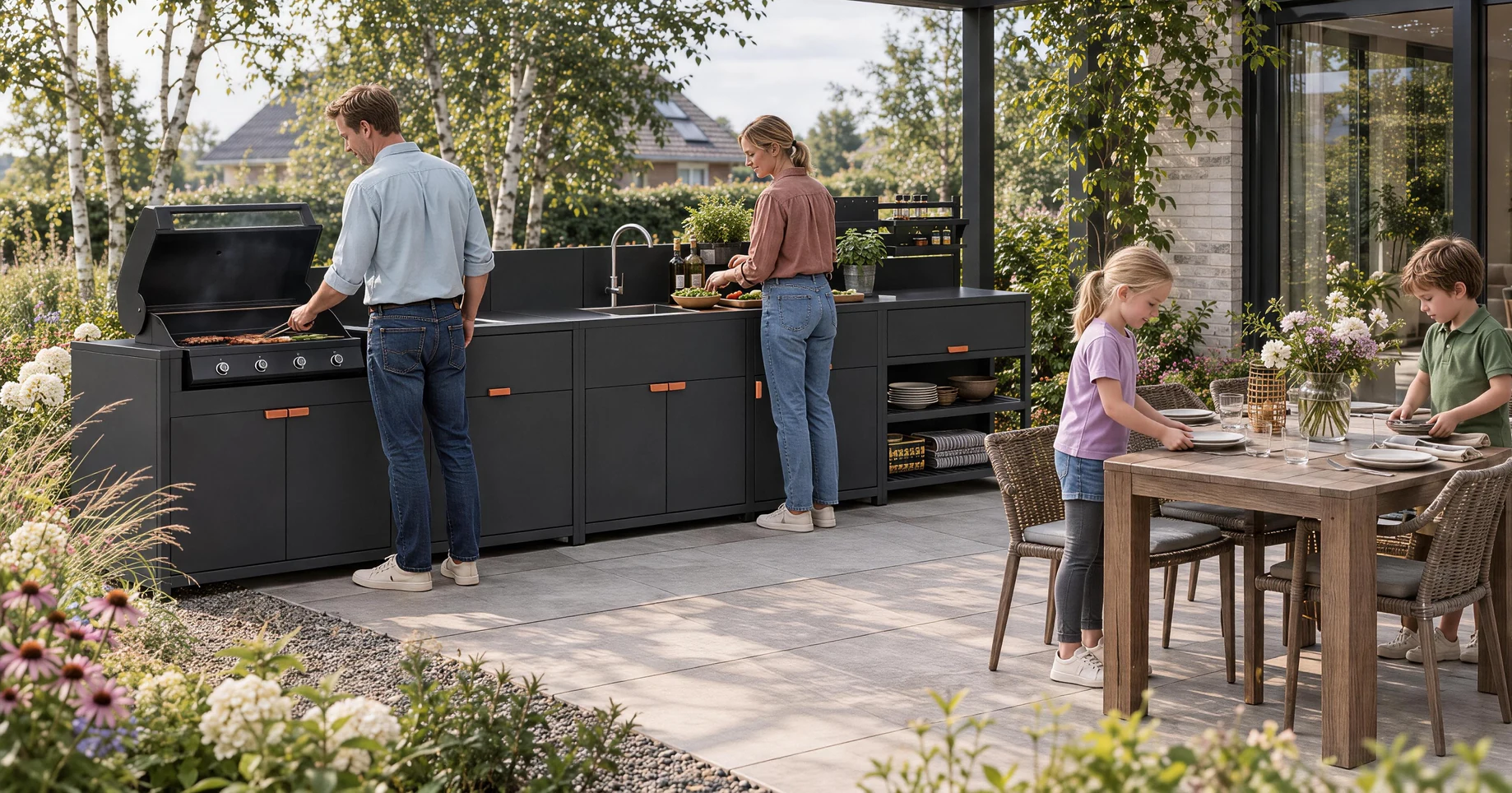 NOVA series shown in a garden. Use the order’s module list to identify the cartons for an individual project.
Match Each Module to the Right Carton
Read the Full Model Code
Open the approved module schedule and the carton proof side by side. Read the series, full model code, selected finish where relevant and what the pack will contain. In our AXIS galvanized steel outdoor kitchen with open shelving, AXIS-B is an enclosed storage cabinet. In our compact NOVA modular outdoor kitchen with a sink module, NOVA-B is a sink cabinet. Both list 800 × 600 mm as the first two dimensions and use the B suffix. Check the complete code and the module function against the order.
-
AXIS-B. Enclosed storage cabinet.
-
NOVA-B. Sink cabinet with faucet shown.
Series layouts for identification. Confirm the ordered modules, equipment and box contents.
If the proof shows NOVA-B against an order for AXIS-B, return the affected proof for correction even if the artwork revision agrees. Then confirm the buyer’s stock-keeping unit against the approved module list and check the human-readable description. A model suffix may be convenient within one series. On packaging shared across several series, use the full model wherever the approved copy expects a factory reference. The illustrated cross-reference shows the evidence to compare before print.
| Review field | Enclosed cabinet example | Sink cabinet example |
|---|---|---|
| Published module | AXIS-B · Enclosed storage | NOVA-B · Sink cabinet |
| Published size | 800 × 600 × 910/1030 mm | 800 × 600 × 900/1100 mm |
| Example buyer SKU | BR-STORAGE | BR-SINK |
| Example artwork scope | Storage cabinet carton | Sink cabinet carton |
The sizes are product entries. Buyer SKUs and pack scopes are illustrative. Use the approved packing record for the actual contents.
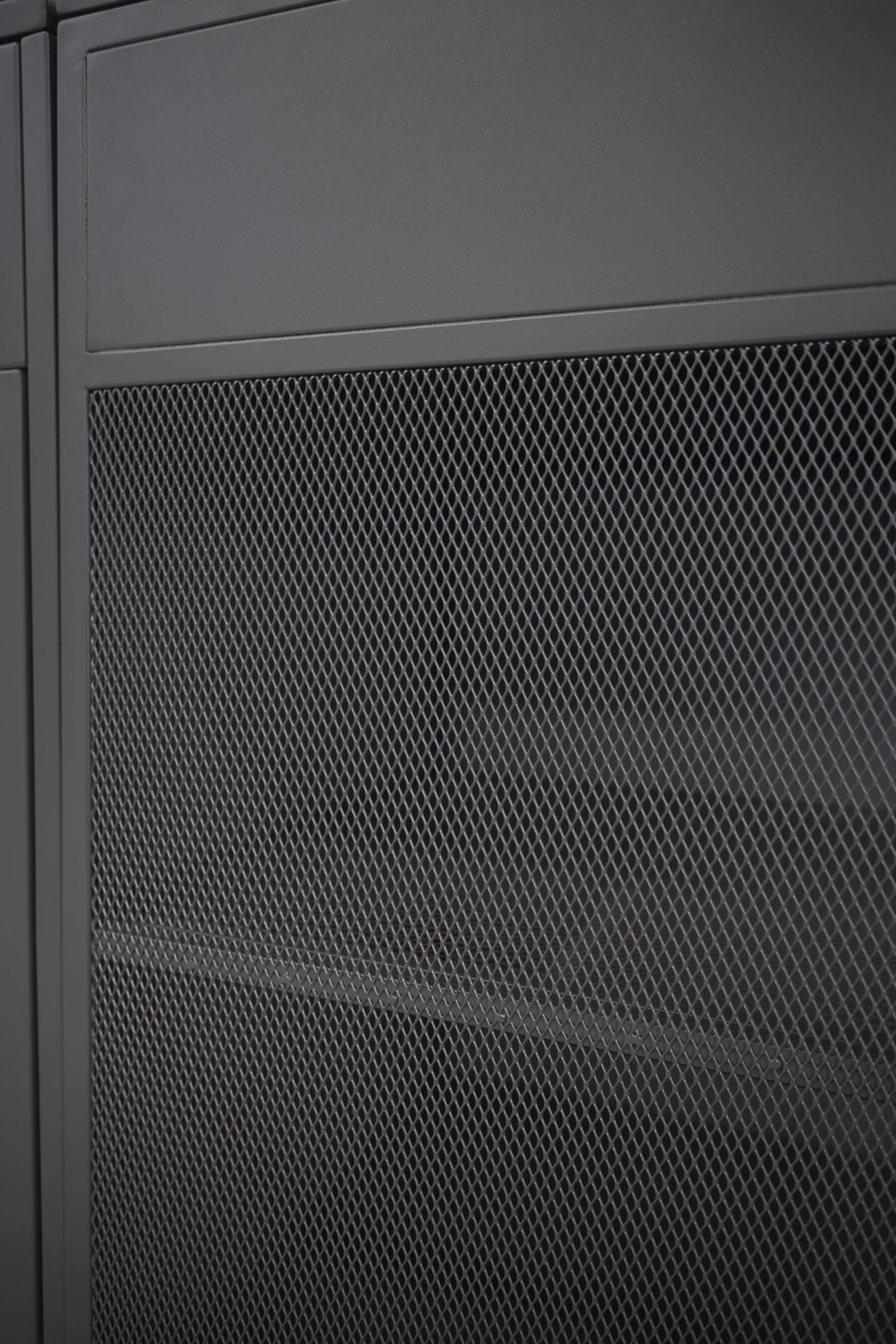 AXIS open mesh shelf. Identify the ordered module from its complete code.
 NOVA slatted shelf. Match the ordered part to its module and packing reference.
Identify the Packaging Level Before Assigning a Code
For modular outdoor kitchen sets, use the packing plan to confirm which references identify the complete set, the individual cabinets and any separately packed parts. If an order line spans several packages, read back the contents and expected count of each package. A buyer SKU is an internal item code. Where the channel uses a GS1 Global Trade Item Number, or GTIN, check which trade item the number identifies and whether a case has its own assigned number. The GS1 US shipping case guide illustrates that distinction. Confirm the actual receiving identifier separately.
When the assortment includes multiple configurations, compare our modular outdoor kitchen series and give each approved selection its own record. Decide which data the buyer supplies and which details the packer adds from the order. An outer shipping mark may serve receiving, while the retail carton carries the brand’s product copy. Approve the panel and purpose of each mark before the artwork goes back to the printer.
Review the Proof on the Finished Carton
Check the Visible Face After Folding
Ask for the current dieline, the drawing that marks the carton’s cuts, folds and glue areas. Overlay or compare it with the proof and trace each label from the flat drawing to the finished carton. Check which face will be visible when the carton is closed, stacked and presented to receiving. A model code set across a corner can read clearly on paper and break across two faces on the finished box. A closure strip can also cover the label.
-
Label across a fold. Follow both halves as the carton closes.
-
Glue tab. Locate the shared edge and check the agreed closure method.
-
Obstructed. The edge and closure interrupt the identification.
-
Clear in this example. The label sits on one visible face.
Generic carton example. Check the actual dieline, closure and receiving position. The marked area represents a label.
For a new panel position or a change to the box, review an agreed folded mock-up or production-representative sample. Have the printer identify the closure area and usable face, then check the panel in the orientation the warehouse will see. If the carton print identifies a particular surface or accessory, link the copy and product image to that component. The AXIS worktop edge and NOVA prep surface below illustrate two different features within the galvanized steel range.
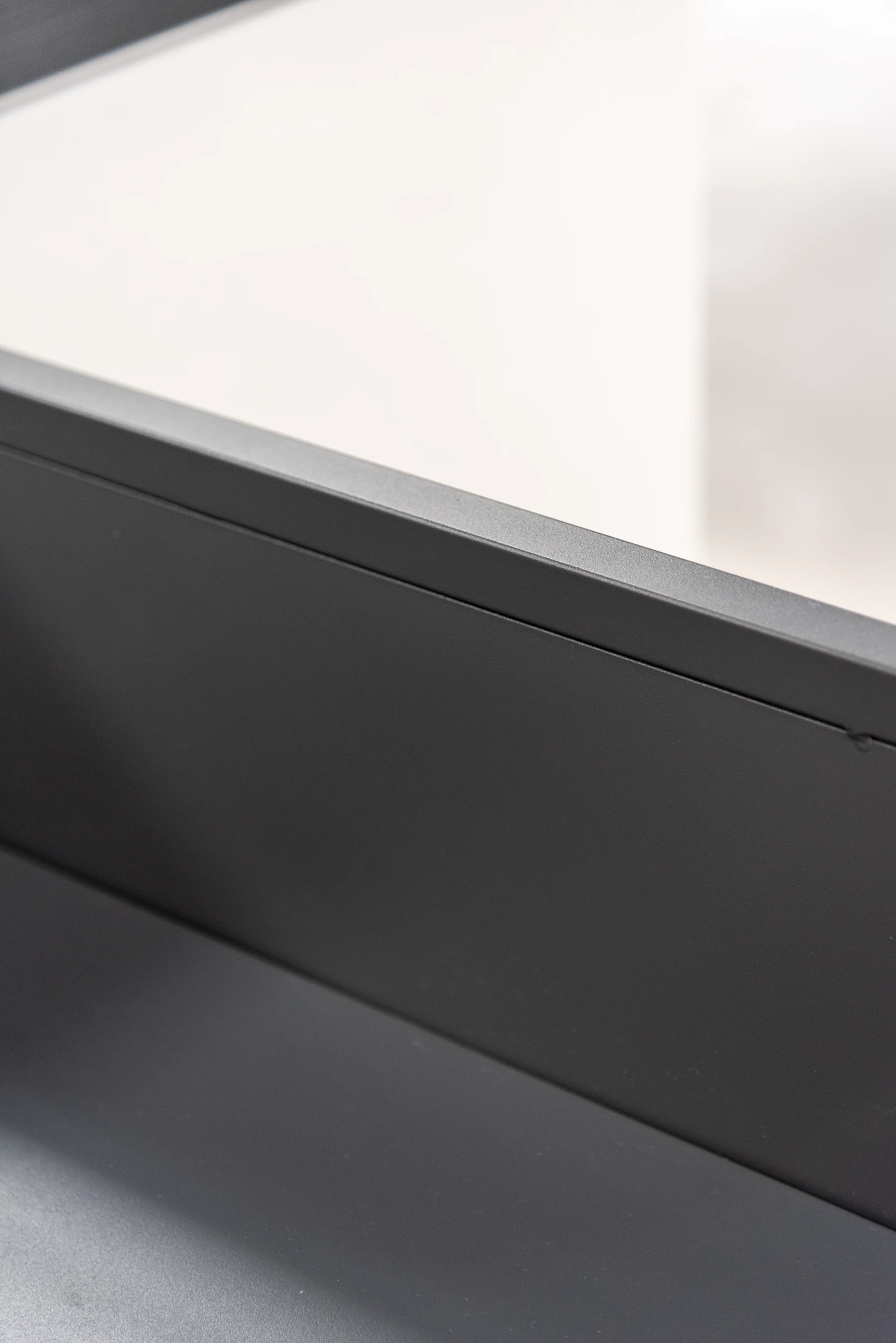 AXIS worktop edge. Match any worktop description on the proof to the ordered item.
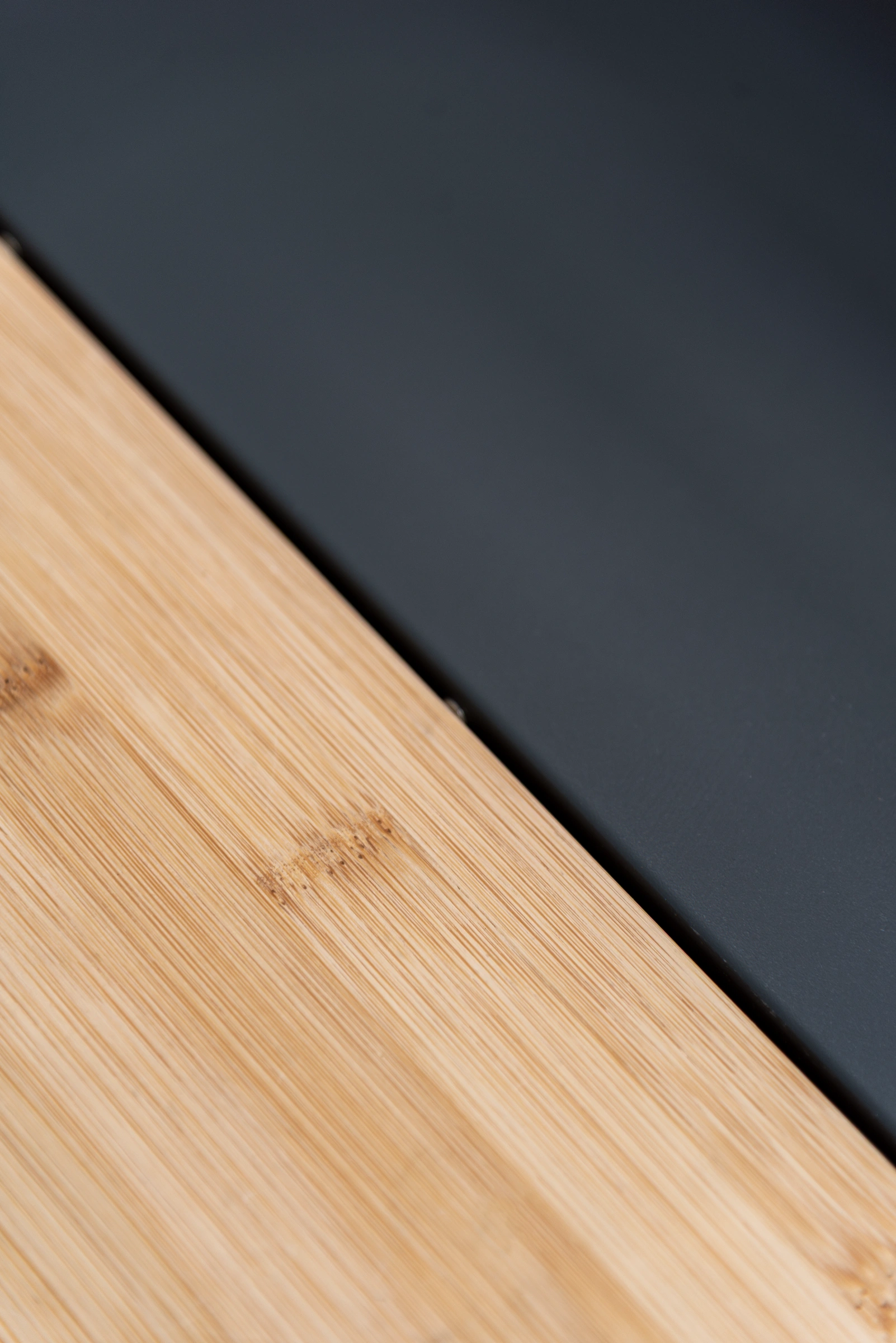 NOVA wood-grain prep surface. Use the selected module and its finish record when reviewing the copy.
Read the Copy and Verify Any Barcode
Read the product name, model, contents, language and applicable market text against the approved copy. Have the designated importer or market reviewer confirm which marks apply to the product and container. For U.S. origin marking, consult 19 CFR Part 134 for the rules and exceptions that may apply. Ask the brand reviewer to confirm the exact approved wording and its position before release.
When the pack uses a barcode, decode the proof and compare its data with the intended item and packing level. Inspect the printed symbol on the agreed substrate. GS1’s print quality checklist identifies checks such as contrast, quiet zones and positioning. Agree any formal verification requirement with the channel and printer, even if a quick scan reads the proof. When working with a modular outdoor kitchen manufacturer for private label brands, name the person who checks the approved proof against the packed unit.
Release One Identified Revision for Printing
Assign the Content and Print Checks
Have the brand owner approve the artwork and the market reviewer confirm applicable language. The manufacturer or its packaging coordinator checks the model, pack contents and closure plan against the order. The printer checks that the specified artwork can be reproduced on the chosen material and process. Agree the proof required for the job, especially where color or small text matters. APTech’s packaging workflow report describes the design, prepress and print handoff. 3M’s proofing requirements show one buyer’s way of specifying the proofs it needs.
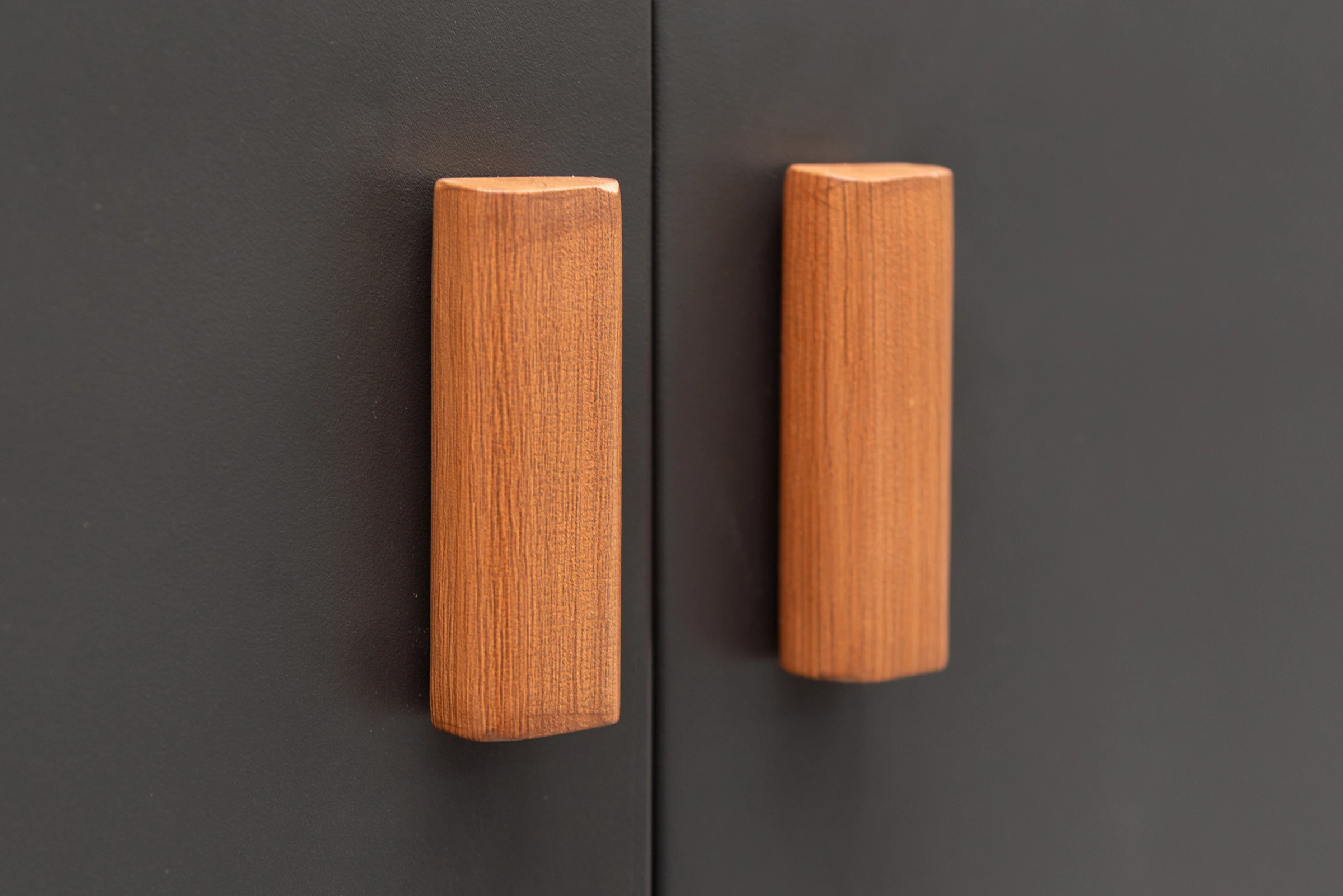 AXIS paired handles. Confirm any handle image in the artwork against its intended module.
For a custom outdoor kitchen project, review whether a model photo or feature claim still matches the configuration after a change. For example, record which cabinet or handle appears in a pack insert and which order lines use that insert. If the brand also changes the module or hardware, prepare a private label outdoor kitchen development brief for that wider scope. The artwork approval can identify the pack affected by the change and the evidence the reviewers need.
Record the Approval and Reopen Affected Items
Keep the artwork file, dieline revision and printer’s proof reference as separate fields in the release record. Attach the exact proof approved, name the authorized reviewer and list the order lines, destinations and packaging levels covered. Specify who may issue the print instruction. When copy, placement or construction changes, reopen the affected review and give the printer the authorized replacement issue. Ask which print or packing jobs still hold copies of the earlier artwork.
- Match the order
Check the module and packaging level.
- Review the proof
Check copy, identifier and folded face.
- Sign the issue
Record the named reviewer and exact files.
- Release to print
Send the authorized issue to the printer.
- Compare first print
Verify the received output against the proof.
If evidence differs, set aside the affected issue or printed stock and repeat the relevant review.
| Finding | Check before proceeding | Ask |
|---|---|---|
| Model or carton level differs | Confirm the order line and issue the corrected proof. | Buyer and packaging coordinator |
| Market text is open | Get the applicable wording and panel approved. | Brand and destination reviewer |
| Closure hides a marking | Review a folded proof with the proposed position. | Printer and packaging coordinator |
| First print varies | Set aside the affected print and approve the correction. | Printer and packing QA |
Assign roles for the order and retain the release decision for the affected work.
Give Packing and Receiving the Approved Reference
Compare the First Print With the Release Record
Ask the packing team to compare the first printed output or the agreed sample with the released proof. Check the model and copy, then close the carton the way the packing team will close it and confirm the label is visible. Verify any applicable symbol under the agreed conditions. If the first output differs, identify and set aside the affected printed stock for review. Record which print and order lines are affected and what must be checked before use.
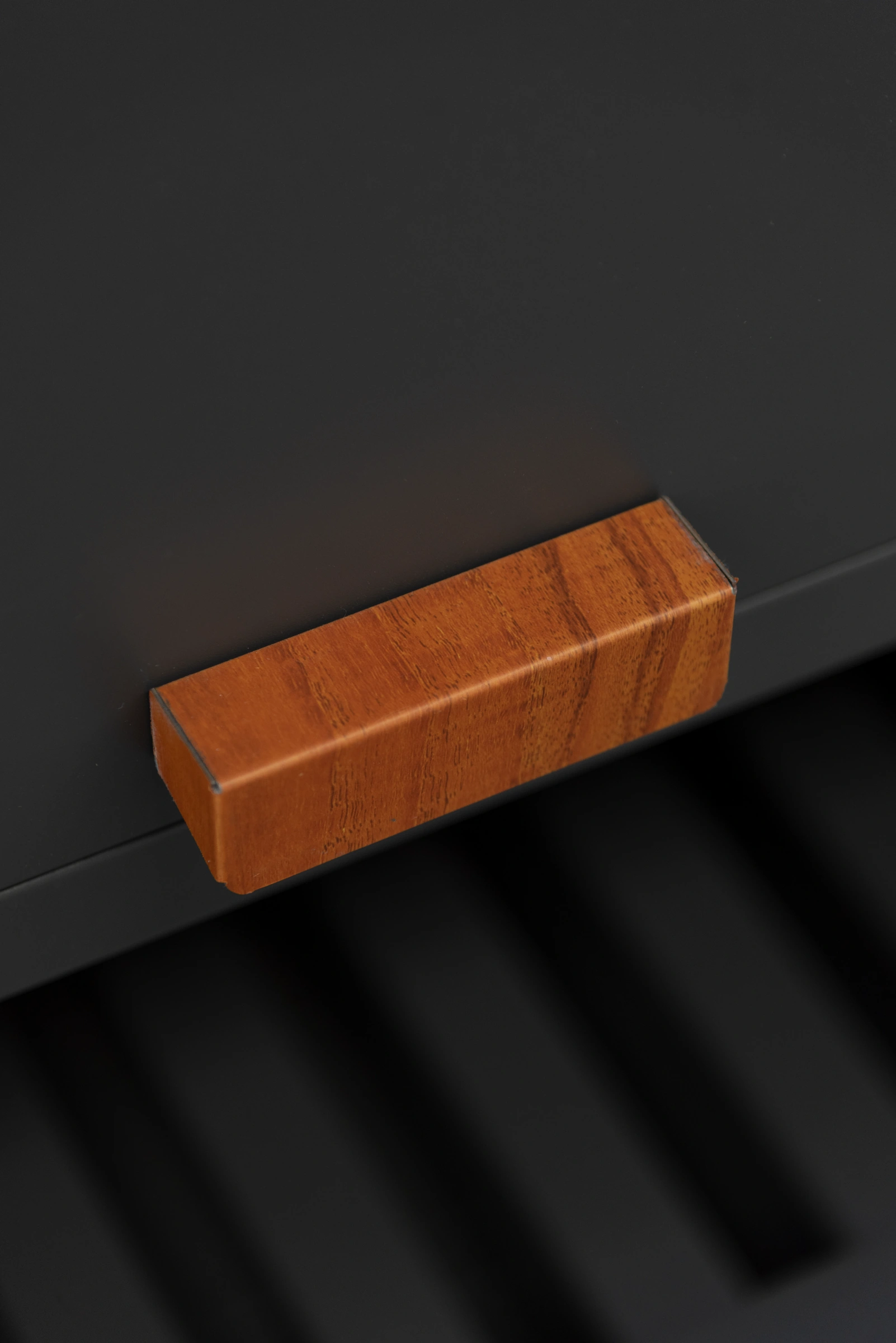 NOVA cabinet handle. Identify the ordered part before using a photo as a receiving reference.
Send Receiving the Information It Will Use
Give the warehouse an expected package list tied to the approved module references and the labels it will see. A wholesaler handling mixed models can use those references to check the receipt and direct exceptions to the supplier. Where an exporter prepares dispatch records, ask that team to carry the same package and model references into the handoff. Keep configuration changes traceable, especially when similar cabinet fronts are packed together. See how to plan shipping and delivery for modular outdoor kitchens for the loading and receiving preparations.
Apply the same product-to-carton check when the order also includes URBAN modular aluminum outdoor kitchen cabinets, METRO outdoor kitchens with 304 stainless steel worktops or ELITE outdoor kitchens with sintered stone worktops. Confirm that any printed material or feature description applies to the approved item. When coordinating with a Chinese outdoor kitchen factory supporting custom brand projects, give the packaging and print contacts the same approved references. See our outdoor living product range and our outdoor structure manufacturing facility for the products and factory workflow.
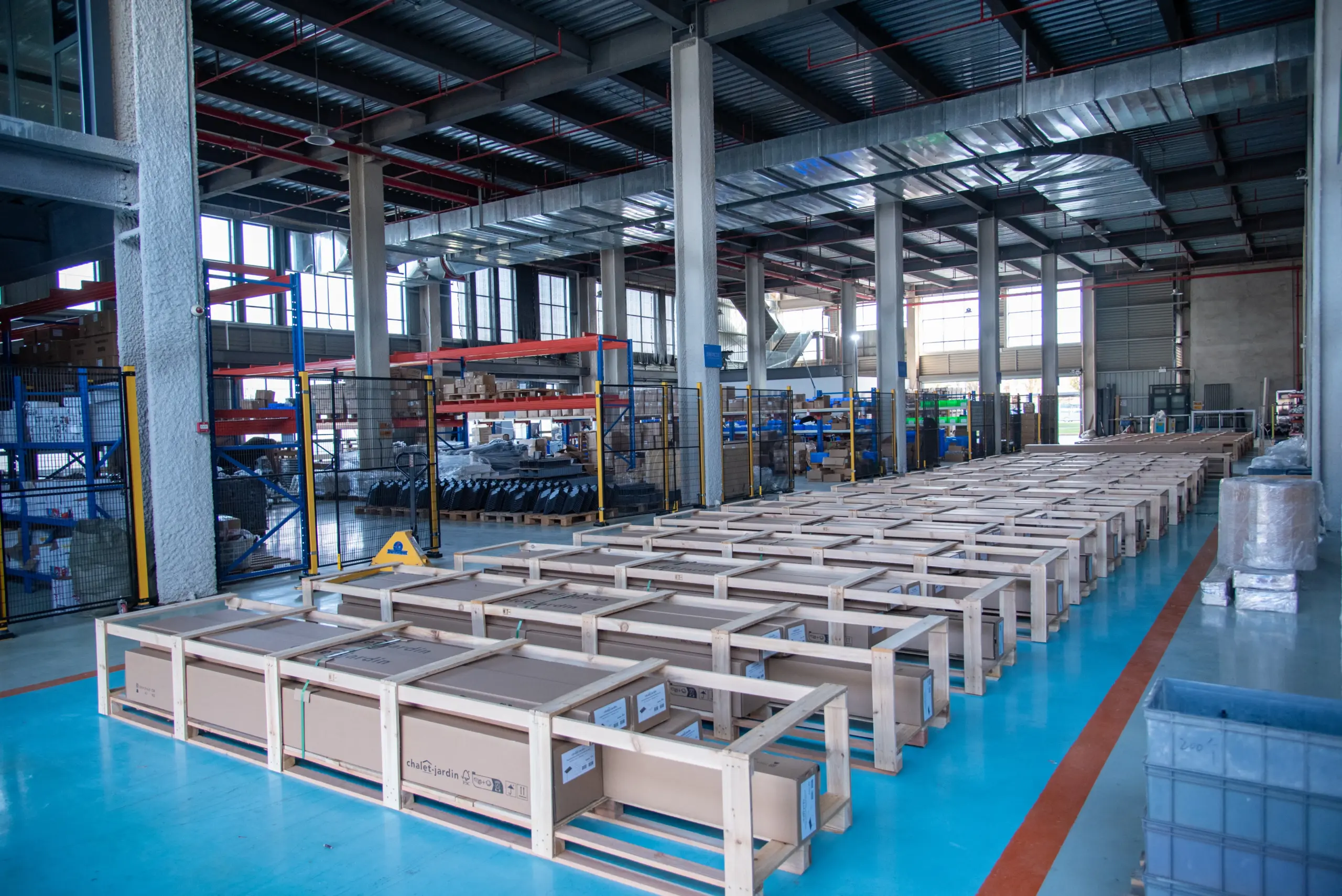 Packed goods in wooden frames at our factory. Confirm the packing and identification details for the selected order.
Frequently Asked Questions
Can customers identify a cabinet before opening its carton?
Yes, if your agreed carton label carries a readable model or item reference. Give dealers the matching module list so they can help customers identify each carton.
What should a packaging artwork proof identify?
It should identify the product or module, packaging level, destination and artwork revision. Check that the proof refers to the approved dieline and relevant order line.
Can similar modules share the same carton artwork?
Shared graphics can be used if variant identification stays correct. Verify the printed model, applicable barcode and contents for each packaging level and order line.
Are the buyer SKU and factory model code interchangeable?
Keep separate fields and map them to the same ordered item. A shortened model suffix can represent different functions in different series.
Is a PDF proof enough before printing cartons?
A PDF can support copy and layout approval. Confirm the checks needed on the finished carton when the substrate, color, folds or barcode quality matter.
Who approves wording for the destination market?
Name the authorized brand and market reviewers. The designated importer or compliance contact should confirm which language, origin and product markings apply.
When should revised carton artwork be approved again?
Reopen the affected approval when identifiers, wording, placement, carton construction or the printing basis change. Release the corrected revision with its applicable scope.
What should the packing team check on first print?
Match the approved revision, module and pack level. Check the visible panel after folding and verify any barcode under the agreed receiving conditions.
Materials, hardware, installation requirements, packaging and final customization are confirmed for each order and destination.
