For a powder coated aluminum pergola, specify the finish by component, site exposure and an approved physical sample. The order should also identify the coating system, the evidence that applies to it and the changes that would require renewed approval. A color name can start an inquiry. Aluminum beams, steel sun louvers and separately supplied hardware each raise different decisions. This guide helps importers and distributors turn those decisions into one specification their manufacturer can quote, sample and confirm before production.
Approve the appearance on representative parts
Record color, gloss and texture as separate fields
A purchase specification begins with the color reference, then establishes how the finish should look on the product. Record the exact color name or code, the expected gloss and texture, and any project-specific appearance requirements. Ask the supplier to identify the actual finish offered against those fields. A configuration presented as dark gray can be smooth or textured, for example, and the two surfaces can reflect light differently even when they are intended to have the same color. Approve those visible characteristics before the quote is converted to an order.
Use a physical reference when the project specifies a color match. Screen previews and photographs help a team narrow the options while the RAL reference helps identify the intended color. For approval, use an agreed coated sample and record its identity, the finish reference and who accepted it. A sample can travel with the order record so the buyer, supplier and installer can refer to the same finish even when they work in different markets. RAL guidance on digital colors and physical samples.
Set the viewing condition for neighboring surfaces
Consider how the assembled pergola will be seen. A post may be viewed upright from the patio while the louvers are primarily seen from below and at an angle. Agree which faces matter most, how to position the samples and what lighting to use when making the decision. Compare exposed parts together when their relationship matters. For example, review the underside of a louver alongside a beam face so the buyer can discuss visible variation where the roof meets the frame.
When matching another outdoor product, identify the part that provides the reference. A swatch matched to a nearby door frame might meet the designer's intent in one viewing condition and show a different sheen from another angle. Mark that neighboring part and ask for a representative pergola sample if the match is commercially important. For a custom color, we can review a physical reference and confirm the sample for the order. Carry that sample identifier into the coating schedule.
Ask the reviewer to distinguish the conditions that matter for the particular sale. A showroom buyer may judge a frame and roof panel together at short range. A project specifier may primarily see those surfaces against existing masonry or glazing. Use enough of the actual profile to review the relevant condition and record it with the sample. The supplier can then propose how to demonstrate the appearance on the parts the customer is likely to compare. In the PRESTIGE detail below, the roof underside and neighboring enclosure are visible from one seated position. Use that viewpoint to agree how their finishes should be reviewed.
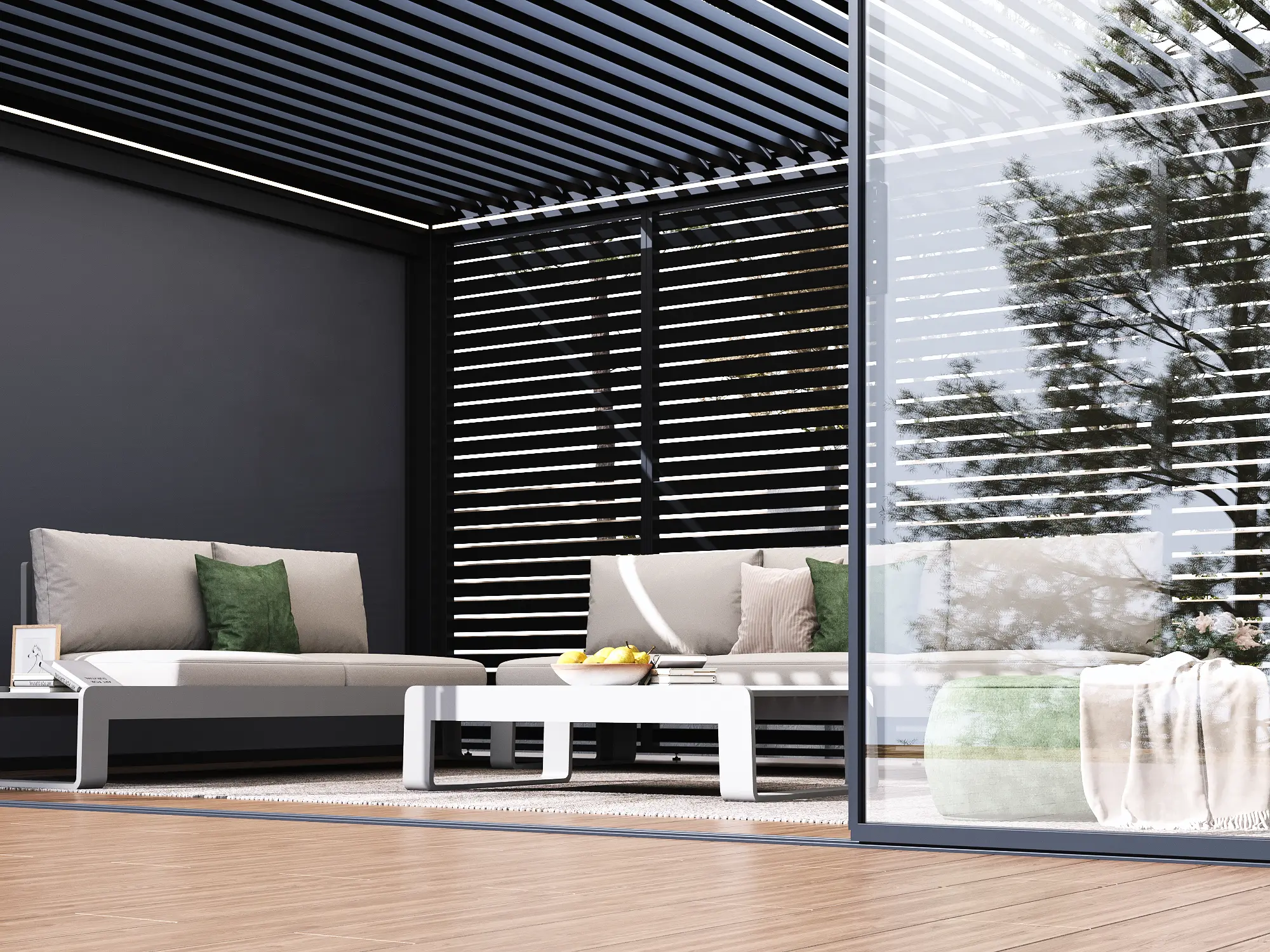 PRESTIGE roof underside and adjacent enclosure. Review samples from the angle at which the parts will be seen together.
Write the coating schedule by pergola component
Identify the actual metal under each finish
List the selected product, drawing revision and relevant parts before writing a coating requirement. The aluminum louvered pergola collection helps identify configurations, and the individual product page gives the starting material information. PRESTIGE with aluminum posts, beams and louvers gives a clear example of those three components sharing a substrate family. We list six named color options for PRESTIGE. Confirm the selected option and its physical sample on the order. Keep any separate requirements for accessories and fixings against their own part references.
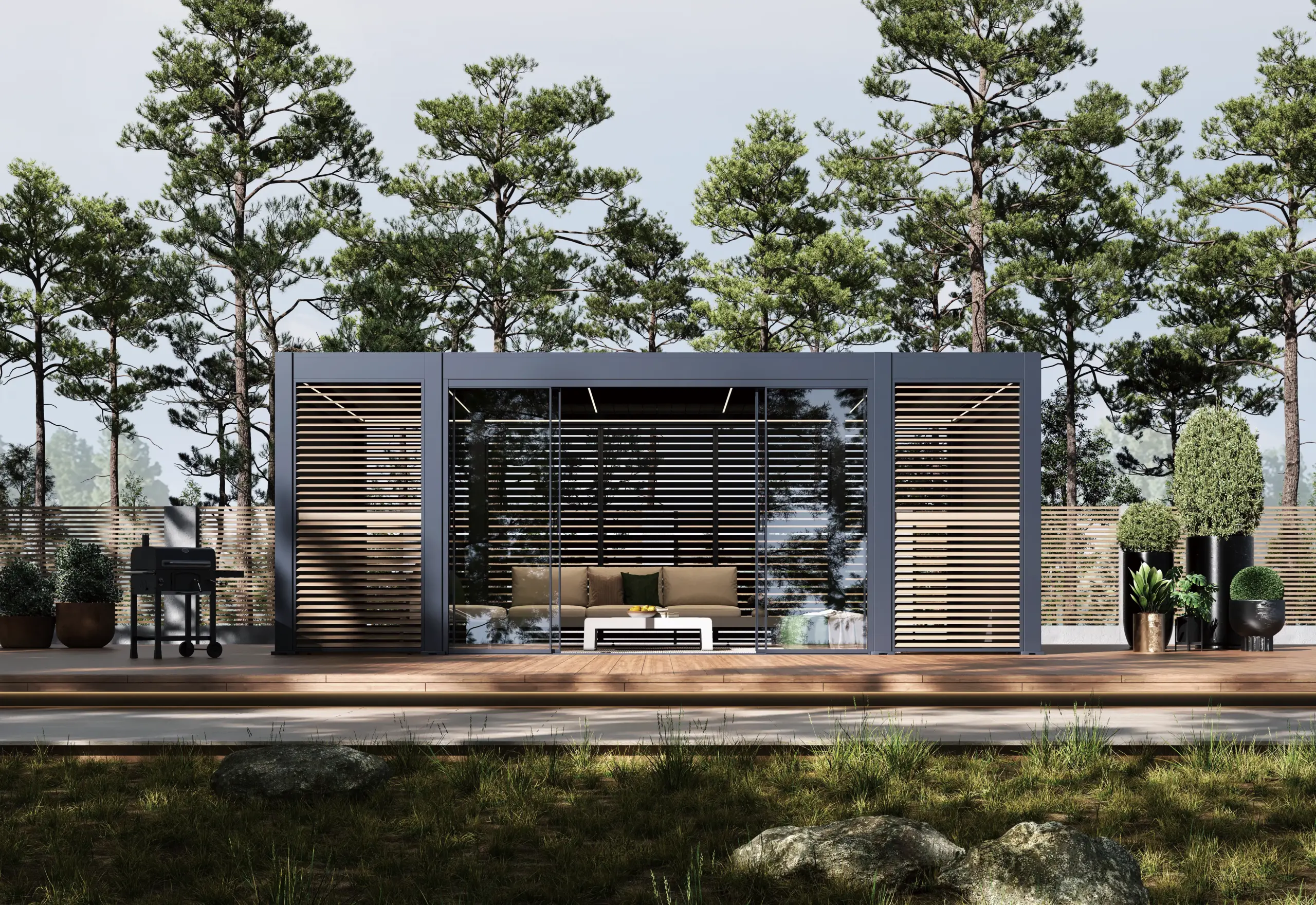 The PRESTIGE scene shows adjacent aluminum posts, beams and louvers in one assembled setting.
The schedule changes when the metals change. The NEO STEEL with steel louvers and an aluminum frame illustrates why substrate belongs on each part entry. A buyer can request a coordinated appearance across the frame and roof while checking the requirements that apply to each material. If an offered coating system refers to an aluminum reference standard, establish its scope for the beam and post, then ask for the appropriate evidence for the steel louver. The same approach helps when consulting our outdoor living product range by category for related project components.
- Post. List visible faces and lower areas where water or cleaning runoff can collect.
- Beam. Distinguish exposed faces, undersides and any channels with separate finish requirements.
- Louvers. Confirm blade substrate and the finish on top faces, undersides and visible ends.
- Joints and interfaces. Record coverage boundaries at fasteners, cut edges and contacts between different metals.
Define the coverage boundary on the drawing
Give the buyer and supplier a common way to identify the surfaces that need attention. Mark exterior faces, the louver underside, exposed profile ends and any project-critical drilled holes or machined areas. On a visible corner, ask whether the first sample represents the approved edge condition as well as the flat face. The PRESTIGE beam-to-post junction below gives buyers a place to identify the adjoining visible faces and meeting edges. Record requirements for difficult-to-reach areas and confirm the intended treatment for the selected profile.
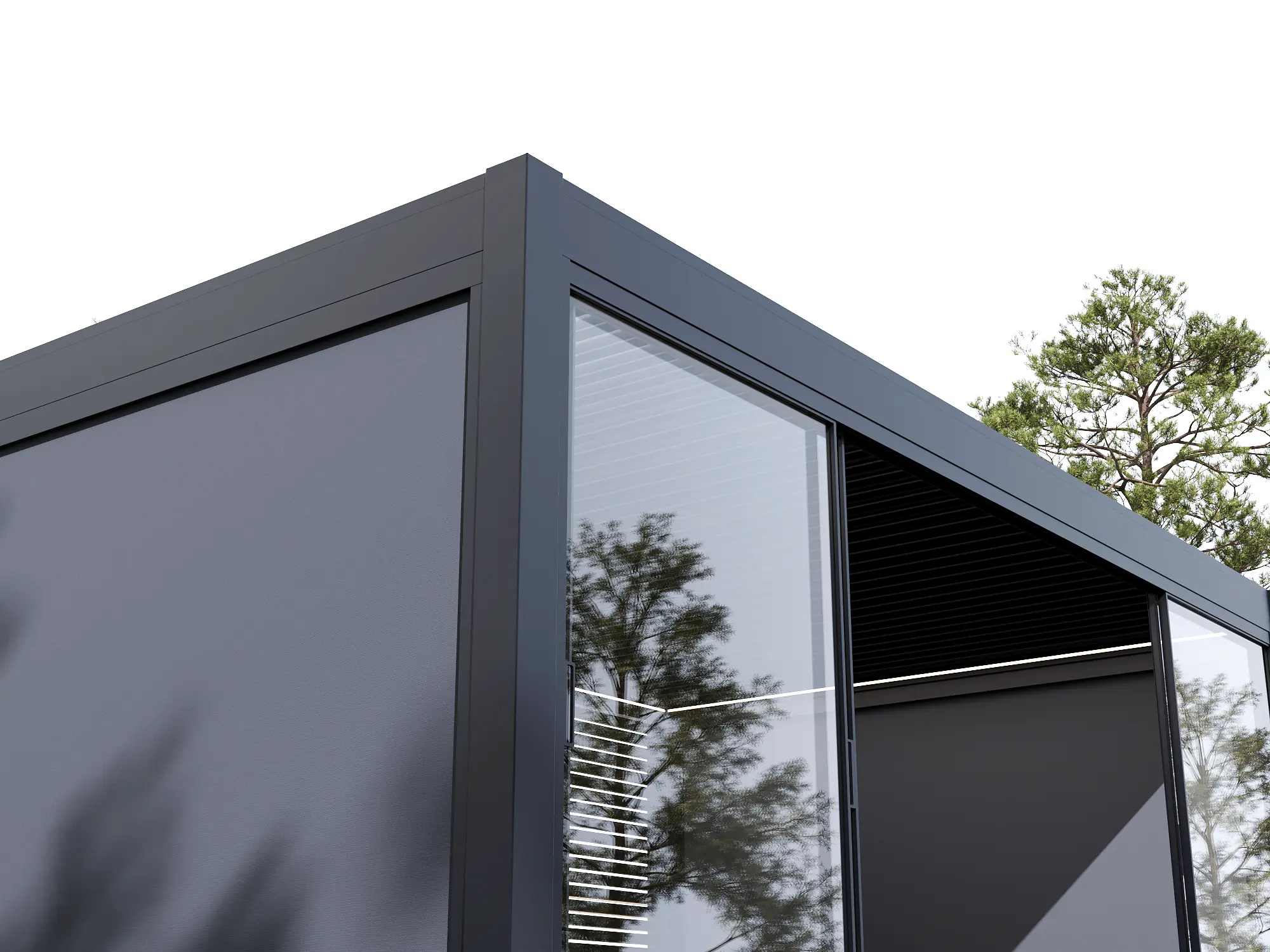 PRESTIGE beam-to-post corner. Mark the faces and meeting edges that need their own finish requirements.
A finish schedule also records how components meet. Mark where a fastener contacts a coated part, where a cap meets the profile and where a connection will be adjusted during installation. Ask what treatment or hardware is included for these locations. If a later operation would change an approved surface, agree who reviews it and what written instructions govern the work. This creates a purchasing boundary the installation team can use while keeping detail dimensions and sealing requirements with the approved assembly documents. At the PRESTIGE lower glass-door track, identify the exposed track surface separately from the main frame and confirm its specified finish.
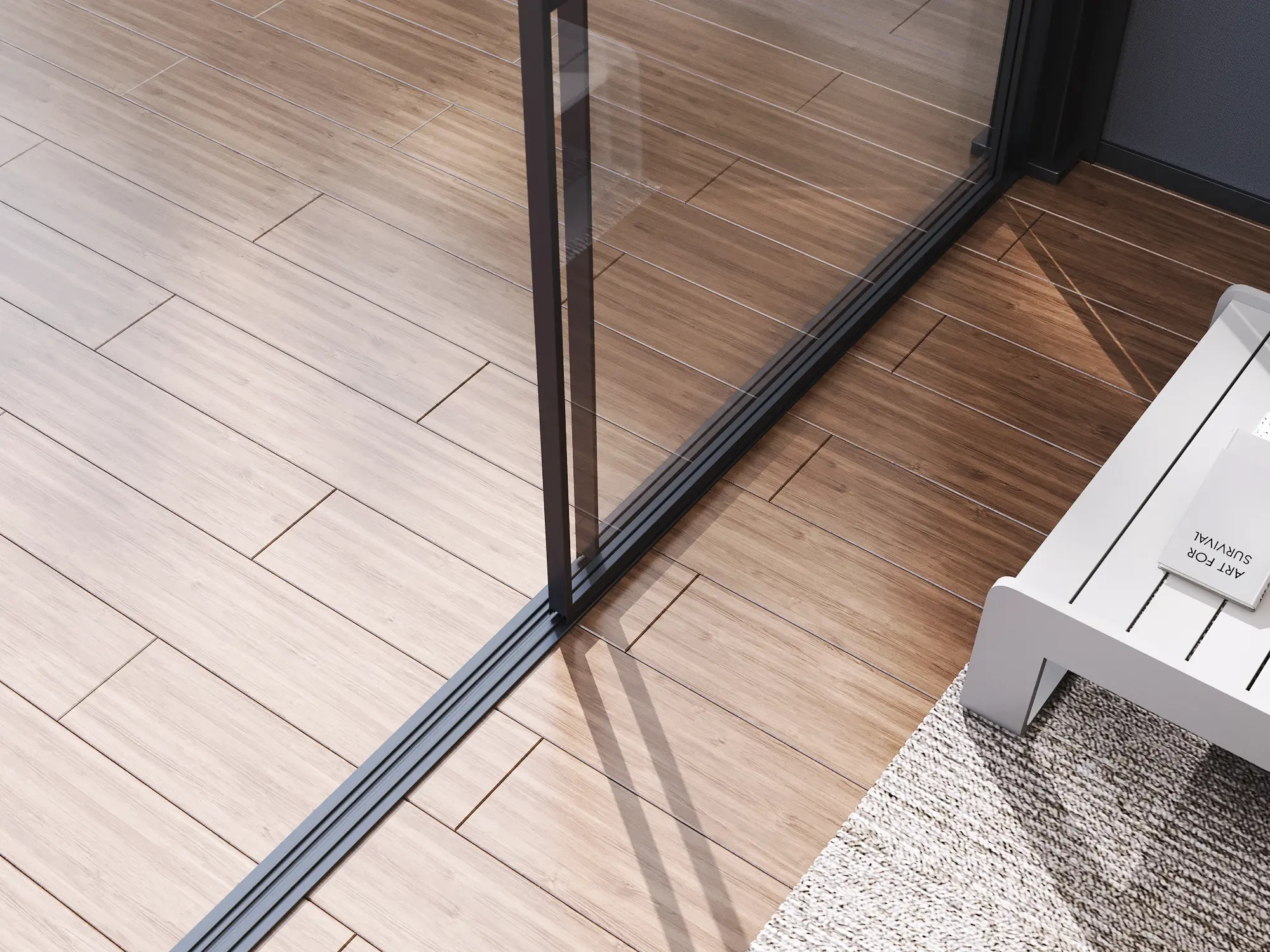 PRESTIGE lower glass-door track. Confirm any exposed track finish separately from the main pergola frame.
- Powder finish. Record the proposed powder system and the approved color, gloss and texture for the part.
- Pretreatment. Ask the applicator to identify the preparation and pretreatment for the specified substrate.
- Base metal. Confirm which material results apply to. If the coating system has additional layers, record those separately.
Give the supplier enough detail to quote and sample
Group parts together where the project uses the same substrate, appearance and applicable coating evidence, then list exceptions separately. Use the following matrix to decide what goes in the inquiry and what must be established before an order is released. When a buyer works with an aluminum pergola manufacturer for customized coating specifications, identify which decisions are fixed by the project and which are open for the manufacturer to propose. Both sides can then recognize the work required for samples, supporting documentation and changes.
| Component or decision | Record in the inquiry | Confirm before the order |
|---|---|---|
| Posts and beams | Drawing revision, substrate, exposed faces, color reference, gloss and texture. | Coating system proposed for those parts and the agreed representative sample. |
| Louvers | Louver material, visible underside, relevant edges and any coordinated roof color. | Sample facing the intended viewing direction and evidence appropriate to its substrate. |
| Fasteners and interfaces | Hardware references, areas of contact and modifications planned for installation. | Included finishes, approved treatments and responsibility for any site work. |
| Site exposure | Project location, degree of shelter, sun exposure and any salt or persistent wetting. | Applicable performance criteria and care guidance for the proposed system. |
| Order release | Required documents, finish sample IDs and proposed change approval authority. | Which parts the evidence covers, outstanding items and triggers for renewed approval. |
Relate the automated coating line to the order
Identify the equipment and powder selected for the project
At Outdoor Creation, our factory has a fully automatic line designed for electrostatic powder coating. It uses high-performance spray guns from Swiss coating equipment maker Gema. We select powder coatings from AkzoNobel and PPG, two internationally recognized coatings manufacturers, according to the project and finish requirements. Together, the equipment and selected materials support consistent application and the specified appearance. Ask which powder product is proposed for your order and how it fits the component, exposure and performance requirements. Outdoor Creation pergola materials and surface finish guidance.
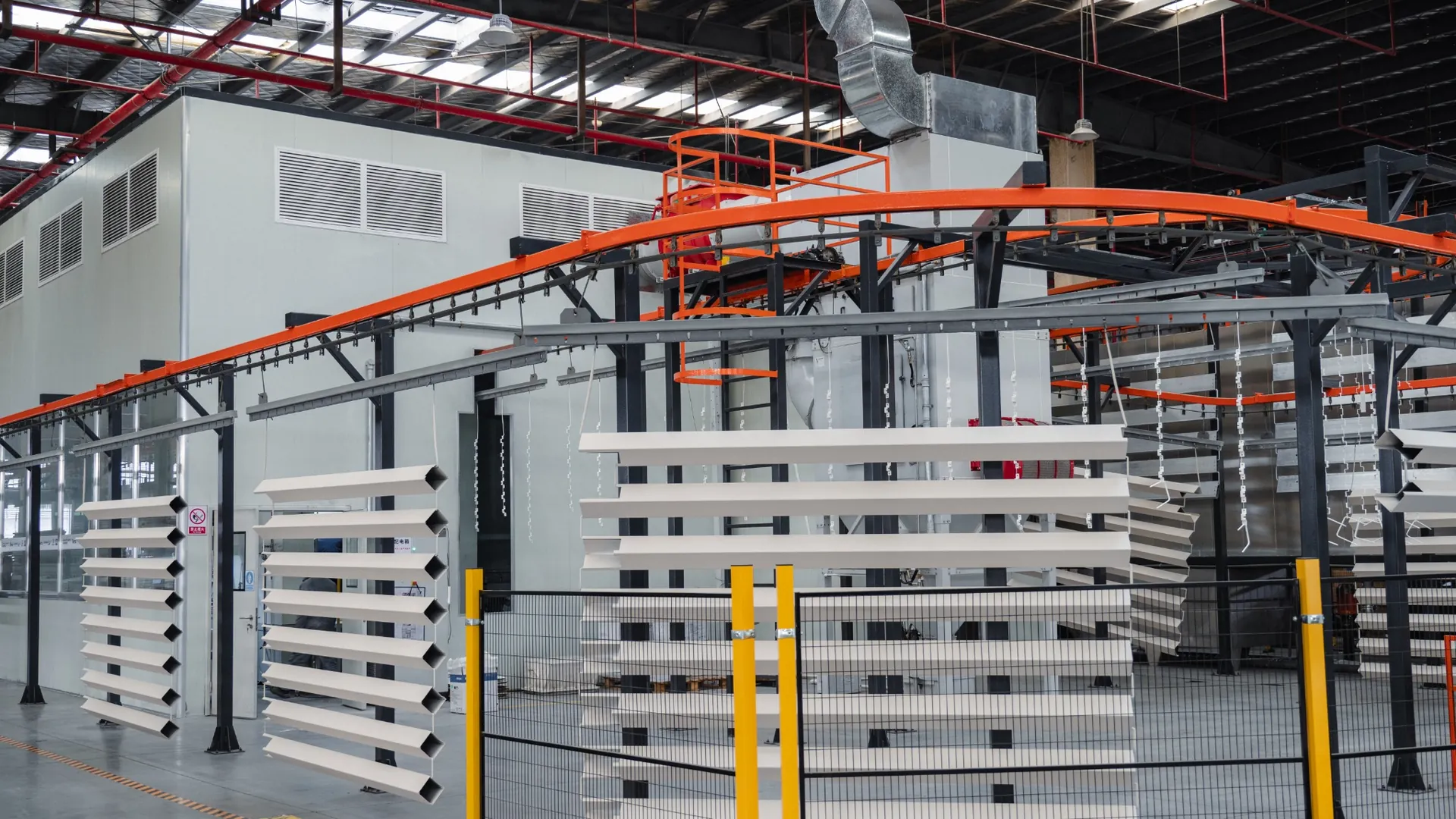 Metal profiles suspended from the overhead conveyor on Outdoor Creation’s powder-coating line.
Dry powder application can reduce solvent-related emissions compared with some solvent-based coating methods. For a project with environmental documentation requirements, request the technical and safety data for the proposed powder and any required declarations. Ask the supplier to identify the formulation and application conditions behind any declared environmental attribute. Aluminum Extruders Council overview of powder coated finishes.
AkzoNobel and PPG offer exterior powder formulations with documented corrosion-resistance properties for specified systems. Request the data for the grade proposed on your order and match the evidence to the pretreatment, substrate and exposure. The manufacturer’s data can guide the selection and document the test conditions used for the proposed system. AkzoNobel exterior powder technical data example and PPG architectural powder coatings overview.
Read the typical process in the order parts travel
In a typical electrostatic line, parts are cleaned and pretreated for the substrate, then dried before the spray stage. The spray equipment charges the powder, which is attracted to grounded parts. The applied powder is then cured according to the applicable product requirements. After cooling, parts can be checked against the agreed criteria. These stages help a buyer organize questions about the line and finish. The equipment arrangement, temperatures, timing and target values belong to the applicable specification and agreed production documents. PPG explanation of electrostatic spray deposition.
- Prepare. Clean and pretreat the metal for the specified coating system.
- Dry. Ensure prepared parts are dry before powder application.
- Spray. Use automatic electrostatic guns to apply powder to grounded metal parts.
- Cure. Heat the coated parts under the powder supplier’s specified cure conditions.
- Cool. Allow the cured parts to cool before handling and assessment.
- Inspect. Check the finished parts and sample against the project acceptance requirements.
A source factory can apply and control an automated finish in-house only when its technical team can manage the full process and demonstrate the result on representative parts. For B2B buyers, that means asking the factory to explain the agreed preparation, powder application, curing and inspection controls, then show a sample made for the proposed custom finish.
Separate what the buyer needs to prescribe from what the manufacturer needs to confirm. The buyer defines the intended use, permitted appearance and required evidence. The manufacturer identifies the proposed finish system and confirms how its process supports the agreed requirement for the ordered parts. If a contract requires a named powder or a specific surface preparation, put that requirement in the order documents alongside the drawings and the approved sample. Give the supplier the opportunity to identify component-specific exceptions during quotation.
The component schedule can also clarify which parts are available to compare in one sample review. A beam, louver and separately sourced cover can have different handling and approval routes. Tell the factory which parts must be reviewed together and which can be shown with their own references. If the supplier proposes a sample assembled from comparable materials, ask which features it represents and which need confirmation on the ordered component before release.
Match the exposure and evidence to the selected parts
Describe what the installation will actually face
Give the supplier enough site information to review the finish. A roof louver in direct sun and rain can have a different exposure from a post under an overhang. For a salt-exposed site, explain where deposits may accumulate and how the installed parts can be accessed for cleaning. Where wetting remains a concern, identify the exposed connection and the parts involved. Attach a marked plan or representative site photographs when they help explain the conditions. Have the applicable care requirements confirmed alongside the coating proposal.
For a repeat range serving several markets, state which market conditions a single finish specification is intended to cover. An importer can define a standard set of appearance options and route an unusually exposed site for a separate review. Give the supplier a clear list of required site conditions, then identify any project for which a maintenance plan or additional evidence is needed. This helps maintain one baseline offer while keeping site-specific decisions visible before the production schedule is agreed.
Trace the test or approval to the proposed system
When a buyer requires a named standard, record the document, edition, relevant part and expected evidence. FGIA's AAMA 2603, 2604 and 2605 specifications describe test procedures and performance requirements for categories of organic coatings on architectural aluminum extrusions and panels. Agree the applicable requirement for the order and ask which part of the proposed system the supporting report represents. Keep the tested substrate and finish visible on the review record, including any difference between a flat specimen and a shaped component. FGIA catalog of AAMA aluminum finish specifications.
When a specification calls for the QUALICOAT quality label, verify the actual documentary scope before using the label in order materials or downstream sales literature. The published scheme describes requirements for equipment, coating materials and finished products. Ask for the evidence applicable to the relevant facility and system. For test reports, capture the specimen, method, result and the agreed requirement. A request for film thickness should define the component, measurement locations and acceptance criteria for that order. QUALICOAT specifications and quality label requirements.
At document review, check that the evidence answers the question written in the inquiry. A test on a coated aluminum panel supplies evidence for the tested conditions. If the order also includes a steel louver or a cut edge added after finishing, identify that exception and ask for the supplier's proposed evidence or treatment. A sales description, sample approval and test result each answer a different question and can be filed together against the same order line.
Release the order with a traceable finish decision
Keep appearance approval and performance evidence together
Gather the approved sample identity, part schedule, proposed coating description, applicable evidence and open questions in one controlled set of order documents. Capture which reviewer approved each sample and which parts it represents. If the approval refers to a particular extrusion, coating or test record, link that item to the schedule. This allows the procurement team to see whether a whole frame can be released while a separate accessory or roof part still needs clarification.
Provide the finish schedule in advance when discussing a project with a direct pergola factory for importer finish approval. Identify the components a customer will compare side by side, then list the documents and samples needed before production. We can review those requirements against the proposed configuration at our Outdoor Creation outdoor living manufacturing facility. For the later stages of checking physical production and shipment, see our aluminum pergola quality control checklist for buyers.
Set the changes that need renewed approval
Agree the change triggers before the work begins. A proposed powder substitution, a change to the substrate or pretreatment, a different source of a visible accessory, or a revised site exposure can affect the original decision. Name the buyer and supplier contacts who will review changes and state which documents they must submit. Where the appearance is affected, give the reviewer a way to compare a new sample against the approved reference and its neighboring parts before authorizing the revision.
Use an explicit hold point when an approval affects what the manufacturer will produce. For example, an importer may accept the frame sample while waiting for confirmation that the louver finish meets a separately agreed criterion. Mark the affected entries as open and state how they are to be closed. Before authorizing production, trace those entries back to the final drawings, the confirmed powder proposal and the person authorized to sign the decision.
Keep the final record with the order and the care guidance supplied for the selected finish. If a retailer later needs to discuss sheen variation or request a replacement part, it can use the exact component and sample reference to raise the question. A coating specification is ready for production when the agreed appearance, the intended use and the required evidence are all tied to the parts the buyer is ordering.
Frequently Asked Questions
Can the same RAL color look different across parts?
Yes. Gloss, texture, lighting and surface orientation can change how a color appears. Compare adjacent components against the approved physical sample under agreed viewing conditions.
Does an approved swatch define the coating system?
A swatch records the agreed appearance. Specify the component substrate, preparation and powder system separately. Link the swatch and technical documents to the same order revision.
What should buyers specify for coastal pergola projects?
Describe the site’s expected salt exposure, shelter and maintenance access. Ask the supplier to confirm the proposed system, its evidence and any conditions for the selected components.
Can an aluminum coating specification cover steel louvers?
Specify steel louvers separately. Confirm their substrate, pretreatment, coating system and evidence with the supplier, even when the intended color matches the aluminum frame.
Does powder brand alone determine finished coating performance?
Performance depends on the specified powder, substrate, preparation and cure, along with actual exposure and care. Ask for evidence that applies to the finished component.
When should a pergola finish be approved again?
Reopen approval before production if the component substrate, preparation, powder system, application route or agreed exposure changes. Record replacement evidence and any new sample approval.
Materials, coating systems, hardware, installation and order conditions vary with the configuration and project. Confirm customization options and final specifications before production.