A pergola shipment should arrive with each package traceable to the approved order and its intended installation. Give the receiving team a packing list that links package marks to structural profiles, hardware, motor controls and any agreed accessories. Importers can use those records to spot shortages during the agreed receiving check. Distributors can carry the same references forward when several installations share a warehouse delivery.
Check three records before releasing a pergola shipment to the installation team. Use the approved configuration to establish what belongs to the order, the packing list to identify where each part is recorded, and the receiving record to document what arrived. Log missing packages, shortages, wrong parts and visible damage separately so the next team can resolve each issue.
Define What the Shipment Must Contain
For B2B importers, planning pergola shipping and handover starts with the approved configuration. A distributor may receive several systems of the same series and finish on one vehicle. Its warehouse has to deliver the parts that belong to each job, including items that may arrive separately. The specification gives the warehouse something to check against when similar parts and labels appear in the same delivery.
- Confirm the order Lock the configuration and revision.
- Match the packages Link package marks to the parts and quantities.
- Send the records Share the final list and receiving details.
- Check the delivery Check package marks and condition. Check contents as agreed.
If the delivery differs: Record and route the discrepancy. Confirm which packages can proceed.
- Release to the project Pass on the matched parts and records.
Designed and created by the Outdoor Creation team.
Start with the approved pergola configuration
Record the order and project reference, selected series, nominal size, installation type, finish and roof control. Add the approved drawing or specification revision and identify any destinations or job groups that share the order. If the buyer is still selecting a series, start with the aluminum louvered pergola systems. The outdoor living products overview helps when the same program covers several product categories. The shipping reference comes from what the parties eventually approve for that order.
A small order can use one project reference throughout. When one shipment covers several locations, give each destination a reference the factory and warehouse can both recognize. If units will be drawn from stock, identify the batch or stock group at receipt and record the job allocation when it is made. Either approach makes it possible to check which parts should leave together when the warehouse prepares the next delivery.
Keep an approved copy available to the purchasing team and any warehouse staff who need to verify a part. A late change to a roof control or side screen can affect the part list, the packing records and the documents an installer receives. Identify the change and confirm which records it affects before issuing the updated set. That also gives the warehouse a way to check whether an older list is still in circulation.
Separate structural parts, controls and options
Take a nominal 4 × 4 m, four-post freestanding PRIME MAX motorized louvered pergola as an example. The aluminum post, beam and louver profile cross sections are 136 × 136 mm, 195 × 95 mm and 166 × 38 mm respectively. These figures help distinguish the three component types in the configuration. Use the order drawings for part identification and the packing list for actual package measurements. PRIME MAX also has a manual roof option, so specify the selected motorized configuration in the order record.
Nominal 4 × 4 m · Freestanding · Motorized configuration
- Aluminum post
136 × 136 mm cross section - Aluminum beam
195 × 95 mm cross section - Aluminum louver
166 × 38 mm cross section
Check hardware, motor controls and selected accessories against the order. The drawing is schematic.
Designed and created by the Outdoor Creation team.
Check the required structural hardware against the order alongside the posts, beams and louvers. For the motorized roof, identify the motor and control components specified for the order. If a remote, sensor or other device is specified, ask the packing team how it will be identified. Check selected pergola accessories, such as a compatible screen or beam lighting, against the approved configuration and supply list. The same series name can appear on orders with different control and accessory scopes.
Mark each line according to its confirmed supply status. A component can be included in this shipment, supplied under a separate shipment reference or provided locally by an assigned party. For instance, a distributor expecting an accessory in a later delivery should carry that reference into the warehouse record. The installer can then account for what is outstanding before scheduling the work that depends on it.
Match Each Package to the Order
A useful pergola packing list connects what the buyer ordered to what the warehouse can see on the outside of each package. Start with fields commonly used in export documentation, such as package marks and types, descriptions, quantities, and weights and dimensions as applicable. Add the part and project information that supports reconciliation at your warehouse. The International Trade Administration guidance on export documents identifies common packing-list fields and gives the commercial invoice its own role.
Connect package IDs to parts and quantities
For pergola package identification, use the package ID or mark from the outer label to look up the corresponding list entries. The part number describes what to expect inside. The order and project references tell the receiving team where to assign the contents. If the same package carries more than one part number, give each item its own entry. If a part quantity is spread across packages, show the quantity in each package so the receiving team can reconcile the total.
| Record field | How it is used |
|---|---|
| Order and drawing revision | Sets the approved configuration and identifies which project or purchase order the delivery belongs to. |
| Package ID | Links the outer mark to all corresponding packing-list lines. Cross-reference shared or split contents. |
| Part number and quantity | Identifies the expected item and count in each package. Record separately shipped items under their own shipment reference. |
| Project or installation position | Connects what arrived to its planned destination. Add this reference when the distributor splits the shipment. |
Designed and created by the Outdoor Creation team.
For example, two installations may use the same pergola frame while only one order includes beam lighting. The warehouse can allocate the frames by project reference and check the lighting against the order that specifies it. If that lighting ships separately, retain its own shipment reference on the allocation record.
When similar items go to different projects, distinguish them with the agreed identifiers on the label and supporting records. A long beam may look like one from another order even when its part reference differs. A smaller package of hardware can also be staged with the wrong structure. In a warehouse using GS1 logistics labels, a GS1 Serial Shipping Container Code can identify the logistics unit. Agree separately how the team will look up the part quantities and project assignment.
When briefing an aluminum pergola manufacturer for shipment planning and handover, explain how warehouse staff locate items and whether they separate stock by order, project or delivery. Request the package references and fields they need to do that work. For custom packing or buyer labels, confirm the layout and the documents that will use the same identifiers. If packaging changes are part of a larger OEM or ODM program, address them in the custom pergola development and packaging approval process.
Check the packing plan against the receiving site
Ask for confirmed external dimensions and weights as the shipment plan is finalized. Check the vehicle approach, unloading location and onward route against the longest and widest packages. Confirm that the handling plan accounts for the heaviest package and the instructions for each affected item. Give the carrier and receiving site the approved handling instructions and have the responsible parties confirm access and equipment before dispatch.
Discuss protection for finished profile surfaces and long components, identification of smaller hardware packages, and protection for the controls specified for the order. For containerized transport, the IMO, ILO and UNECE Code of Practice for Packing of Cargo Transport Units gives guidance on loading and receiving cargo transport units. Apply the handling and transport arrangements confirmed for the order with the parties responsible for the load.
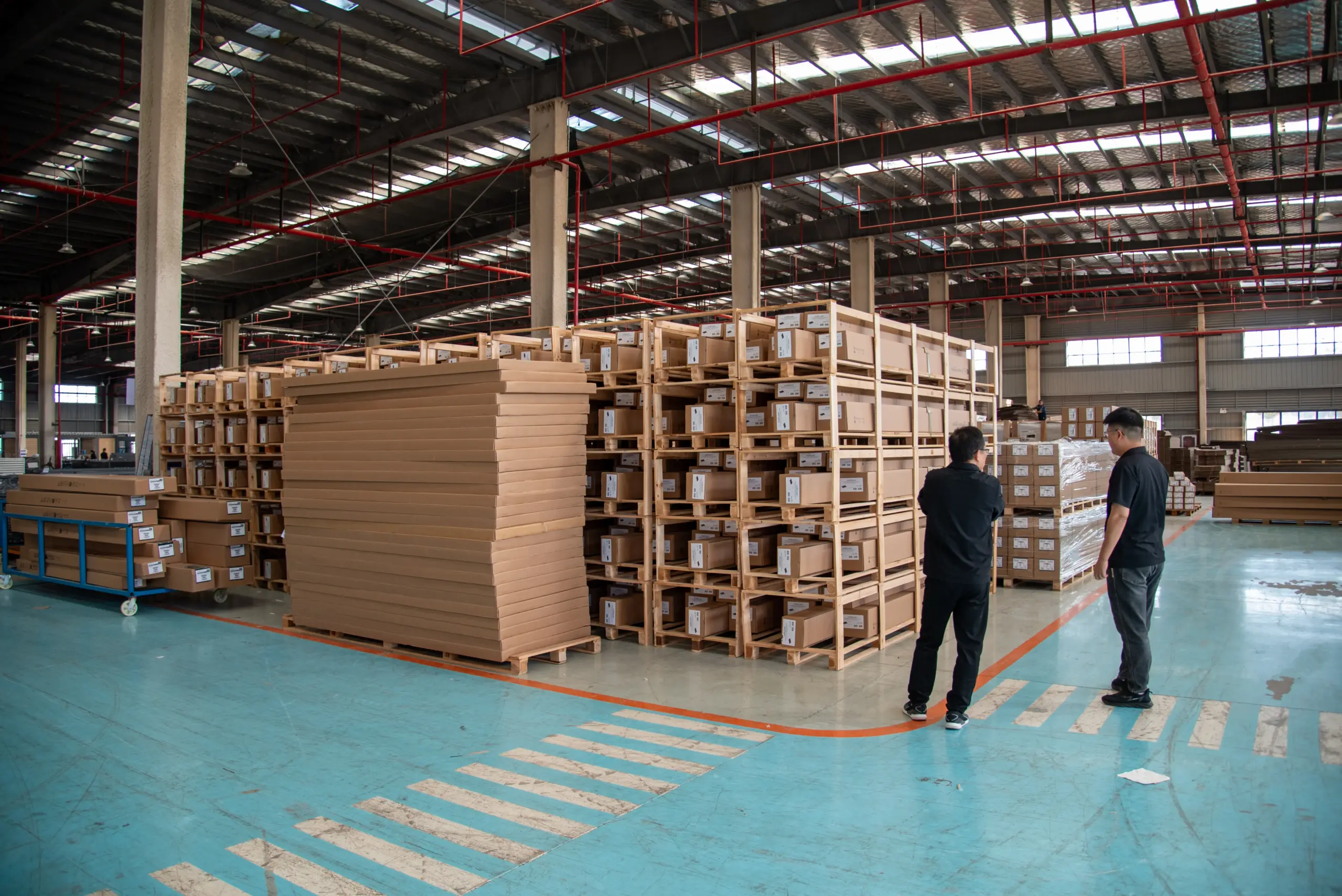
See how Outdoor Creation groups and protects packed goods as part of pergola manufacturing and export preparation in China. The warehouse photo shows packed goods before onward handling. The dimensions, grouping and contents of the packages for a particular pergola remain part of that order’s shipping records.
Agree the Handover Before Dispatch
Prepare for who takes possession at the first agreed handover and who checks the packages at the planned receiving location. Those can be different people. For example, a freight partner may collect a load before the distributor’s warehouse receives it and separates it for local projects. Let each team know which count or condition checks it has been asked to perform and which record it should give to the next team.
Name the delivery point and receiving party
Use the exact named place or point in the agreed sales arrangement. If the contract incorporates an Incoterms rule, check the rule, edition and named location against the contract. Under C rules, the place named in the term is the destination for carriage. Risk transfers earlier, at the place or port of delivery defined by the rule. Record the physical receiving location separately when it differs. The International Chamber of Commerce explanation of Incoterms 2020 outlines how the rules address these questions.
Agree who coordinates the vehicle’s arrival, who provides equipment at each applicable transfer, and who will be there to receive it. Also agree who is authorized to open packages for inspection and who should receive reports if an issue appears. Give transport personnel the site access instructions and the receiving contact. If an importer uses a consolidation warehouse, discuss how that site will identify packages that go onward without opening and which checks the final warehouse will perform.
When a distributor plans several deliveries from one shipment, ask the warehouse to confirm how it will identify staged goods by job or stock group. A site receiving directly should also know whether the freight appointment covers one shipment or several loads and whether all the parts for its first phase are expected. These decisions help the receiving team set aside the right space, people and time for the actual checks.
Send the records the warehouse will use
Pass the current approved order reference, packing list and separate-shipment references to the warehouse before the goods arrive. Include the physical receiving address or bay, access instructions and receiving contact. When part identification depends on a drawing or a page from the installation instructions, make that reference available to staff who will check or allocate the parts. Confirm they can open the files and identify which revision corresponds to the delivery.
For B2B orders that involve several parties, prepare clear information for each transfer. For example, agree who supplies the factory packing records and package marks, who passes on transport references and condition notes, and who records the IDs and visible condition at receipt. When the warehouse splits the shipment, agree who updates the project allocation and what records the installer receives. Confirm the checks and responsibilities with each party in advance.
If the shipping plan is revised after the documents were shared, send the updated list to all parties who will use it. Mark changes that affect a warehouse count, shipment reference or expected order sequence. At the same time, flag anything still pending, for example a separately dispatched accessory or a proposed second delivery. That gives the warehouse a clear basis for distinguishing an expected later arrival from an item the current consignment should contain.
Record Exceptions Before Releasing Parts
A pergola receiving checklist starts at the package level. Compare the visible IDs and condition against the list for the actual shipment. Verify contents to the extent specified in the receiving plan. Where checking all contents at the first transfer is impractical, record what was checked and identify which team will confirm the rest. The records that accompany the goods should make that status clear when they reach the next team.
Distinguish missing packages, wrong parts and damage
Check each visible mark as well as the aggregate package count. If one listed ID is absent and another ID appears twice, the received count may still match. If opening a package is part of the agreed check, compare the actual contents with the entry for that package. Record the expected part, actual part and observed quantity while the outer mark and order are still easy to trace. For visible damage, capture the condition and package mark and follow the agreed notification procedure.
- Package missing
- Record
- Expected package ID, count and delivery record.
- Send to
- The designated delivery contact.
- Confirm
- Whether the package was split from the shipment or is unaccounted for.
- Part short or incorrect
- Record
- Package ID, expected and received part numbers and counts.
- Send to
- The supplier or dealer contact responsible for checking contents.
- Confirm
- Which project is affected and how the part will be resolved.
- Visible damage
- Record
- Package ID, condition photos and the receipt record.
- Send to
- The contact named in the agreed reporting process.
- Confirm
- How to handle the affected package before any further release.
Use the order reference for every report and follow the agreed notice time and recipient.
Designed and created by the Outdoor Creation team.
Different observations call for different follow-up. For an absent package, review the dispatch and receipt records for the specific ID. A part shortage inside a received package calls for its recorded contents and actual count. An unrecognized item needs a readable part or label reference or a photograph for identification. A damaged package needs a condition record and instructions from the responsible parties on how to proceed. Send the evidence to the designated contact within the terms agreed for the shipment.
When you turn to a B2B pergola supplier for matching parts to shipment documents, provide the order and project, packing list revision, package mark, expected and observed details, and any relevant images or handover notes. Record the response alongside the issue and identify who will authorize the next action. This is especially useful when the same shipment contains stock for other installations that might otherwise be held or delivered based on the wrong record.
Pass a reconciled record to the next team
Before releasing goods to a project, reconcile the received parts against the project allocation. If multiple jobs share a box, carry the original package ID into the warehouse record when splitting its contents. Record which parts and quantities were assigned to each job. If retail stock and project orders arrived together, preserve the distinction after unpacking so a later stock pick can still identify the relevant specification.
Give each installation team the project reference, the list for its allocated packages or parts, and the applicable installation documents. Indicate whether a component is expected under a different shipment or if an issue still needs a decision. A small contractor collecting its own order can use the same information to plan its receipt and reach the right person if a package is unclear. Agree with the responsible party what can be released when other parts are awaiting confirmation.
Retain the approved order, issued packing list and completed receiving record together with documents for any later transfers. When an installer reports an issue after the distributor has split a delivery, these references make it possible to trace the part to its warehouse assignment and original package. The distributor can then explain what was received, what was forwarded and whose confirmation is needed to complete the handover.
Frequently Asked Questions
What should a pergola packing list include?
Ask for package marks, descriptions and counts, with weights and dimensions where applicable. Include the approved order reference and enough detail to match each package to the parts inside.
How does a package ID differ from a part number?
A package ID identifies the shipping unit. A part number identifies an item inside it. The packing list connects these references and shows the quantity to check.
How do distributors keep similar pergola orders separate?
Assign each package to an order or project before breaking up the delivery. Carry that reference onto the warehouse allocation record and the handover to each installer.
How should we check controls and accessories?
Match the ordered motor and control components and each selected accessory against the approved list. Check any separately shipped item against its own shipment reference.
What should I confirm before the pergola ships?
Confirm the configuration revision, packing list, package measurements and weights as applicable, handling requirements, named delivery point and receiving contact.
What should I record if a package arrives damaged?
Record the order and package ID, photograph the visible condition and follow the agreed receiving procedure. Share the evidence with the designated contact.
What if the package contains the wrong part?
Record the expected part number, the part received, the count and the package ID. Keep the affected items traceable while the responsible party confirms the next step.
What can dealers give a small installation team?
Give the team the project reference, relevant package list and installation documents. Name the dealer contact who can confirm contents or coordinate a shortage before work starts.
Share your pergola configuration, project references, delivery point and how your warehouse allocates goods. We make pergolas in our own factory and can review package identification, order records and custom packing requirements with your B2B team before dispatch.
Materials, hardware, installation requirements, packaging, custom arrangements and commercial terms are subject to final order confirmation.