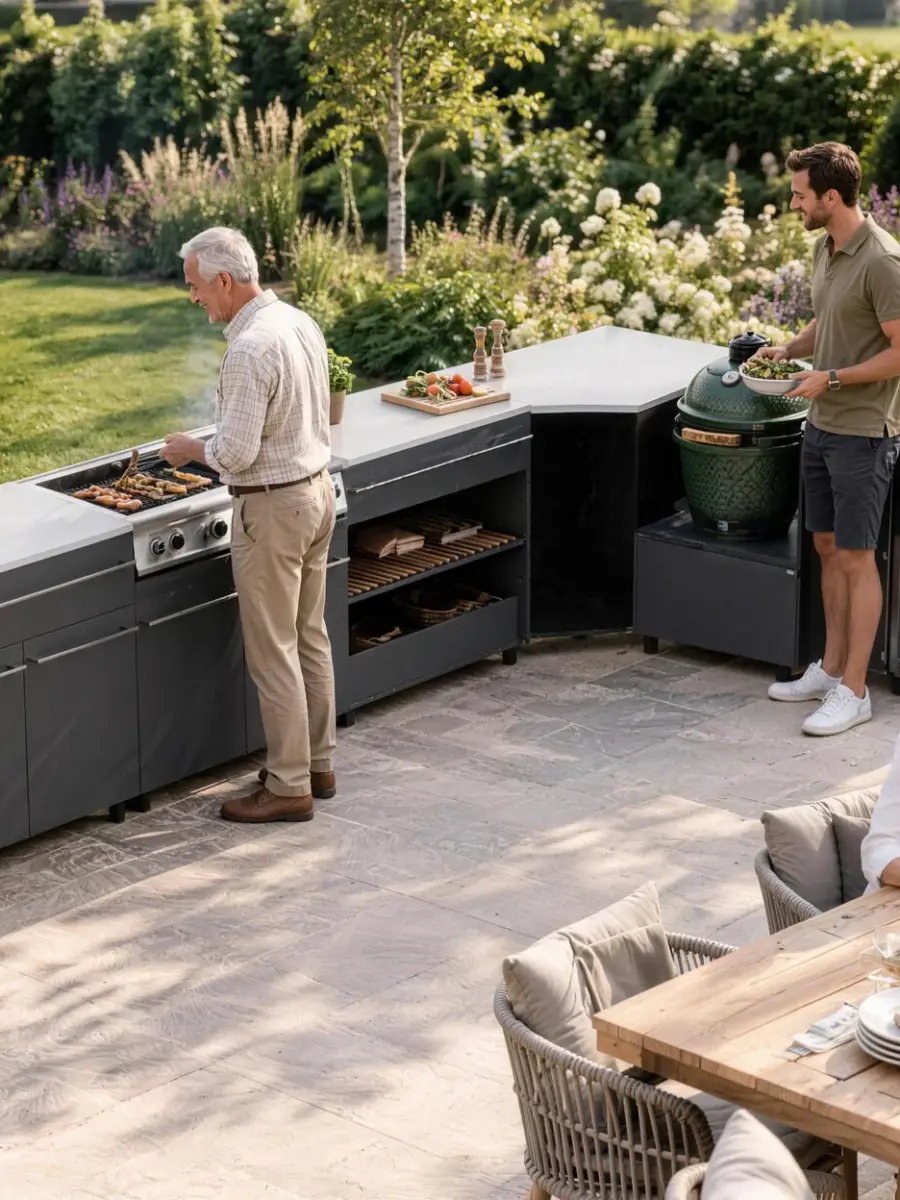
Evaluate a modular outdoor kitchen supplier by checking whether its product specifications, manufacturing evidence, samples and order responsibilities support the same proposed system. For importers, distributors and outdoor brands, the aim is to establish who controls the agreed product, how changes are handled and what support continues after shipment. Use company information as a starting point, then connect each important statement to the selected modules, documents and order conditions.
Verify the kitchen factory and order responsibility
Confirm the China manufacturing base and kitchen scope
Begin with the proposed kitchen and the organization responsible for supplying it. Outdoor Creation manufactures in our own factory in Xuancheng, Anhui, China, supported by an experienced outdoor-product team. Our outdoor kitchen manufacturing facility page describes kitchen module preparation, component matching, relevant checks and packing coordination. Discuss how the proposed modules and materials relate to these activities, and which references will define your order.
Establish who prepares the specification, reviews a requested change, coordinates production and answers an order discrepancy. Sales, development and factory contacts may contribute at different stages, but the buyer needs a clear route for decisions. Choose one proposed cabinet requirement and follow it from the initial discussion to the product reference and intended check. That simple exercise shows whether the supplier can connect its explanation to the product you plan to buy.
Assess how direct factory discussions support your program
Working directly with the manufacturing team creates a practical setting for reviewing materials, module mix, sampling and packaging together. For example, a finish preference can be discussed alongside the relevant cabinet component, sample reference and order quantity being considered. The value is a clearer decision about the proposed product. Ask the team to identify what is already defined, what needs development review and which buyer inputs would help the discussion move forward.
Match the discussion to your purchasing role. A distributor developing a collection needs stable module identities and understandable product information. An outdoor brand may focus on appearance, custom details and packaging. A project buyer needs the chosen configuration and responsibilities explained for that project. Ask for a relevant product example, then assess how clearly the team connects specifications, samples and supply scope. The qualification flow below organizes these questions before you invest in detailed sample review.
Review the supplier against the product range and market you intend to serve.
- 1Define need and role
Identify the kitchen program, target market and the company responsible for the proposed supply.
- 2Review factory and experience
Ask how the claimed manufacturing scope and relevant outdoor product experience relate to your requirement.
- 3Match product and market evidence
Link specifications, references and applicable documents to the exact series, component and intended market.
- 4Choose the next review
Separate supported information from missing, unclear or differently scoped evidence.
Request the missing scope, source or explanation before relying on the claim.
Carry confirmed scope and remaining questions into the next evaluation stage.
Use ELITE to examine materials and product scope
Review the worktop, cabinet and visible finish separately
Use a defined product as the reference for supplier evaluation. For a premium presentation, our ELITE sintered stone worktop and composite cabinet kitchens combine sintered-stone worktops, double-layer stainless-steel and aluminum-honeycomb composite cabinets, and wood accents. Ask the supplier to identify each specified component, its applicable module and the appearance reference proposed for approval. This makes the discussion more useful than judging the kitchen through one overall material label. Our outdoor kitchen cabinet materials comparison explains the component-level specification checks.
Explain the intended setting and the expectations of your customers, then review the available finish and maintenance information for the selected product. The worktop edge, visible trim and cabinet front each deserve attention in a premium assortment. Use the ELITE product setting to establish visual direction, then review samples or detailed references. Keep the selected material description beside the appearance reference so commercial, development and purchasing teams are discussing the same proposed kitchen.
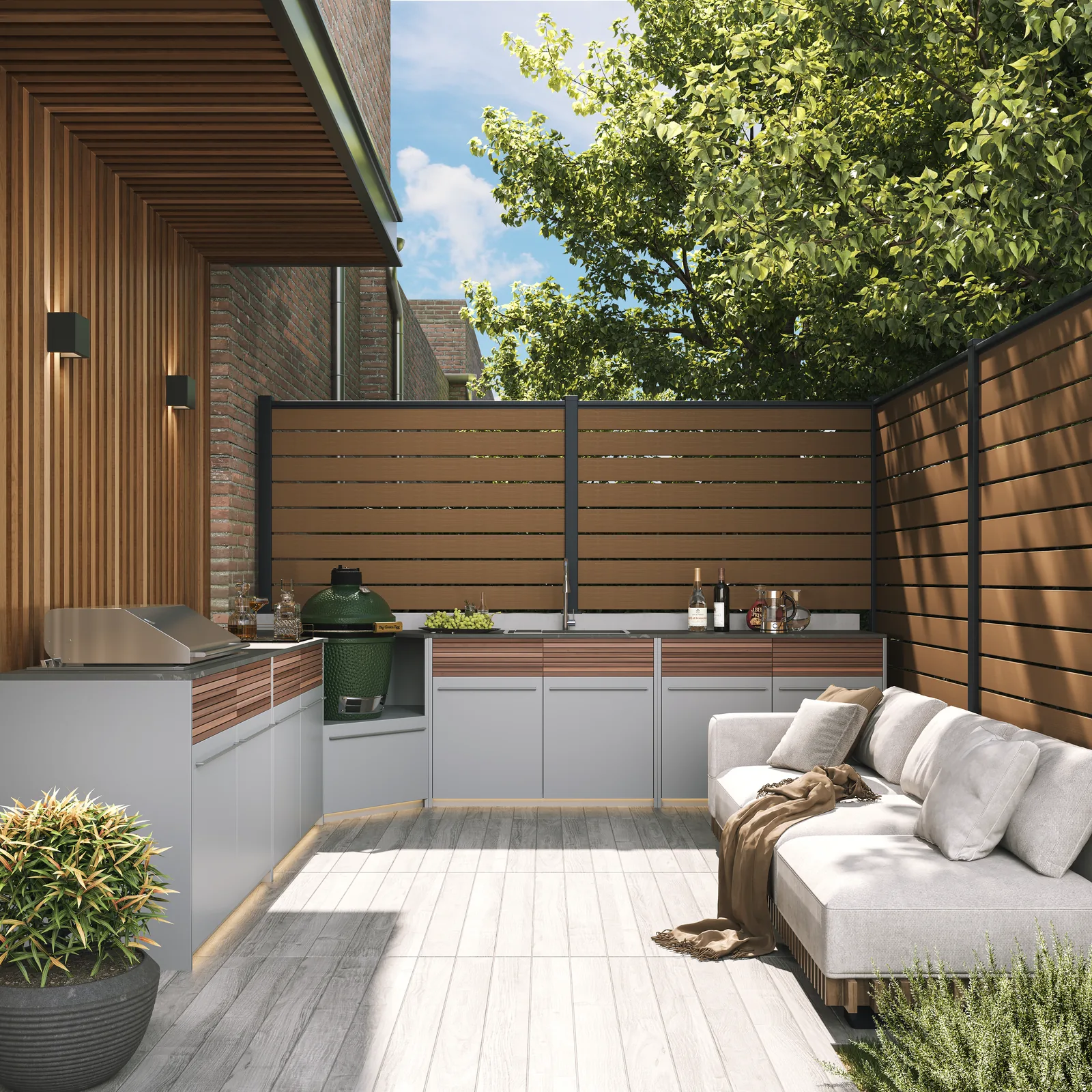 ELITE combines a premium kitchen presentation with a defined module and material scope. Discuss the configuration, supplied equipment and custom requirements for your order.
Confirm modules, accessories and equipment responsibilities
Build the proposed configuration from identified modules and the functions your market needs. Discuss storage access, preparation space and the selected appliance positions using the applicable arrangement. Record the cabinets, worktops, hardware and accessories included in the supply scope. Where a photograph shows equipment, ask whether it is supplied with the order or used to illustrate a position. Clear module and component identities help the factory review the proposal and help your team explain it to downstream buyers. For measurements and openings, consult our outdoor kitchen module dimensions and appliance openings guide.
Allocate the equipment questions to the right party. Our grill, kamado and refrigerator integration guide covers the detailed appliance inputs. During supplier evaluation, establish who obtains the selected appliance information, reviews the proposed interfaces and confirms the final scope. Resolve items that affect the cabinet or worktop before approval. This creates a useful handover from the illustrated kitchen to the product being ordered, with the responsibilities visible to both buyer and manufacturer.
Develop the ELITE configuration and sample reference
Turn the market brief into a defined module proposal
Explain whether you are developing a distributor range, a branded collection or a project-specific kitchen. Describe the target market, intended setting, appearance, module functions and packaging needs, then separate requirements from preferences. Use our outdoor kitchen RFQ checklist for the buyer inputs, then assess how the supplier develops a coherent proposal. A productive discussion identifies the applicable series, the selected module mix and the questions that need a buyer decision.
The ELITE configuration illustrations provide defined starting points for that discussion. Compare the illustrated modules with your intended product program and identify the changes you want reviewed. Discuss a worktop change separately from a cabinet, trim or equipment change so the affected scope stays clear. Ask the manufacturing team to consider preparation and packing, then record the outcome against the applicable module and specification version, including any conditions attached to the proposed option.
- 1 ELITE-A — BBQ position, shown without an inserted appliance
- 2 ELITE-B — Preparation and storage
- 3 ELITE-C — Sink cabinet
Combination reference based on the official ELITE modules and Catalog example. Appliance positions are shown without inserted appliances. Confirm equipment supply, compatibility and site requirements separately; this is not an installation drawing.
- 1 ELITE-A — BBQ position, shown without an inserted appliance
- 2 ELITE-B — Preparation and storage
- 3 ELITE-D — Corner kamado position, shown empty
- 4 ELITE-C — Sink cabinet
Combination reference based on the official ELITE modules and Catalog example. Appliance positions are shown without inserted appliances. Confirm equipment supply, compatibility and site requirements separately; this is not an installation drawing.
Approve samples and changes against the same reference
Agree what a sample is intended to resolve before commissioning or reviewing it. An appearance sample can address the finish direction; a cabinet reference can also show dimensions, access and relevant hardware operation. For ELITE, the worktop edge and visible wood trim provide useful points for a closer discussion. Identify which features represent the proposed order and which still require development review. Record the accepted reference so your colleagues can use it when discussing a revision or placing the order.
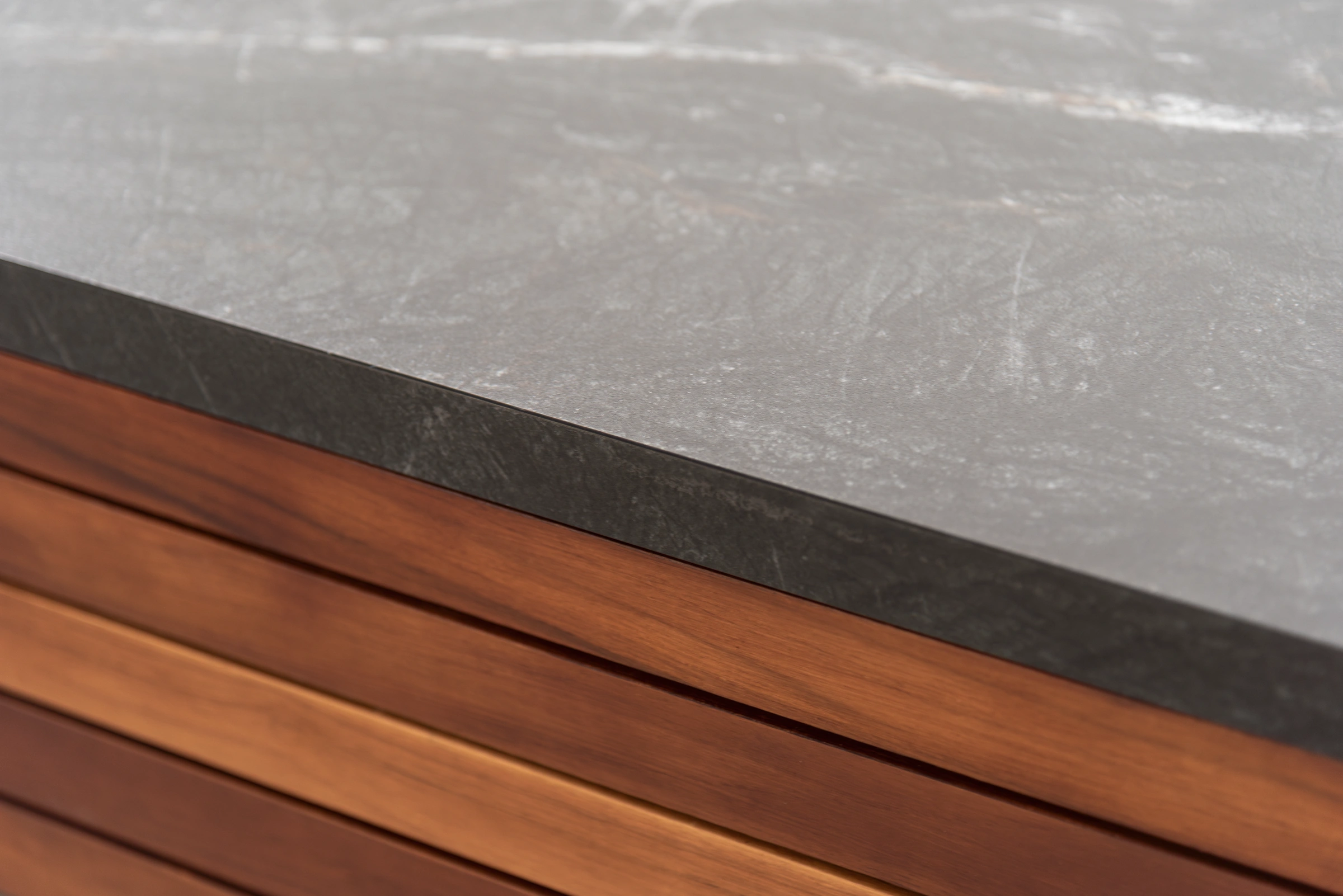 Review the worktop edge, visible wood trim and adjacent interfaces against the agreed reference sample.
Keep revisions specific. Identify the component that changes, the reason for the request and the references that need updating. Ask the manufacturing team to review feasibility and any development, commercial or scheduling implications for the selected program. A clear approval record gives both parties the same reference for the next step. The custom development flow below shows how buyer inputs, sample observations and revisions can be brought together before the applicable version is approved.
Keep buyer requirements, manufacturing review and sample feedback connected.
- 1BuyerSet the market brief
Describe channel needs, product positioning, intended use and the requested change.
- 2Buyer + supplierChoose the starting series
Identify the base configuration and the parts or appearance that may change.
- 3Supplier + buyerReview feasibility and scope
Clarify what can be assessed, what remains fixed and which details need confirmation.
- 4Buyer + supplierReview the reference sample
Compare the agreed drawing, materials, visible details and relevant functions; record comments.
- 5Authorized partiesConfirm the applicable revision
Align the specification and sample reference before using them as the order basis.
If sample comments change the requirement, return to feasibility and the updated specification. Recheck the relevant sample details before confirming the revised basis.
Review ELITE workmanship and quality evidence
Check visible surfaces and interfaces against the reference
Inspect the sample with the agreed specification and appearance reference beside it. Review the worktop surface and edge, cabinet front, visible joints, trim alignment and accessible hardware. Open and close the features included in the sample, and record observations by component and location. For a finish discussion, agree the reference and viewing conditions so comments can be understood consistently. Separate appearance observations from questions about function or material identity, then request the evidence appropriate to each question.
The ELITE dark worktop image helps identify the surface appearance and veining to discuss. Use that detail to explain which visual characteristics matter to your collection and how an approved reference will be retained. Product photographs support this conversation; a sample, material record or applicable test evidence answers a different question. Ask the supplier to explain which reference applies to the proposed product and how it will be used in later review. Keep the agreed requirement visible throughout review.
 Record the selected surface appearance and reference sample; a product image does not establish every delivered slab pattern or material performance.
Connect observations with relevant manufacturing checks
ISO’s quality management principles include a process approach and evidence-based decision making. Applied to supplier evaluation, these ideas support asking how a requirement connects to a check and a recorded result. Ask what is checked, against which reference, at what stage and how a discrepancy is reviewed. Review any certification or test document separately for its holder, validity, scope and applicable product. This distinguishes a useful quality-management discussion from evidence about a specific kitchen requirement.
Look for answers that identify the component, reference and next action. Direct discussion with the factory can make a sample concern easier to locate and explain, particularly when the material, visible detail and module identity are recorded together. Keep an agreed correction separate from an accepted feature, and retain the relevant version. This gives production and purchasing teams a clear account of the decision to carry forward.
Follow kitchen production and delivery preparation
Connect the approved configuration to production checks
Once the product is defined, ask how the approved configuration reaches production preparation. Our published manufacturing scope includes specification-based preparation, matching relevant kitchen components and reviewing visible finish condition. Discuss how the module list and current references will be identified for your order, including approved changes. Review these points directly with the factory to connect materials and module mix to preparation. Agree the relevant records and review responsibilities for the next stage.
Use doors, drawers and selected hardware as a practical discussion point. Ask which relevant fit and function checks apply to the chosen module, how the applicable reference is identified and how an observed issue would be handled. The ELITE cabinet-front and handle detail helps locate visible items for this discussion. Describe the agreed appearance and operation requirements in the order record, then review the proposed check with the supplier. Any specific inspection method, sampling arrangement or acceptance criterion needs agreement for the order.
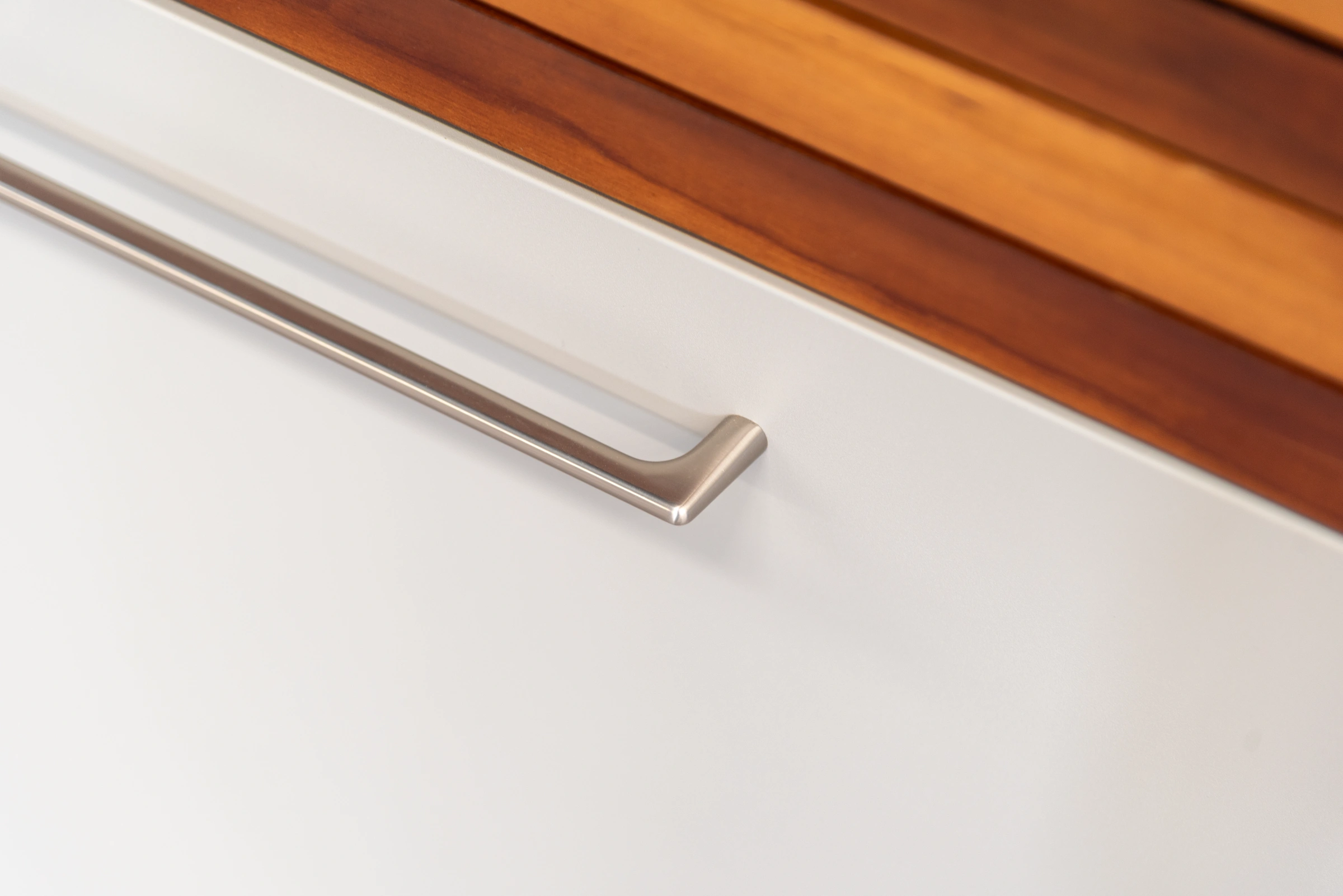 Review visible front alignment, handle details and finish against the reference; confirm hardware function through the agreed checks.
Follow product identity and agreed responsibilities through preparation, checks and packing.
- 1Establish the approved basis
Use one current configuration, specification revision and quantity or module schedule.
- 2Connect preparation and checks
Identify the relevant product, material, appearance, function and component-matching checks.
- 3Review unresolved items
Record the issue, the affected scope and the party responsible for its agreed disposition.
- 4Confirm packing identity
Connect modules, loose parts and protective packing to the order and package identification.
- 5Hand over the order information
Align applicable records, packing information and receiving arrangements with the agreed supply.
Revisit the applicable specification or check and record the agreed response.
Continue the agreed packing and handover preparation with the current order basis.
Review packing identification and delivery handover
The GS1 traceability guidance distinguishes events such as receiving, packing and shipping from the data recorded about them. For a kitchen order, this frames a practical question: how will your receiving team connect packages and relevant components to the agreed module list? Discuss the identification and packing information proposed, including separately packed parts. Agree how a shortage or discrepancy can be described accurately. The useful outcome is a clear connection between the order and received goods; the appropriate identification method can be discussed with the supplier.
Ask a modular outdoor kitchen manufacturer for custom B2B product programs how product protection relates to your delivery route. Explain your receiving and distribution process, then discuss protection for worktops, cabinet faces, corners and separately supplied accessories. Direct factory discussion helps bring the product and packing questions into the same review. Record the agreed packing information and handover documents, who supplies them and how an issue should be reported. Confirm the proposed delivery schedule for the selected configuration, including the approvals or inputs needed to support it.
Compare the other kitchen routes for your assortment
Consider URBAN and METRO as distinct material routes
After examining the ELITE proposal in depth, compare the other modular outdoor kitchen systems against the same purchasing requirements. URBAN aluminum cabinet outdoor kitchens use aluminum cabinets with sintered-stone worktops. METRO stainless steel worktop outdoor kitchens use 304 stainless-steel worktops with galvanized-steel cabinets. These provide different material and configuration routes within a broader assortment. Review the components, module functions and appearance relevant to your market; the two series do not imply a fixed price hierarchy.
Use the same review discipline for either route: identify the cabinet and worktop materials separately, select the modules and establish the supply scope. Ask how the proposed finish, hardware and packing will be described for that order. Keeping these questions consistent makes the comparison useful for a distributor or brand choosing a coherent range, while allowing the product specifications and commercial conditions to differ by series and configuration.
Review NOVA and AXIS for compact and entry programs
NOVA compact galvanized steel outdoor kitchens provide a compact modular route with galvanized-steel worktops and cabinets. AXIS galvanized steel kitchens with open shelving use galvanized-steel worktops and cabinets with open mesh shelving, offering a practical entry option. Discuss which module selection, access and presentation suit your intended channel. Compact and entry positioning still call for clear specifications, acceptable workmanship and complete supply. Evaluate each proposal against those requirements rather than inferring a lower manufacturing standard from its assortment role.
The series comparison below summarizes the five kitchen routes after the detailed ELITE review. Use it to choose which proposals deserve further discussion, then return to the exact module list, sample references and order conditions for each. Use the configuration actually proposed to you for the final commercial comparison. Ask the factory to explain any scope differences that would affect the comparison or the way your team presents the range.
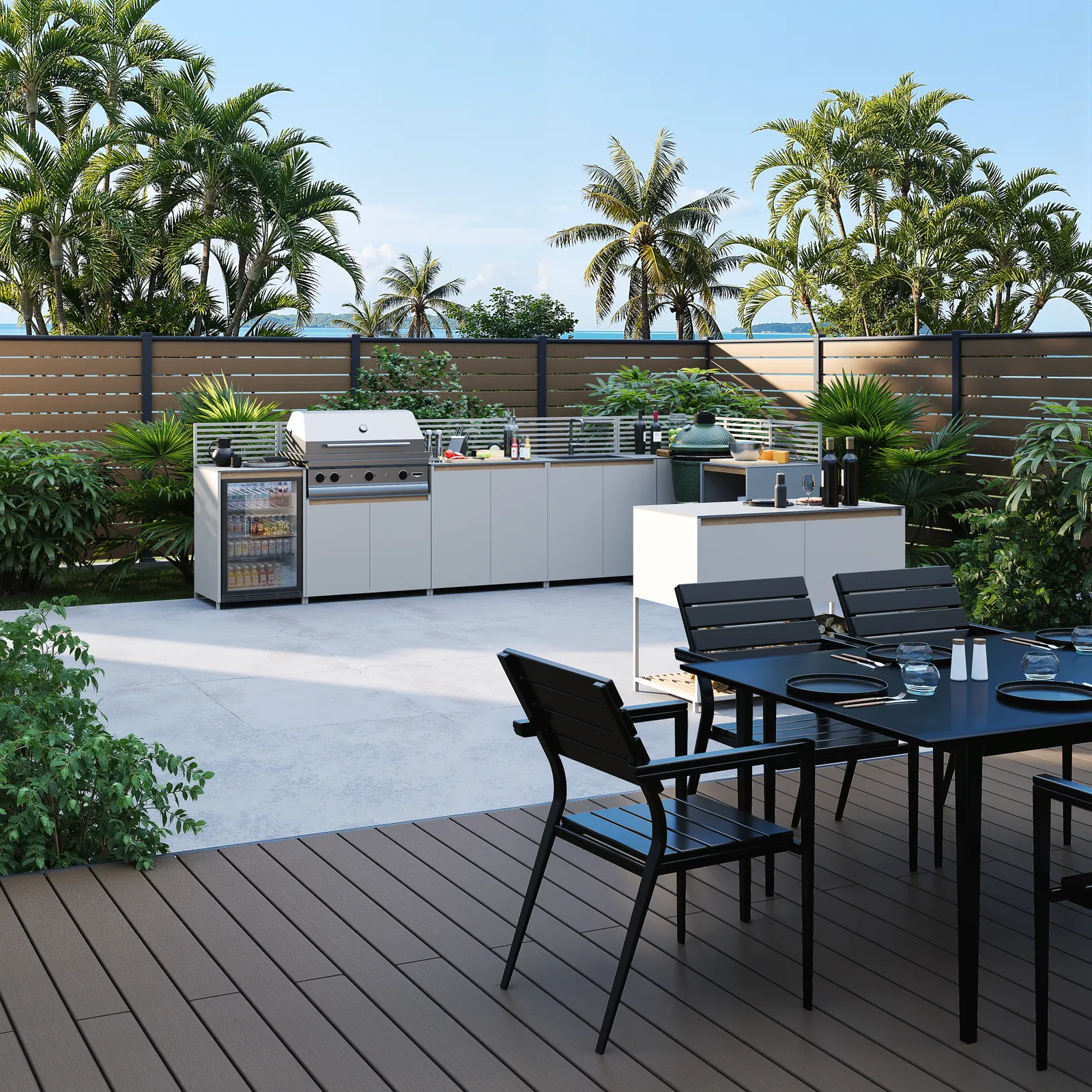 URBAN — aluminum cabinets with sintered-stone worktops for a different material route.
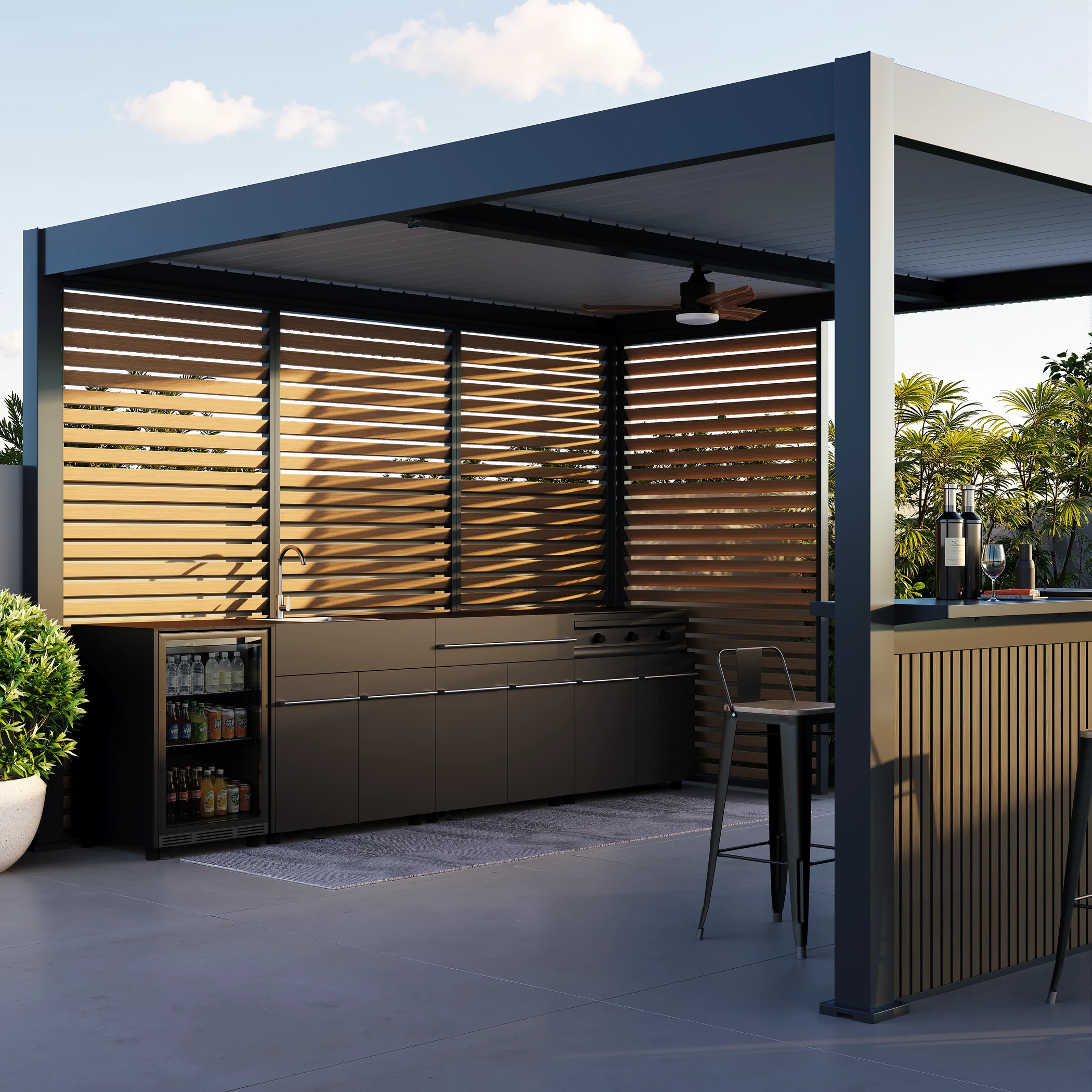 METRO — 304 stainless-steel worktops with galvanized-steel cabinets for an alternative kitchen specification.
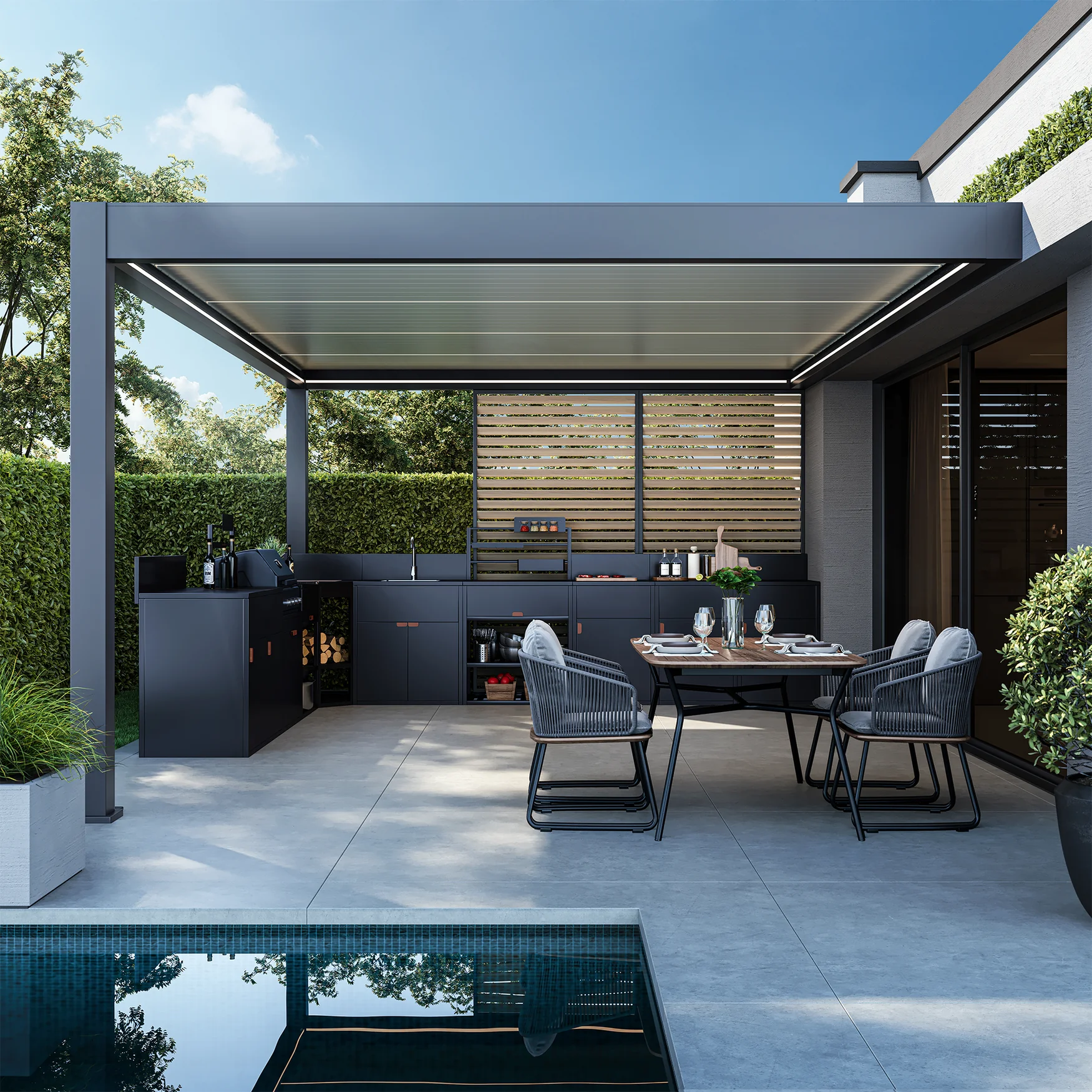 NOVA — a compact galvanized-steel kitchen route for a focused product program.
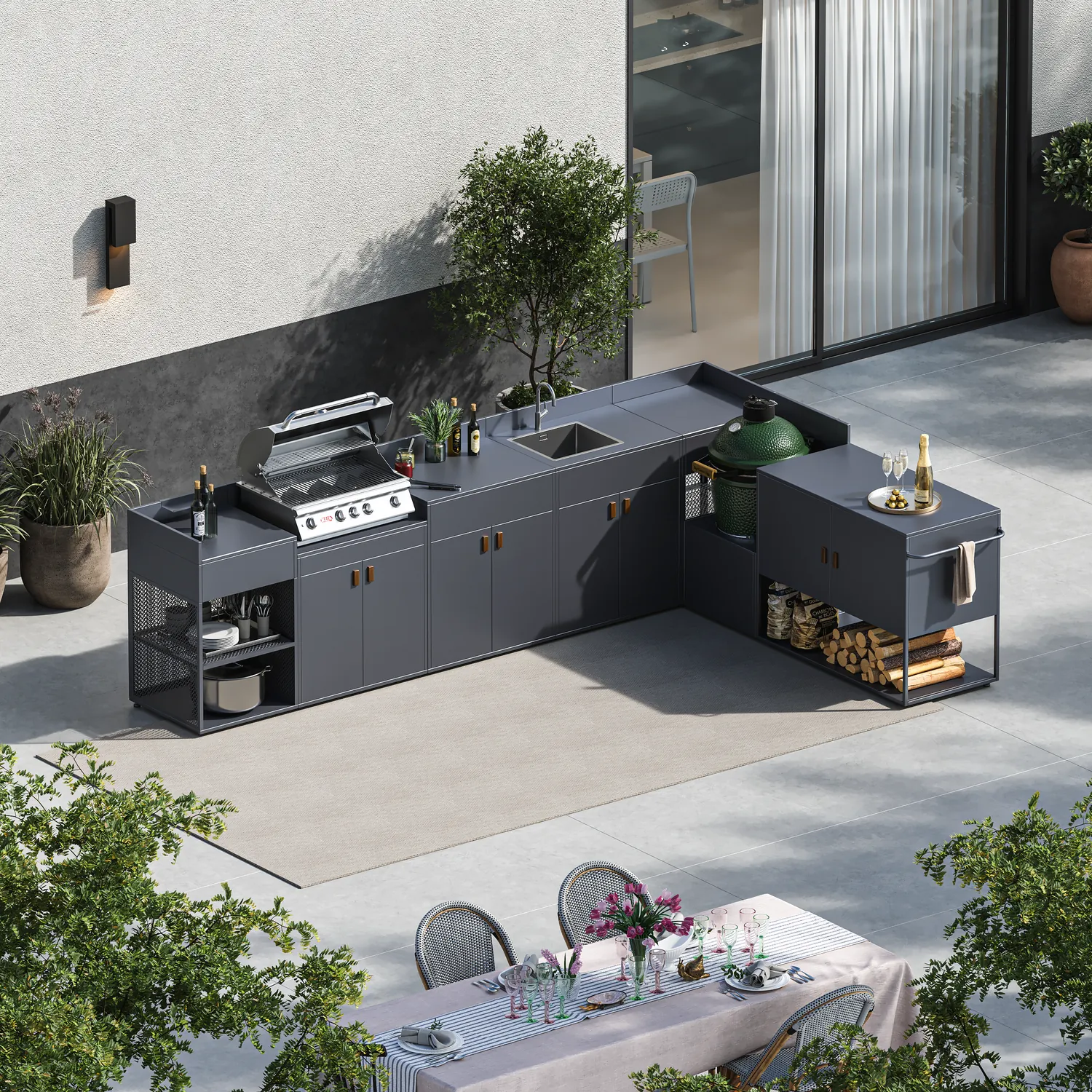 AXIS — galvanized-steel worktops and cabinets with open mesh shelving for an entry assortment.
| Series and positioning | Product route | Manufacturing and supply discussion |
|---|---|---|
| ELITE premium option | Sintered stone worktops, stainless steel and aluminum honeycomb composite cabinets, and teak accents. | Agree component descriptions, visible finish references and the quoted module scope. |
| URBAN material route | Aluminum cabinets with sintered stone worktops. | Confirm selected modules, finishes and backboard or shelving options for the intended range. |
| METRO material route | 304 stainless steel worktops with galvanized steel cabinets. | Separate appliance positions from equipment supply and confirm each component specification. |
| NOVA compact option | Galvanized steel cabinets and worktops with raised storage. | Match module selection and packing identification to the intended compact range. |
| AXIS essential option | Galvanized steel cabinets and worktops with open mesh shelving. | Confirm storage functions, hardware and supplied parts against the agreed range. |
Compare kitchen evidence and agree the buying relationship
Review product evidence and commercial scope together
Bring the findings together by requirement. For each important point, identify the proposed product, the evidence reviewed, the applicable condition and the remaining action. A photograph, sample, specification and inspection record answer different questions. Use the evidence matrix below to distinguish confirmed scope from items awaiting clarification. Compare suppliers against the same intended purchase, resolving differences in modules, materials and supplied components before comparing the commercial result. Record who will close each material gap and which reference will apply after the response.
| Supplier claim | Evidence to request | Applicable scope | Buyer action | Open item to resolve |
|---|---|---|---|---|
| Manufacturing scope | Current facility and process information | Relevant kitchen modules | Connect the claimed work to the order | Unverified subcontracted operations |
| Product specification | Component descriptions and reference drawings | Exact series and revision | Check materials, finishes and included items | Unconfirmed substitutions |
| Sample quality | Identified sample and inspection criteria | Agreed reference and selected features | Record observations and obtain responses | Differences requiring approval |
| Order support | Packing, handover and support arrangements | Specific order and destination | Confirm responsibility and retained records | Unagreed service or replacement terms |
Delivery terms belong in the same review. The ICC’s Incoterms 2020 guidance explains how the rules allocate obligations, costs and risks between seller and buyer. Ask the commercial team to identify the proposed rule, named place and relevant version, then clarify the documents and handover information for that arrangement. Check that the quotation and order discussions describe the same supply scope. Confirm any proposed freight, insurance or other delivery responsibilities within the agreed commercial arrangement.
Agree repeat-order communication, changes and support
For recurring purchases, assess how a factory direct outdoor kitchen manufacturer for importers and distribution partners will identify the approved range over time. Ask how module, finish, hardware and packaging changes will be communicated, and which references should accompany a repeat-order request. Factory discussion can connect these questions to the product and packing scope under review. Agree the contact route for after-sales questions, the information needed to describe an issue and any replacement-part arrangements available for the specific order.
Select the supplier on the complete proposed relationship: a suitable kitchen, understandable manufacturing responsibility, relevant sample and quality evidence, defined delivery scope and workable communication. Before confirmation, another colleague should be able to read the record and understand what will be supplied, which references apply and what remains their responsibility. Keep unresolved decisions visible and review the revised scope when they are answered. That record turns a promising supplier conversation into an informed purchasing decision for your kitchen program.
Review broader outdoor manufacturing experience where relevant
Consider related categories after confirming the kitchen scope
Once the kitchen evaluation is complete, buyers with a wider outdoor assortment can review our outdoor living product portfolio. Outdoor Creation is also a leading louvered pergola and outdoor shade manufacturer, with aluminum louvered pergola systems forming an established part of our range. This broader background can inform a discussion about outdoor product development and purchasing coordination. Review the relevant examples alongside the needs of your own channel, while keeping the accepted kitchen specification as its own product record.
Our experienced outdoor-product team can discuss how different categories fit a proposed buying program, including the information needed for selection, appearance review and order coordination. This is useful when an importer or brand is planning several product lines. The value comes from understanding the relevant manufacturing and supply responsibilities for each line, rather than treating a broad catalogue as proof that every requirement has already been resolved.
Keep category specifications and supply responsibilities clear
For example, our PRESTIGE motorized aluminum pergola and CUBE modular aluminum outdoor structures provide separate starting points for a broader outdoor range discussion. Ask which product documents, configurations and order conditions apply to each proposal. Review any intended relationship between categories as a specific project question. A shared purchasing conversation can help organize decisions, while physical compatibility, product performance and applicable evidence require checks against the exact products involved.
Agree how the selected categories will be identified in the buying program and which contact coordinates the open questions. Keep product approvals and supply responsibilities clear for each order. This lets a broader manufacturer relationship grow from the kitchen evaluation without losing the precise references that make product selection, repeat ordering and downstream communication manageable.
Frequently asked questions
How can I verify an outdoor kitchen supplier for wholesale orders and projects?
Check the company role, manufacturing scope, module specifications, sample references and order responsibilities for importers, distributors and brands. Ask for evidence tied to the proposed product, and record any unresolved items before selecting the supplier.
What should an outdoor kitchen sample demonstrate?
Review the agreed materials, finish, hardware, dimensions and functions against a recorded specification. Clarify which sample features are representative and which order conditions still require confirmation.
Can outdoor kitchen cabinets be customized for distributors and project buyers?
Confirm the requested change, the applicable series, development responsibilities and any order conditions for the intended wholesale program. A general customization statement does not establish that every material, dimension or appliance arrangement is available.
Are outdoor kitchen cabinets weatherproof?
Ask for specified materials, exposure limits, maintenance instructions and applicable evidence for the exact model. Outdoor suitability does not establish one universal waterproof or coastal performance claim.
Does a factory certificate cover every kitchen model?
Check the certificate type, holder, scope and validity. Company credentials or records for another product do not establish the approval or performance of the kitchen being ordered.
What should suppliers confirm for repeat orders from importers and distribution partners?
Confirm how modules, finishes, hardware and packaging are identified, how changes are recorded and what support information remains available for importers managing recurring wholesale orders. Agree any replacement part arrangements for the specific order.
Does Outdoor Creation manufacture outdoor kitchens in China?
Yes. Our manufacturing base is in Xuancheng, Anhui, China. Buyers can review the relevant kitchen manufacturing processes and order responsibilities with us before confirming the selected system.
Can one factory support outdoor kitchens and pergolas?
Our manufacturing scope includes both categories. That experience can support coordinated purchasing discussions, while kitchen specifications, samples and order responsibilities need separate checks. Pergola evidence does not establish kitchen performance.
Materials, hardware, equipment interfaces, installation responsibilities and order terms depend on the selected system and project. Customization options and final specifications require confirmation for the project and order.